
Reviewed · WALKING TOURS
Oslo City Walks – Historic River Walk
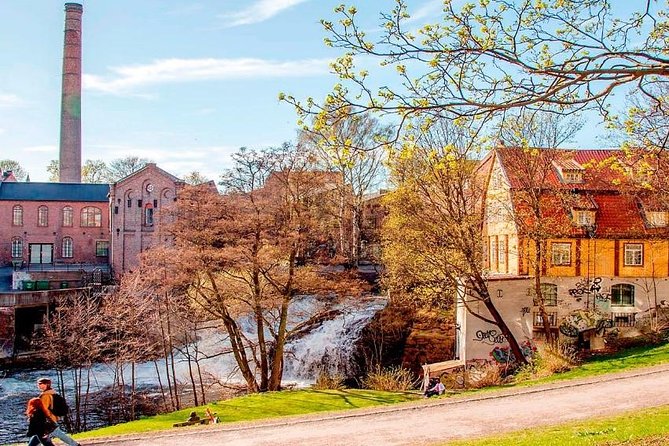
Oslo’s industrial past is easiest to understand beside the Akerselva River, where old working buildings now share the route with cafés, galleries, and open green space. This guided walk takes you from the city center to a waterfall at Beierbrua, showing how one waterway helped shape Oslo.
I like the clear story and the useful food stop at Mathallen. I also like that the walk ends away from the central station, giving you a different part of Oslo rather than simply circling the main sights.
The main consideration is physical effort. You need a moderate level of fitness, and the walk operates in all weather, so good clothing matters. The $53.28 price also does not include food at Mathallen or transportation after the tour.
Key points at a glance
- The Akerselva tells Oslo’s industrial story: You follow the river that once powered the city’s industrial growth and now serves as a green outdoor corridor.
- Mathallen adds a practical food break: You have about 15 minutes to look around an old industrial building now used as a gourmet food court.
- The walk finishes at a waterfall: Beierbrua provides a memorable endpoint instead of returning you to the city center.
- The route is guided in English: One guide leads a small group of no more than 20 people.
- The tour connects east and west Oslo: The river is described as a dividing line between the two sides of the city.
- You need weather-ready shoes and clothing: The tour runs in all conditions and requires moderate physical fitness.
Why the Akerselva River makes a good walking route
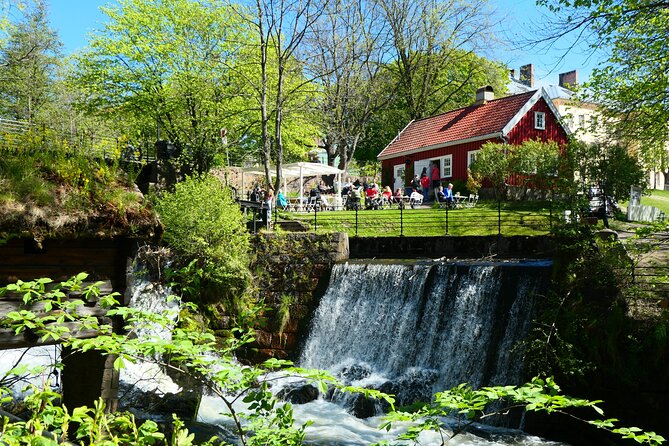
Akerselva is more than a pleasant strip of water. It is the thread that ties together several parts of Oslo’s story. The river divides the city between east and west, and its water helped make industrial development possible.
That gives your guide something useful to explain as you walk. Instead of looking at isolated buildings, you see how the river affected work, transport, and city growth. The focus is not only on old structures. It is also on what happened to them afterward.
The industrial buildings along the route have been put to modern use, with cafés, art galleries, and other public spaces taking the place of some former workplaces. I like this approach because it shows Oslo as a city that has changed without erasing every trace of its working past.
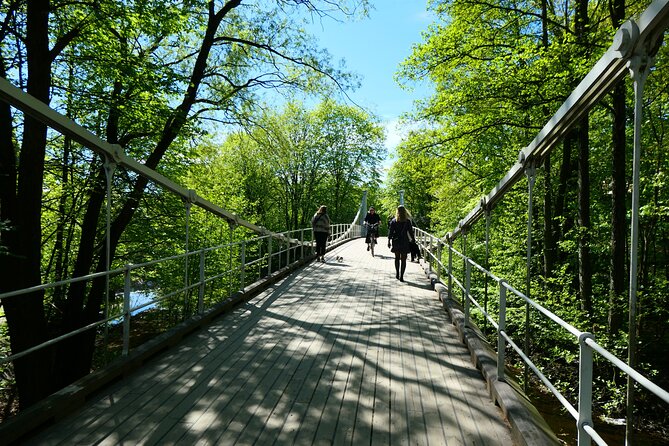
The route is called Oslo’s Green Lung, a fitting description for a riverside walk that gives you a break from the city center. You should not expect a wilderness hike. This is an urban walk with water, buildings, bridges, and public spaces, all tied together by the river.
Other guided walks in Oslo:
- Oslo Nature Walks: Island Hopping Tour
★ 4.8 · 2,713 reviews - Oslo Nature Walks: Island hopping
★ 5.0 · 570 reviews - Oslo: Best of Oslo Walking Tour
★ 4.5 · 458 reviews
Starting at Oslo Visitor Center at 2 pm
The tour begins at Oslo Visitor Center, at Jernbanetorget 1, at 2:00 pm. This is a practical meeting point near Oslo’s central transport area, so it should be straightforward to reach if you are already exploring downtown.
Arrive with enough time to find the visitor center and use the toilet before setting off. The tour does not include hotel pickup, so you are responsible for getting to the start. Since the endpoint is at Beierbrua, you should also think ahead about what you want to do afterward rather than assuming you will finish back where you started.
The group can include up to 20 people. That is large enough to provide company but still small enough for a guide-led walk to feel organized. The experience is offered in English, which makes the historical explanations accessible to English-speaking visitors.
The guide is included in the price, and the route is built around explanation rather than simply pointing out views. That matters here. The river and buildings become more interesting when you understand their role in Oslo’s development.
The first hour along Akerselva
The main portion of the tour takes place in Akerselva Miljopark, where you spend about an hour following the river and hearing about its past. This is the heart of the experience.
You can expect the guide to explain the river as both a physical divide and an engine of industrialization. The walk connects the waterway to the buildings around it, then brings the story forward by showing how those spaces have been adapted for current city life.
I like that the tour gives this part a full hour. It is long enough to provide context without turning the outing into a full-day history lecture. The route also gives you time to see the river at walking speed, which is often more useful than a quick drive past the same area.
The setting should appeal to you if you prefer city history mixed with outdoor time. You get fresh air and a changing view, but you also learn why the area looks the way it does. The river is not just decoration. It is the subject.
The official stop description lists admission as free. That means you are paying for the guide and the organized experience, not an entrance ticket to a paid attraction. For visitors who enjoy learning as they walk, that can make the cost easier to justify.
The route does require moderate physical fitness. The tour is a walk rather than a seated sightseeing trip, and the full experience lasts about two hours. The information does not give a precise distance or describe every surface, so you should be prepared for steady walking and choose sensible shoes.
Mathallen: a 15-minute taste of Oslo’s food scene
The tour stops at Mathallen Oslo for about 15 minutes. It occupies an old industrial building and now functions as a gourmet food court with Norwegian and international choices.
This is a smart stop for two reasons. First, it gives you a toilet break along the way. Second, it lets you see how a former industrial setting has been adapted for food and public use, reinforcing the larger theme of the walk.
Fifteen minutes is enough to look around and decide what you might want to eat later, but it is not a full meal stop. If you want to sit down and sample several dishes, plan to return after the tour or allow extra time after the group walk ends.
Food is not included in the tour price. The guide is included, but any bite or drink at Mathallen is your own expense. I would treat this as a chance to get oriented rather than as a promised tasting session.
Mathallen may be especially useful if you are unsure where to try Norwegian specialties. It also offers international food, so the stop works for mixed groups with different tastes. You do not have to commit to a meal during the 15-minute break.
The food hall also makes the walk feel connected to present-day Oslo. You are not only hearing about old industry. You are seeing a modern use of an old building and getting a practical suggestion for eating in the city.
Same base, a completely different day:
- Oslo: Scenic Fjord Cruise with Audio Guide Commentary
★ 4.5 · 5,375 reviews - Oslo: 100% Electric Oslofjord Sightseeing Cruise
★ 4.4 · 2,041 reviews - Oslo: Fjord Evening Cruise with Shrimp Buffet
★ 4.5 · 1,956 reviews - Oslo: 3-Hour Highlights Bike Tour
★ 4.8 · 1,609 reviews
Ending at Beierbrua and the waterfall
The walk ends at Beierbrua, near postal area 0459, beside a spectacular waterfall. This gives the tour a clear finish and a visual payoff.
I prefer an outing with a real endpoint rather than one that simply turns around and returns to the starting place. Here, the waterfall marks the end of the route and leaves you in a different part of Oslo from where you began.
The information provided does not specify the exact arrangements for getting back after the walk. Because the tour ends away from Oslo Visitor Center, keep your phone, map, and transport plans ready. You can also use the end of the tour as a starting point for more independent exploring, but that is something you arrange yourself.
The waterfall is also a fitting conclusion to the river story. You begin by learning what the waterway meant to the city, then finish at a place where the force of the river is easy to see. It makes the industrial explanation more concrete.
Is $53.28 a fair price?
At $53.28 per person, this is not the cheapest way to spend two hours in Oslo. You can walk along parts of the river without paying an admission fee. The value comes from having an English-speaking guide organize the route and explain the connection between the river, industry, reused buildings, and modern Oslo.
The group limit of 20 helps support that value. You are not paying for a large coach tour or a short stop at a single landmark. You are paying for a guided walk with a defined route, a food hall visit, and a waterfall finish.
The price makes the most sense for you if you would otherwise pass through the area without understanding it. It is less compelling if you only want a casual stroll and are comfortable researching the river on your own.
Remember to budget separately for food at Mathallen. The tour includes the guide, but it does not include hotel pickup, drop-off, or purchases at the food court. You will also need to arrange your own way onward from Beierbrua.
Weather, clothing, and the walking pace
The tour operates in all weather. That is useful for planning, but it also means you cannot count on a sunny afternoon. Check the forecast and dress for a riverside walk rather than a short indoor attraction.
Waterproof clothing, comfortable shoes, and an extra layer are sensible choices. The supplied details do not promise shelter or a change of plan for poor weather. Children must be accompanied by an adult, and service animals are allowed.
The moderate fitness requirement is worth taking seriously. The tour lasts approximately two hours and includes a route along the river. The exact distance and number of stairs are not specified, so anyone with mobility concerns should ask the provider before booking.
You should also keep the 2:00 pm start in mind. The tour uses much of the afternoon, with the final stop coming after the riverside section and Mathallen. It works well as an afternoon activity, but it may not suit a tightly packed schedule of timed attractions.
Who will enjoy this Oslo walk most
I would recommend this tour to you if you like learning how a city works. It is a good fit for first-time visitors who want more than the usual central sights, and for repeat visitors looking for a different side of Oslo.
It should also suit people who enjoy a blend of history, architecture, food, and outdoor walking. Mathallen adds flexibility for different appetites, while the river and waterfall provide a change from museums and formal attractions.
Families can join, provided children are accompanied by an adult. The moderate fitness requirement means you should consider the walking pace and weather before booking for younger children.
This is not the best choice if you want a short, effortless sightseeing stop, a private tour, or hotel pickup. It is also not ideal if you need a tour that ends at the same place it starts. The one-way route is part of its appeal, but it requires a little planning.
The experience has a 4.8 rating, with 94 percent of participants recommending it. Those figures fit the tour’s strengths: a pleasant riverside route, clear city context, and a useful stop at Mathallen. They should not hide the practical limits, especially the weather policy, moderate fitness requirement, and separate food and return transport costs.
Should you book the Historic River Walk?
Book it if you want a guided introduction to Oslo’s industrial past and enjoy walking through changing city spaces. The combination of Akerselva, reused industrial buildings, Mathallen, and the waterfall at Beierbrua gives you a well-shaped two-hour outing.
I would especially choose it early in an Oslo visit. The walk can help you understand the city’s east-west divide and point you toward places you may want to revisit, including Mathallen and the riverside areas.
Skip it if your priority is a central sightseeing loop, indoor shelter, or a tour with transportation included. Also think twice if you are not comfortable walking for about two hours in uncertain weather.
Free cancellation is available if you cancel at least 24 hours before the 2:00 pm start. That gives you some useful flexibility, but changes or cancellations made inside that window are not refunded.
FAQ
Where does the Oslo Historic River Walk start?
The tour starts at Oslo Visitor Center, Jernbanetorget 1, 0154 Oslo, Norway.
What time does the tour begin?
The start time is 2:00 pm.
Where does the tour end?
The walk ends at Beierbrua, near the waterfall in Oslo’s 0459 area.
How long does the walk last?
The experience lasts approximately two hours.
Is food at Mathallen included?
No. The tour includes a guide, but food and drinks at Mathallen are not included.
Does the tour run in bad weather?
Yes. The tour operates in all weather conditions, so you should dress appropriately.
More history tours around Oslo
- Oslo: Historic Myths & Legends Evening Walking Tour
★ 4.8 · 408 reviews - Oslo: History, Art and Secrets Tour
★ 4.7 · 62 reviews - A Well Balanced History and Food Tour with Focus on the Scandinavian Kitchen
★ 4.5 · 29 reviews - Jewish Heritage Tour in Oslo
★ 5.0 · 16 reviews
Just added around Oslo
- 4 hours Best View of the Oslofjord Winter Edition★ 4.0 · 15 reviews
- Unknown war. Oslo and Norway during 1940-45★ 5.0 · 74 reviews
- The Ultimate Norwegian Skiing Experience★ 5.0 · 16 reviews
- Oslo Winter Highlights Bike Tour★ 5.0 · 36 reviews
- The Viking Planet Museum – Mini Group (4 adults)★ 4.0 · 16 reviews
- The Ultimate Study of the Human Form at Vigeland’s Sculpture Park with a Local★ 4.0 · 14 reviews
- Visit the Instaworthy Spots of Oslo’s Vigeland Park with a Local★ 5.0 · 4 reviews
- Fjord Houseboat Cruise in Oslo. 100 % electric. BYO★ 5.0 · 3 reviews
Walking Tours, compared.
Past & Present Small Group Guided Walking Tour
Read our review →
Walking Tour in Bergen of the Past and Present
Read our review →
Browse the lists this tour appears in