
Reviewed · CYCLING TOURS
Oslo: 3-Hour Highlights Bike Tour
Oslo is made for seeing by bike: the route links Akershus Fortress, City Hall, the Royal Palace, and Frogner Park without wasting time on long walks between them. I like the mix of harbor views and city history, and I like that most of the riding is flat, with plenty of stops for photos and short explanations. The main tradeoff is that this is a sightseeing ride rather than a serious cycling workout, so some people may want more time in the saddle.
The tour also gives you a useful first look at Oslo’s layout. Guides such as Patrick, Shaf, Lucia, Andreas, Austra, Kat, and Martin have been praised for clear explanations, humor, restaurant tips, and calm handling of small problems such as a puncture. Bring water, expect the tour to run in rain or shine, and remember that winter departures are best for experienced cyclists age 12 and older.
Key points to know before booking
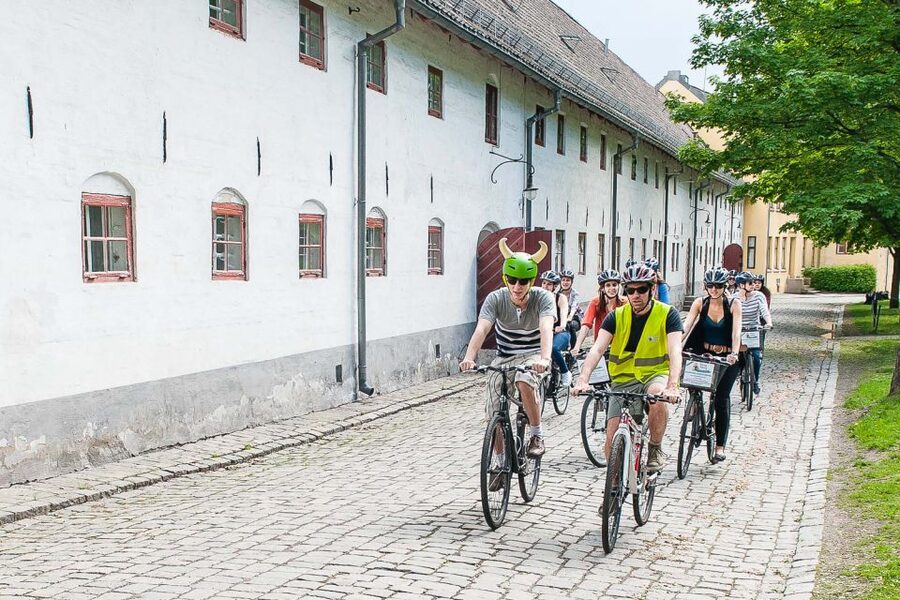
- A three-hour city sampler: Cover Oslo’s harbor, fortress, main boulevard, palace, Frogner district, sculpture park, and Tjuvholmen in one morning or afternoon.
- Mostly easy cycling: The route uses car-free paths, parks, shopping streets, and flat central roads, though a few sections require more care.
- Akershus Fortress is a real stop: You leave the bikes for about 30 minutes to walk the ramparts and take in views over the harbor.
- Frogner Park adds art and open space: The tour includes about 30 minutes around the famous sculpture park, enough to get oriented but not enough for a full visit.
- Good for a first day in Oslo: Guides point out bars, restaurants, and places worth returning to after the ride.
- Winter changes the equation: Spiked tires make snowy conditions possible, but the route can change and the winter version is limited to people over 12 with cycling experience.
Why a bicycle works so well in central Oslo
At $62 per person, this tour sits in the moderate price range for a three-hour guided city activity. You are paying for a bike, helmet, gloves if needed, a guide, and a route that connects several parts of Oslo without requiring separate transport. For a first day in the city, that can be good value.
Walking Oslo’s center is pleasant, but the Royal Palace, Frogner Park, Akershus Fortress, and the fjordfront are spread out. A bus tour covers ground but can feel removed from the city. On a bicycle, you move at street level, stop close to the sights, and get a sense of how the neighborhoods connect.
I especially like the tour for a short Oslo visit or a cruise stop. In three hours, you get enough orientation to decide where to return later. It also helps you save your walking legs for museums, islands, or a longer evening around the harbor.
The pace is generally relaxed. You ride between stops, then listen to the guide, take pictures, and sometimes explore briefly on foot. If you are looking for continuous cycling, you may find the stops a little long. One useful point from the tour feedback is that some people wanted more active riding and fewer extended explanations. That is not a flaw for most first-time visitors, but it matters if you booked this mainly as a workout.
Other ways to see the whole town in Oslo:
- Oslo: 24 or 48-Hour Hop-On Hop-Off Sightseeing Bus Ticket
★ 4.1 · 1,470 reviews - Oslo Highlights Bike Tour
★ 5.0 · 979 reviews - Oslo: City Sightseeing Hop-On Hop-Off Bus Tour
★ 3.6 · 724 reviews
Starting beside the fortress and harbor
The meeting point is Nedre Slottsgate 4J, between Karl Johans Gate and Akershus Festning. It is about a 5 to 10-minute walk from Oslo Central Station, City Hall, and many central hotels, though the wider departure area is also described as roughly a 15-minute walk from the city center.
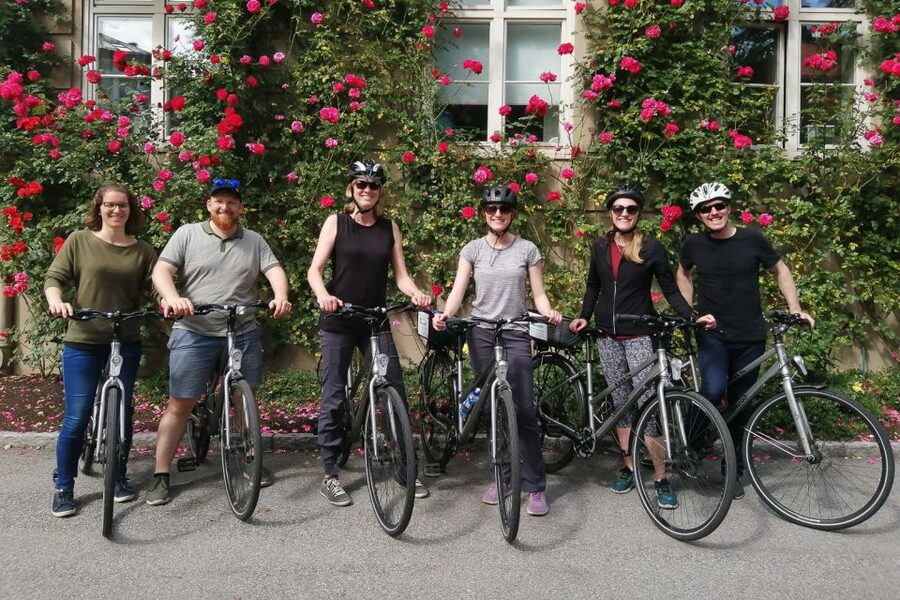
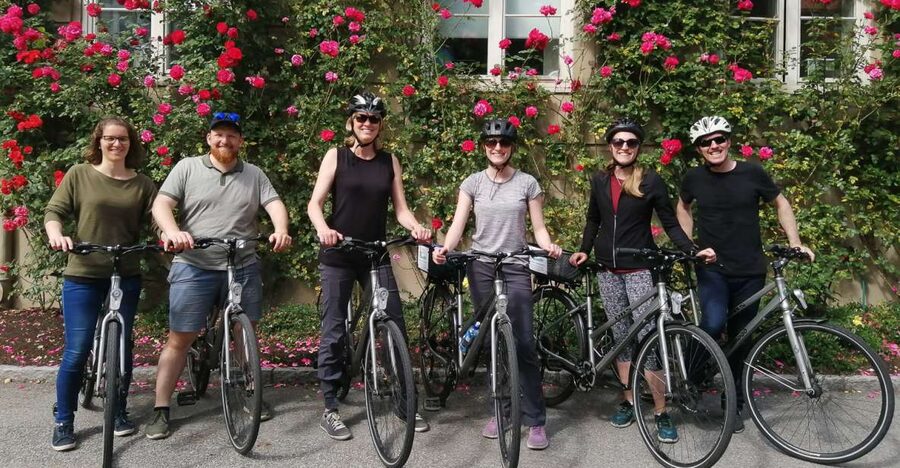
You begin with a comfortable city bike and helmet. Gloves are available if needed. The guide gives a safety briefing, helps match people with bikes, and gets the group moving toward the waterfront.
The first stretch takes you toward Oslo Fergehavn and the harbor. This opening ride is short, but it gets you into the rhythm of the tour without sending you straight into heavy traffic. The route uses car-free paths and pedestrian areas where possible. You still need to watch for people on foot, especially in central shopping areas.
Akershus Fortress: Oslo’s best history stop
Akershus Fortress is one of the strongest parts of the route. The medieval and Renaissance complex sits above the harbor, giving you both a history lesson and a fine view across the water.
You leave your bike for about 30 minutes and walk along the ramparts. This is important because the fortress is not just a quick photo stop. You get time to look over the harbor, inspect the old defensive walls, and hear how the site fits into Oslo’s past.
The stop is also a good break early in the tour. You are not expected to cycle nonstop, and the walking portion lets you stretch your legs. If you have limited mobility, note that the activity is not suitable for people with mobility impairments. The fortress stop includes uneven outdoor walking, and the tour as a whole requires you to mount, steer, and brake a bicycle.
City Hall and the Nobel Peace Prize connection
From the fortress, the route continues to Oslo City Hall. The large brick building faces the waterfront and is closely linked to the annual Nobel Peace Prize ceremony.
The City Hall stop lasts about 20 minutes. You can take photographs, look around, and hear more about Oslo’s civic life. This is not a long interior museum visit, so set your expectations correctly. The value is in seeing the building in context, right beside the harbor and central public spaces.
The nearby waterfront also gives you a good sense of Oslo’s relationship with the fjord. Instead of treating the water as a distant view, the tour follows paths where you can see boats, islands, and forested hills around the city. On a clear day, this is one of the most attractive parts of the ride.
Other rides around Oslo:
- The Grand Oslo Ride: E-bike Experience
★ 4.5 · 146 reviews - E-bike Tour in Geiranger, Norway
★ 4.8 · 81 reviews - Olden: Fjord e-bike tour
★ 5.0 · 23 reviews
Karl Johans Gate and the Royal Palace
The route then heads along Karl Johans Gate, Norway’s best-known boulevard. This is the ceremonial spine of central Oslo, linking major public buildings and the Royal Palace.
You pass the Parliament, National Theater, University, and other notable buildings during a roughly 10-minute cycling section. The guide fills in the setting as you go, which helps turn a string of impressive facades into a readable part of the city.
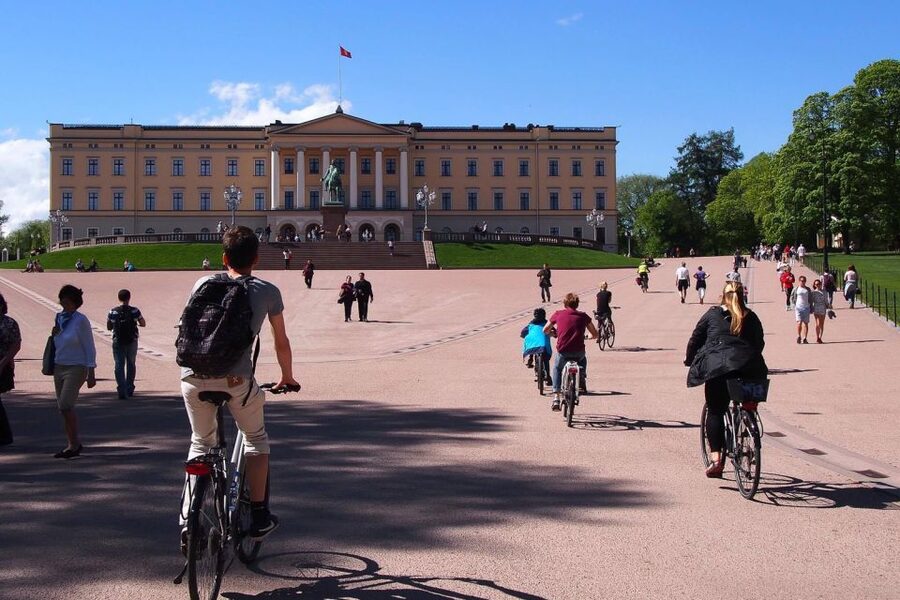
The Royal Palace gets about 15 minutes for a photo stop and brief visit from the outside. It is the home of the current Norwegian royal family, and its position at the end of Karl Johans Gate makes the approach especially clear. You see the palace gardens and the formal relationship between the royal residence and the city boulevard.
After the palace, the route runs downhill through the gardens. That downhill section is a pleasant change after the slower central streets, but keep your attention on the group and other path users. The tour is designed for control and sightseeing, not speed.
Frogner’s calm streets and sculpture park
From the palace area, you continue through Frogner, a neoclassical neighborhood with a quieter feel than central Oslo. The ride through streets such as Gyldenløves gate gives you a look at the city beyond the headline sights.
Frogner Park is the longest major stop, at about 30 minutes. The park is known for its collection of sculptures, and the tour gives you time to look around and hear the guide explain what you are seeing. You get a useful introduction to the park, but half an hour is not enough to examine every work or wander through every path.
That limitation is worth keeping in mind. If Frogner Park is your main reason for booking, plan to return independently after the tour. If you simply want to include it in a broad overview of Oslo, the stop works well.
The route then passes Frogner Church and continues toward the fjord. This section connects the residential character of Frogner with Oslo’s newer waterfront areas. It is one reason the bike format works better than a tightly confined walking tour: you see the change in buildings and streets as you move.
Tjuvholmen and the final return along the water
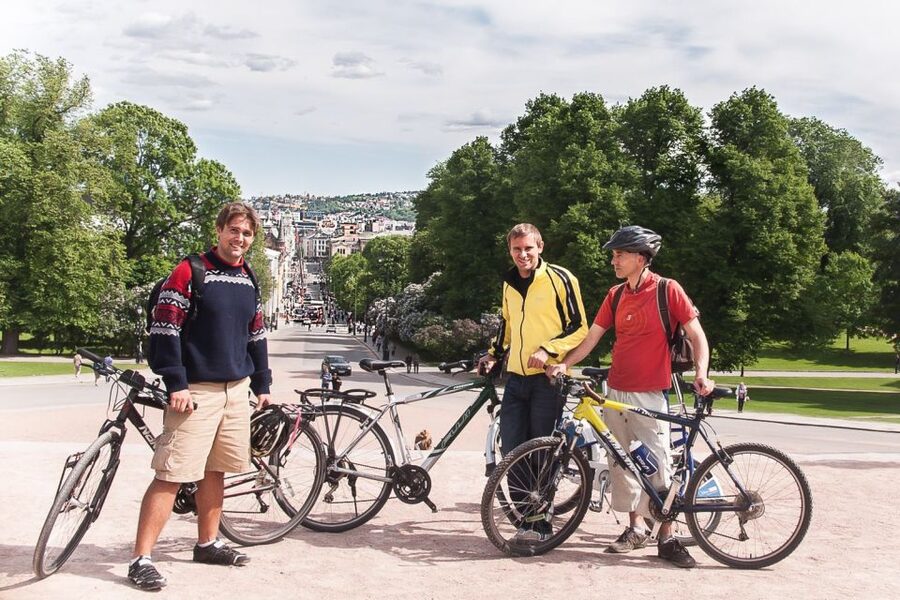
The final major area is Tjuvholmen, where the tour pauses for about 15 minutes. The route reaches a distinctive building constructed over the fjord, described as a lesser-known highlight of the waterfront.
From there, you ride through the pedestrian shopping district of Aker Brygge. This brings you back toward the starting shop and gives you another look at Oslo’s relationship with the water. Aker Brygge is also a practical place to continue your day, with restaurants and harbor views close by.
The return is not simply a ride back to the shop. It completes the tour’s main idea: Oslo’s old fortress, civic center, royal quarter, residential neighborhoods, sculpture park, and modern waterfront all sit within a manageable cycling route.
What the guides add to the ride
The guide makes a big difference here. The tour is in English, and the strongest guide comments focus on clear stories, local suggestions, and a pace that keeps the group together.
Patrick has been singled out for humor, historical detail, and restaurant recommendations. Shaf has been praised for his practical knowledge of Oslo and his enthusiasm for outdoor life. Lucia is noted for keeping a steady pace, while Andreas has received praise for friendly explanations, fun facts, and answering extra questions after the ride.
Austra, Kat, Martin, and other guides have also been praised for making the ride feel safe and organized. One guide handled a puncture efficiently during a wet-weather departure, which is exactly the sort of small matter you want dealt with calmly.
Guides also help you decide how to use the rest of your time. Since you pass restaurants, shopping streets, the fortress, palace, and park, you can ask where to return later. This advice adds value beyond simply following a marked route.
Bikes, safety, and the real level of effort
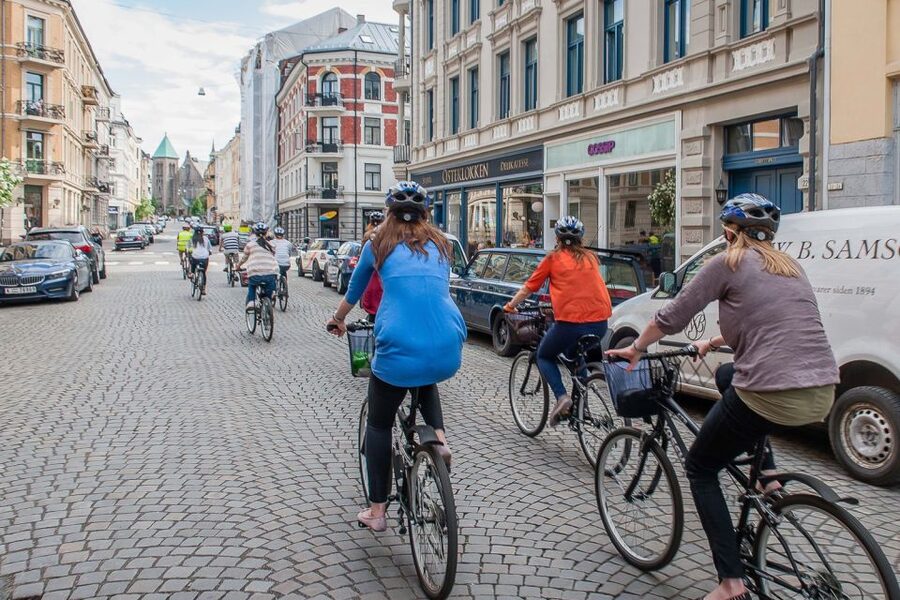
The included bike is a high-quality comfort city bike, with a helmet and gloves if necessary. The route is described as mostly flat, but do not interpret that as completely effortless. There are a few more challenging moments, some pedestrian traffic, and sections where you need to negotiate shared paths carefully.
The tour is generally suitable for anyone comfortable riding a bicycle in a city. You should be able to start and stop confidently, follow instructions, and stay aware around people on foot. It is not suitable for people with mobility impairments.
One trip report puts the full distance at about 7.5 miles with roughly 600 feet of total elevation gain. That gives you a useful sense of scale, though the repeated sightseeing stops make the effort easier than riding that distance continuously.
An e-bike upgrade has been available to at least some groups. It is not listed among the standard inclusions, so ask the operator about current availability and cost if you prefer electric assistance.
Rain, winter, and what to bring
Bring water. Food is not included, and the three-hour duration is long enough that you may want a snack before or after the ride.
Tours run rain or shine, and rain ponchos are sold at the starting point. Oslo weather can change quickly, so a waterproof layer is sensible even if the forecast looks promising.
From November 1 through February 28, the operator changes the route to suit winter conditions and fits bikes with spiked tires. Stops may change because of snow, ice, Christmas markets, or other seasonal activity. Guides choose locations based on safe access, so do not book the winter version expecting precisely the same sequence as a summer departure.
The winter tour is recommended only for people with cycling experience and is available only to those over 12. Snowy Oslo can look wonderful from a bike, but this is not the season to learn basic city cycling.
Who gets the most from this Oslo bike tour
I would choose this tour if you are in Oslo for one day, arriving by cruise ship, or want a practical orientation before exploring alone. It is also a strong fit for families with confident cyclists, couples, and anyone who would rather move through the city than sit on a bus.
You get the most from it if you enjoy short stops, local stories, photos, and a broad city overview. The route includes the major sights without turning each one into a long formal visit.
I would look elsewhere if you want a demanding cycling trip, a private guide, or long uninterrupted time at each attraction. You may also prefer a walking tour if riding among pedestrians makes you uneasy. The central route is safe and manageable for many cyclists, but it is not free of shared paths or busy moments.
The high rating of 4.8 from 1,609 ratings reflects the tour’s main strengths: friendly guides, well-kept bikes, a sensible pace, and a lot of Oslo packed into three hours. The price is fair when you consider the distance covered and the number of major sights included.
Should you book it?
Book this Oslo bike tour if you want to see the city’s main sights in one efficient outing and you are comfortable on a bicycle. I especially recommend it for a first morning in Oslo, because you can use the guide’s restaurant and neighborhood tips to shape the rest of your visit.
Skip it if you dislike cycling in shared urban spaces, need step-free access, or want a tour built around long museum visits. For most visitors who can ride confidently, though, it is a practical way to connect the fortress, fjord, palace, Frogner Park, and waterfront without spending the day walking between them.
FAQ
Where does the Oslo bike tour meet?
The tour departs from Nedre Slottsgate 4J in central Oslo, between Karl Johans Gate and Akershus Fortress. It is about 5 to 10 minutes on foot from Oslo Central Station, City Hall, and many central hotels.
How long does the tour last?
The tour lasts three hours, including cycling, guided stops, and time to look around places such as Akershus Fortress and Frogner Park.
What sights are included?
The route includes Oslo’s harbor and fjord paths, Akershus Fortress, City Hall, Karl Johans Gate, the Parliament area, National Theater, University, Royal Palace, Frogner neighborhood, Frogner Park, Frogner Church, Tjuvholmen, and Aker Brygge.
What is included in the price?
The price includes the guided bike tour, a comfort city bike, a helmet, and gloves if needed. Water and food are not included.
Is the tour offered in English?
Yes. The tour has a live English-speaking guide.
What happens on winter departures?
From November 1 through February 28, bikes are fitted with spiked tires. The route and stops can change based on weather and seasonal activities, and the winter tour is available only to people over 12 with cycling experience.
What happens if it rains?
Tours run rain or shine. Rain ponchos are available for sale at the starting point, and you should bring water and suitable clothing.
More city sightseeing tours in Oslo
- Oslo: Grand City Sightseeing Tour by Bus with Fjord Cruise
★ 4.6 · 647 reviews - Oslo Combo Tour: Grand City Tour and Oslo Fjord Cruise
★ 4.5 · 555 reviews - City Sightseeing Oslo Hop-On Hop-Off Bus Tour
★ 3.0 · 455 reviews - Oslo: City Highlights Walking Tour
★ 4.8 · 197 reviews
Just added around Oslo
- Oslo Sea Kayak Tour “Fjord City”★ 4.5 · 39 reviews
- Akerselva River Kayak/Packraft Tour: Urban Adventure in Oslo★ 4.5 · 42 reviews
- Maral Kunst : Jewelry Bar Experience (Jewelry Making)★ 5.0 · 3 reviews
- Oslo: Perfect Escape – Fun and exciting Escape Rooms★ 3.9 · 4 reviews
- Oslo: 3-hour Kayaking Trip on the Oslofjord★ 4.9 · 43 reviews
- Oslo Sea Kayak Tour: Explore The Incredible Oslofjord★ 4.5 · 31 reviews
- Private Transfer from Oslo Airport to Oslo City Centre★ 5.0 · 15 reviews
- Oslo Private Transfer Between Gardermoen Airport and City★ 4.0 · 27 reviews
Cycling Tours, compared.
Browse the lists this tour appears in