
Reviewed · WALKING TOURS
Oslo: Best of Oslo Walking Tour
Oslo reveals its story block by block on this two-hour walking tour, from the Nobel Peace Center and Parliament to Christiania Torv, Akershus Fortress, and the harbor. You get the city’s royal, political, and maritime threads without spending time inside attractions.
I like the clear route and the guides’ storytelling. Olaf, Amelia, Anastasia, Minji, and others have been praised for mixing facts with humor, local suggestions, and practical answers. I also like the included audio app, which lets you keep exploring after the guide says goodbye.
The main limitation is simple: you pass by the sights rather than enter them, and the route covers a lot of ground in two hours. Snow, rain, or a large group can also make it harder to hear or keep pace, especially for anyone with mobility concerns.
Key points at a glance
- Christiania explains Oslo’s changing identity: Learn why the capital has carried different names over the past 300 years.
- The route joins old and new Oslo: You pass medieval Akershus Fortress, nineteenth-century civic buildings, the Opera House, and the modern waterfront.
- Guides add useful local context: Expect history, politics, Norwegian culture, restaurant ideas, and practical suggestions for the rest of your stay.
- The Nobel connection is part of the story: The tour explains why Oslo presents the Nobel Peace Award, the only Nobel award given outside Sweden.
- The audio app extends the experience: Scan the QR code on your voucher and continue with a self-guided route after the walk.
- The price buys orientation, not admission: At $38 per person, the value is strongest if you are new to Oslo and want a strong first look.
Why this walk works as an Oslo introduction
Oslo is compact enough to explore on foot, but its story is not immediately obvious. A grand avenue, a quiet square, a modern harbor building, and an old fortress can feel like separate sights until someone connects them.
That is the useful role of this tour. You move through Sentrum, Oslo’s central district, while the guide explains how the city developed around government, trade, royalty, religion, and the water. You get a quick sense of how the pieces fit together before deciding where to return on your own.
I would book it for the first or second day of an Oslo visit. The walk does not replace museum time, a fjord outing, or a close look inside the fortress. It gives you a map in your head, which makes those later plans easier.
The tour is offered in English or German. Guides such as Minji, Olaf, Amelia, Anastasia, Oliver, Judit, and Csilla have led particularly well received outings, though your guide will depend on the departure. The strongest pattern is clear: guides explain the city in an easy format, answer questions, and add personal suggestions rather than reciting a list of dates.
Other guided walks in Oslo:
- Oslo Nature Walks: Island Hopping Tour
★ 4.8 · 2,713 reviews - Oslo Nature Walks: Island hopping
★ 5.0 · 570 reviews - Oslo: Guided Walking Tour of Central Oslo
★ 4.7 · 438 reviews
Starting at the Nobel Peace Center or University Aula
Your meeting point depends on the language and booking option. English participants meet near the statue of P.A. Munch by the Faculty of Law entrance at University Aula, Karl Johan Street 47. German participants meet at the Nobel Peace Center at Brynjulf Bulls plass 1.
Arrive five minutes early. That small margin matters in a city walk because the group may leave promptly, and the route includes several streets and public squares where it can be easy to lose sight of the guide.
The Nobel Peace Center is a fitting place to begin the German route. Oslo’s role in awarding the Nobel Peace Award gives the capital a connection with the Nobel system that differs from Sweden’s other awards. The tour uses that fact to introduce Norwegian institutions and the city’s place in international affairs.
From University Aula, the English route begins near the university and Karl Johan. Either start puts you close to the civic core, so the opening minutes quickly move into Oslo’s main story rather than spending time on transport.
Karl Johan Street, Parliament, and the Grand Hotel
The central stretch includes Paleet, the Norwegian Parliament, the Grand Hotel, the National Theater, the University of Oslo, and the Karl Johan monument. This is the part of the tour that helps you understand Oslo as a capital city.
Karl Johan Street links major institutions and public spaces. The Norwegian Parliament gives the guide a chance to discuss government, while the Grand Hotel and National Theater add the ceremonial and cultural side of the avenue. You also pass the monument to Karl Johan, an important visual marker along the route.
The tour does not take you inside Parliament, the theater, or the university. That is both a limit and a benefit. You see several key buildings in one efficient stretch, then can choose which deserves a later visit. If you prefer lengthy interior visits, this outing will feel fast. If you want a broad first look, the pace is useful.
The guide may also point out the Tiger Sculpture and explain Oslo’s nickname as the Tiger City. The nickname sounds playful, but it gives the city a memorable identity marker and helps you place one of the central public artworks on your mental map.
Oslo’s old market core and cathedral
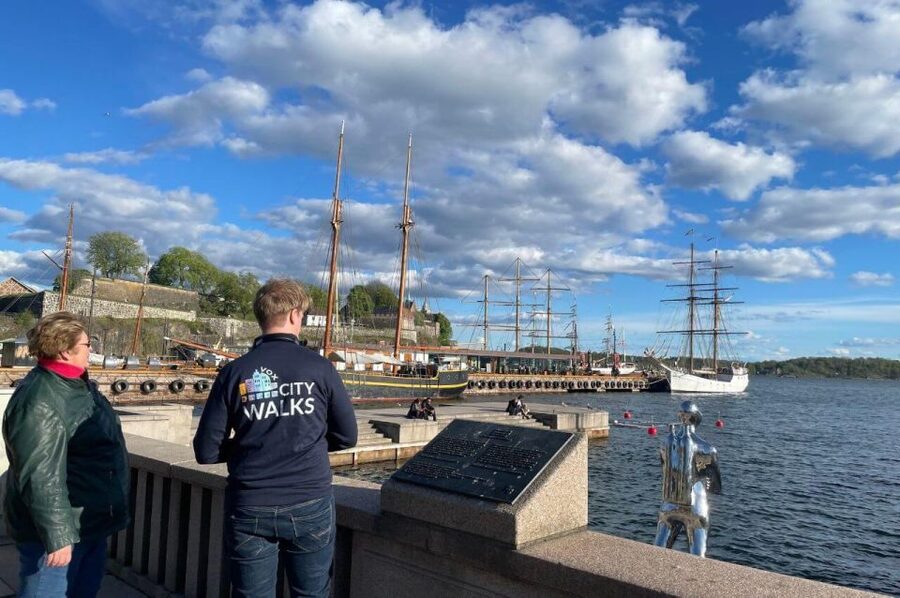
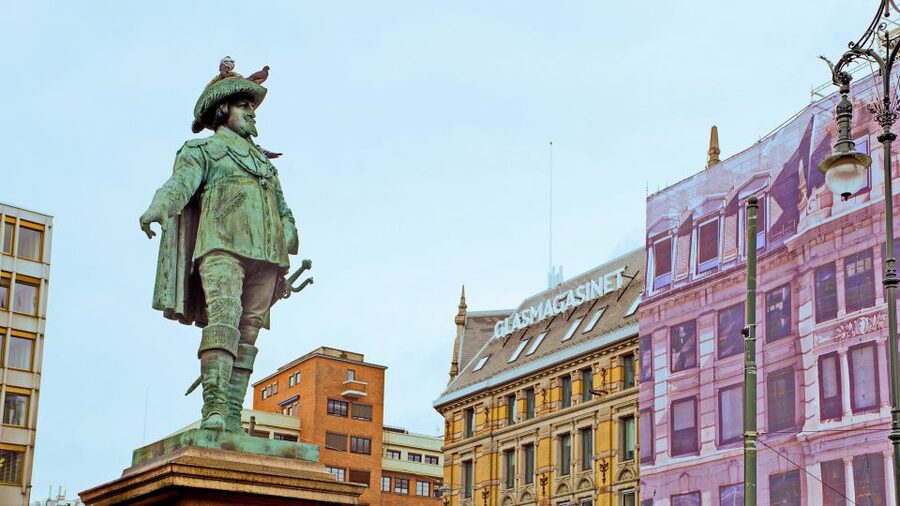
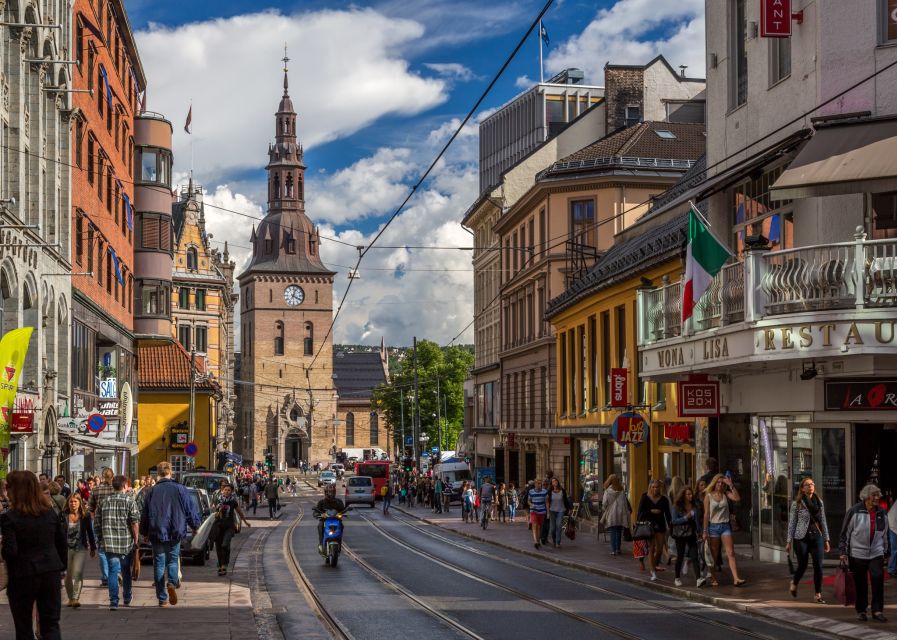
The walk continues past the Oslo Bazaars, GlasMagasinet Stortorv, and Oslo Cathedral. These stops show a more everyday side of the center than the ceremonial avenue.
The bazaars and the department store area help connect historic Oslo with shopping and city life today. At Oslo Cathedral, the guide can place religion and public space into the larger story of the capital. You will see the building from outside, not tour its interior as part of the package.
This section is also useful for practical orientation. You learn where the main retail streets meet the older center, and you can return later for shops, cafés, or a quieter look at the buildings. The tour’s guides have also been praised for suggesting cafés and restaurants. One useful recommendation mentioned during a walk was W.B. Samson, including its cinnamon buns and coffee.
Do not expect a food tour. The café advice is an added benefit, not a formal tasting stop. Still, this kind of local suggestion can be more useful than another string of architectural facts, especially on your first day.
Same base, a completely different day:
- Oslo: Scenic Fjord Cruise with Audio Guide Commentary
★ 4.5 · 5,375 reviews - Oslo: 100% Electric Oslofjord Sightseeing Cruise
★ 4.4 · 2,041 reviews - Oslo: Fjord Evening Cruise with Shrimp Buffet
★ 4.5 · 1,956 reviews - Oslo: 3-Hour Highlights Bike Tour
★ 4.8 · 1,609 reviews
The Opera House and the modern waterfront
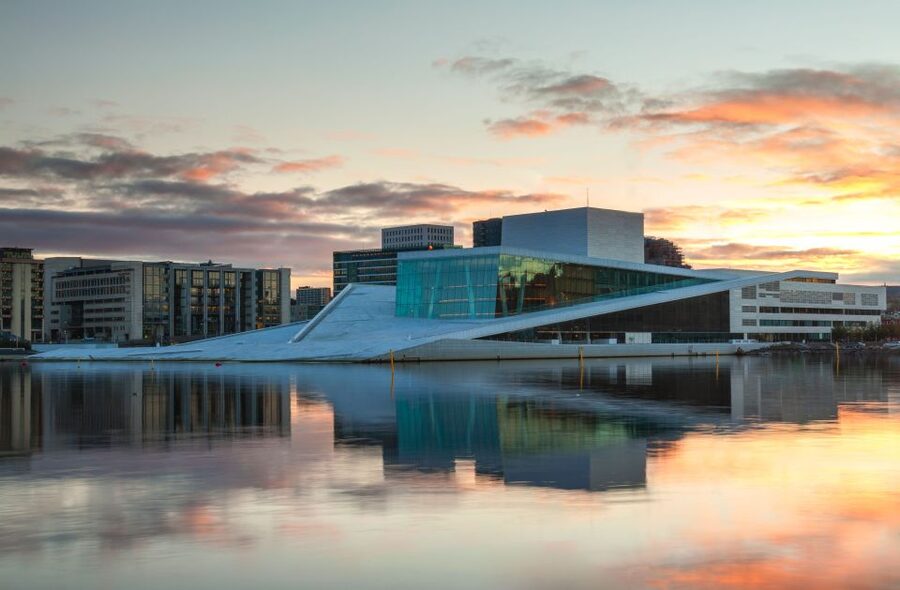
The route heads toward the Oslo Opera House, then continues through Kvadraturen and toward the harbor. The Opera House is one of the city’s most recognizable modern buildings, with a pale, sloping exterior that gives it a strong presence beside the water.
The guide explains how newer Oslo fits beside older districts. You also pass KOK Oslo Sauna at Langkaia, a reminder that the harbor is not just a backdrop for monuments. It has become part of the city’s leisure life.
Because the itinerary lists these places as walk-by stops, you should not assume time for an interior visit or sauna session. The benefit here is visual and geographic: you see how the center reaches toward the fjord and how new public spaces sit beside older streets.
If you want to return to the Opera House afterward, the tour leaves you well placed to do so. The same is true of the waterfront. The guide gives you a sense of where to continue, while the included app offers another route for later exploration.
Christiania Torv and the original city center
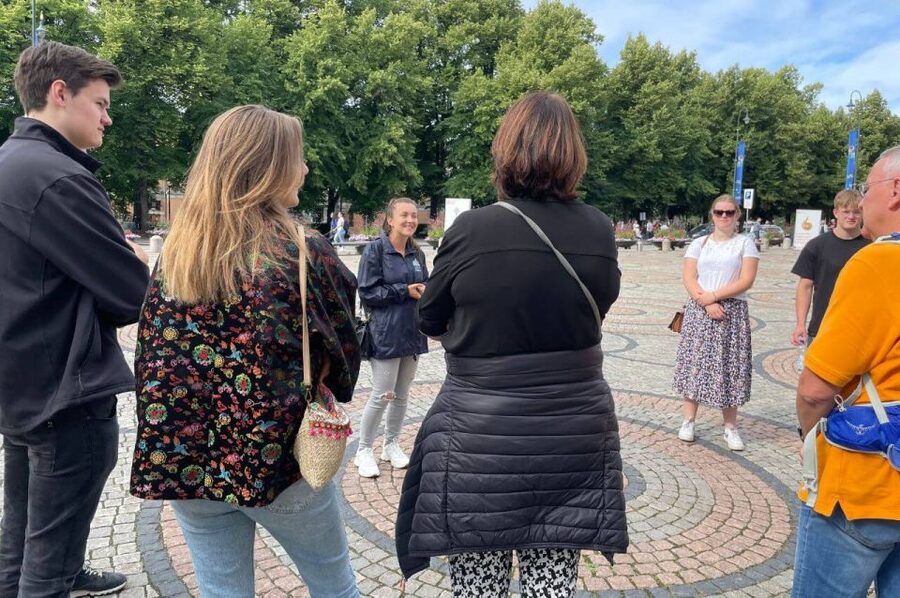
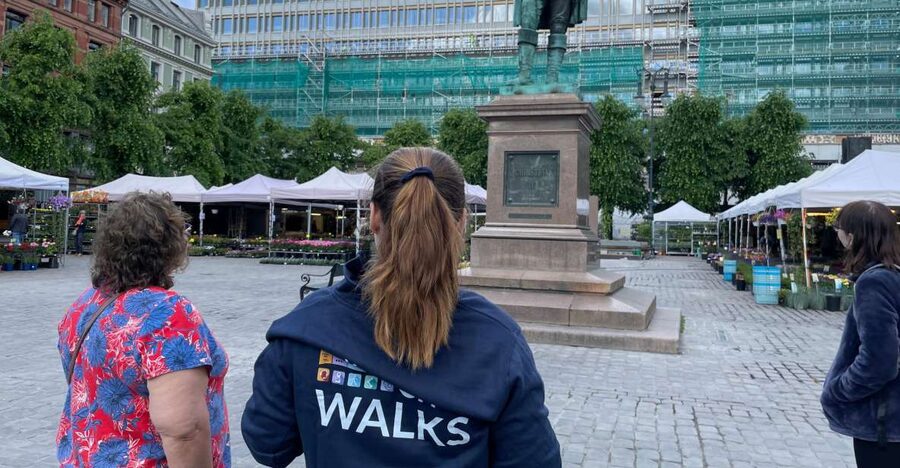
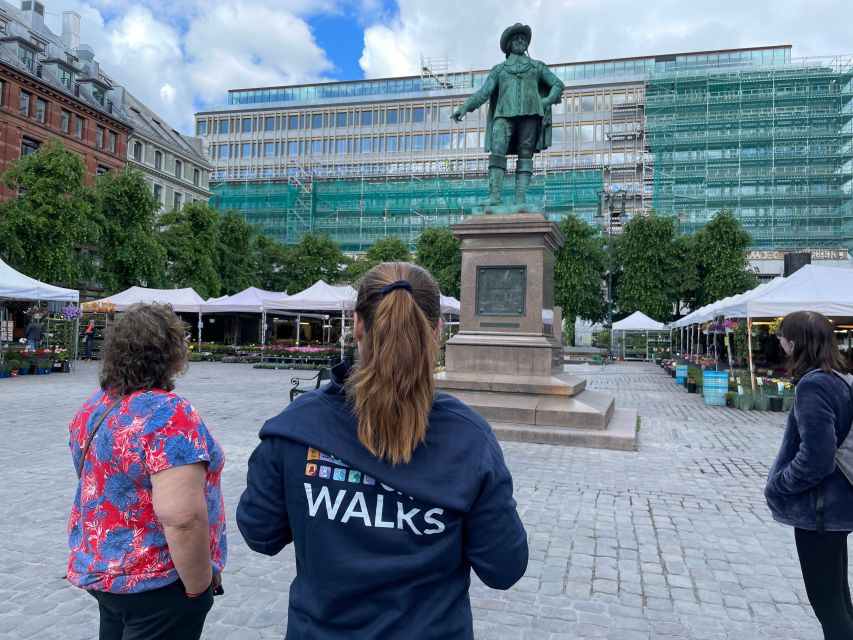
Christiania Torv is one of the most important historical stops. This is where the guide explores Christiania, the former center of Oslo, and explains why the capital has changed its name several times over roughly three centuries.
That name story gives the walk more depth than a basic list of sights. Oslo has not always presented itself under one fixed identity, and the old center helps you see how fires, rebuilding, government, and urban planning shaped the city.
The surrounding Kvadraturen area is particularly helpful for understanding the transition between the old town and the newer center. You pass Gamle rådhus and Anatomigården, along with other older buildings, while the guide provides the context that a casual stroll may miss.
This is one of the tour’s strongest sections for history fans. You are not entering a museum or archaeological site, but the streets themselves become the subject. Look closely at the spaces between the larger attractions. The value is in noticing how the old civic center survives within a modern capital.
Akershus Fortress and Oslo City Hall
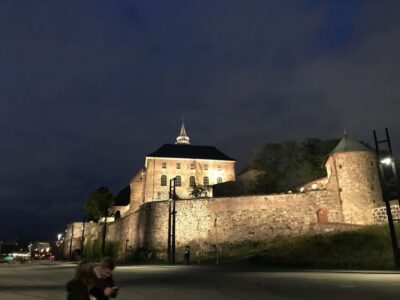
Akershus Fortress brings military and royal history into the route. The fortress overlooks the harbor area and gives you a useful position from which to understand Oslo’s relationship with the sea.
The tour passes by the fortress rather than including entry. That means you will get an introduction, a view, and a reason to return, but not a full exploration of its grounds or interiors. If the fortress is high on your list, allow separate time for it.
Next comes Oslo City Hall, one of the city’s major civic buildings. The guide connects City Hall to Oslo’s public life and to the Nobel Peace Award ceremony, which takes place in the capital. The nearby Ceremony Pier adds to the waterfront setting and helps explain how the civic center and harbor meet.
This part of the walk can be especially good for first-time visitors because it links three things that are often visited separately: the fortress, the City Hall area, and the harbor. You will not leave knowing every detail, but you will understand their place in the city.
Aker Brygge and Tjuvholmen
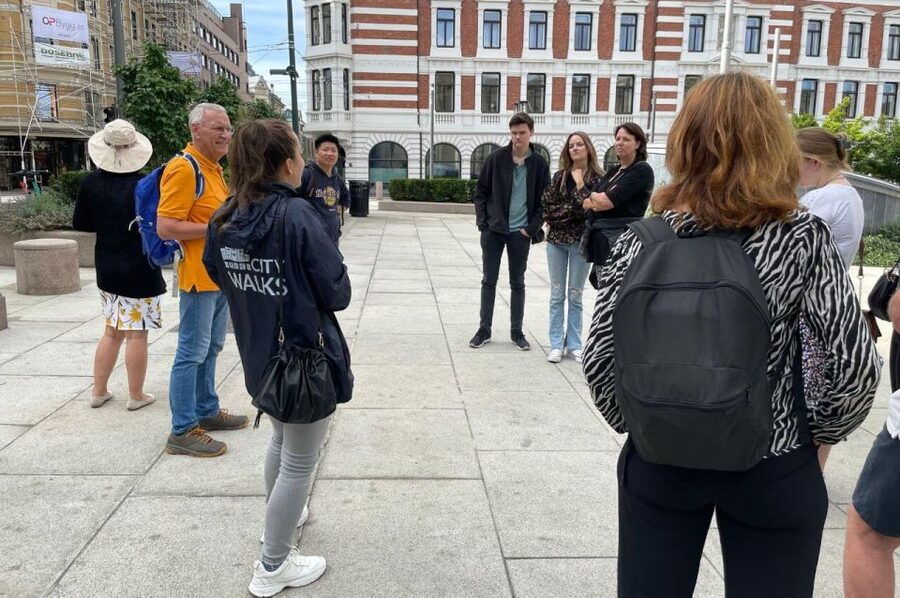
The final stretch reaches Aker Brygge and Tjuvholmen, described as Oslo’s alternative quarter. Here, the tone shifts from old government buildings and historic squares to restaurants, bars, waterfront paths, and newer urban development.
Aker Brygge is a practical end point. You can stop for food or drinks after the walk, and the guide’s local suggestions may help you choose. The tour itself does not include a meal, drink, or attraction admission, so budget separately if you plan to stay in the area.
Tjuvholmen adds another modern waterfront district to the route. Seeing it after Christiania Torv and Akershus Fortress makes the city’s changes easier to read. Oslo is not presented as one preserved old town. It is a capital that keeps adding new districts around an older core.
The walk finishes at Universitetsplassen or the Nobel Peace Center, depending on the option booked. Since the route includes the waterfront before returning toward the center, check your onward plans and allow time to walk or use public transport afterward.
What the guides add to the two hours
The guide is the heart of this experience. The route contains many buildings, but the explanations determine whether the outing feels like a connected story or a hurried checklist.
The best reported qualities are clear English, humor, local knowledge, and patience with questions. Olaf has been praised for stories about Oslo and Norway, while Anastasia has been noted for an engaging style and useful explanations. Minji was singled out for showing less obvious places, and Judit for tailoring the talk to questions and interests.
One practical detail matters in a group: a guide provided an earpiece to a group of 13, and another guide waited until everyone was close enough to hear. That does not guarantee the same arrangement on every departure, but it shows why group size and street noise can affect the experience.
The pace is generally described as comfortable, with the guide finishing on time without rushing. You should still expect a real city walk, not a short stroll between two buildings. Wear shoes suitable for paved streets and bring weather protection. Rain, hail, snow, and cold conditions have not necessarily stopped the walk, but they can change how enjoyable it feels.
Winter deserves special attention. Snow and uncleared sidewalks can make the route difficult for wheelchair users or anyone with limited mobility. One person in a wheelchair had to cut a winter tour short, even though the guide tried to help. Contact the provider before booking if accessibility is important to you.
The app and what it adds afterward
Your voucher includes a QR code for a sightseeing mobile app. After the guided walk, the app provides an audio-guided route through more of Oslo.
The self-guided sights include Frogner Stadion, Trinity Church, Grensen, Aamodt Bridge, the Norwegian Parliament, Karl Johan’s monument, and other points beyond the main two-hour route. This is useful if you want to keep exploring at your own pace or spread sightseeing over several days.
The app does not turn the tour into an attraction pass. Entry fees and public transport are not included, and the guided walk itself passes by the listed sights. Think of the app as a bonus route planner with audio context, not a substitute for museum tickets or transport.
I would scan the QR code before leaving the meeting area and check that the route is ready while you still have reliable phone access. The supplied information does not specify the app’s offline functions, so do not assume you can use every feature without a connection.
Is $38 a fair price?
At $38 per person, this is not the cheapest way to walk around Oslo. You can see many of the same outside views for free with a map and a little preparation.
The price makes more sense if you value a guide who can explain the links between the sights. In two hours, you cover Parliament, Karl Johan, the Cathedral, the Opera House, Kvadraturen, Christiania Torv, Akershus Fortress, City Hall, Aker Brygge, and Tjuvholmen. You also receive the audio app and can ask questions along the way.
The value is strongest for a first visit, a short stay, or a morning when you want to get oriented before choosing museums and neighborhoods. It is weaker for repeat visitors who already know the center, or for anyone seeking lengthy time inside attractions.
The booking terms also reduce some risk. You can cancel up to 24 hours ahead for a full refund, and you can reserve while paying later. Those terms are useful when weather or a changing schedule may affect your plans.
Who should book this Oslo walk?
I would choose this tour if you want:
- A first-day overview of central Oslo
- Historical context without a full-day commitment
- A guide who can answer questions about culture, government, cafés, and museums
- A route that combines old streets, civic buildings, fortress views, and modern waterfront districts
- A starting point for deciding where to spend the rest of your visit
- A self-guided audio route for continued sightseeing
I would choose something else if you want interior access, a museum-focused visit, or a slow photographic walk. You will pass many places, but entry is not part of the experience.
Should you book the Best of Oslo Walking Tour?
Book it if Oslo is new to you and you want a well-organized introduction before exploring on your own. The strongest reason to go is not the number of sights. It is the way a good guide links Christiania, the royal avenue, the Nobel story, the fortress, and the redeveloped harbor into one readable city story.
Choose an early departure if possible. That gives you the rest of the day to revisit the Opera House, Akershus Fortress, City Hall, Aker Brygge, or a museum that catches your interest. Bring rain gear, arrive early, and treat the app as a useful second chapter.
At $38, you are paying for orientation and human explanation rather than admission tickets. For a first Oslo day, that is a fair trade. For an independent visitor who already knows the center, it may be more walking than you need.
FAQ
How long does the Best of Oslo Walking Tour last?
The guided walk lasts approximately two hours.
Is the tour offered in English?
Yes. The tour is offered in English or German. You select your language when booking.
Where does the English tour meet?
The English tour meets near the statue of P.A. Munch by the Faculty of Law entrance at University Aula, Karl Johan Street 47.
Where does the German tour meet?
The German tour meets at the Nobel Peace Center at Brynjulf Bulls plass 1.
Are attraction entry tickets included?
No. The experience includes the guided walking tour and sightseeing app, but not entry to attractions or public transport tickets.
What happens after the guided tour?
You can scan the QR code on your voucher and use the included sightseeing app for an audio-guided route through additional Oslo sights.
Just added around Oslo
- Oslo Sea Kayak Tour: Explore The Incredible Oslofjord★ 4.5 · 31 reviews
- Oslo Sea Kayak Tour “Fjord City”★ 4.5 · 39 reviews
- Akerselva River Kayak/Packraft Tour: Urban Adventure in Oslo★ 4.5 · 42 reviews
- Maral Kunst : Jewelry Bar Experience (Jewelry Making)★ 5.0 · 3 reviews
- Oslo: Perfect Escape – Fun and exciting Escape Rooms★ 3.9 · 4 reviews
- Oslo: 3-hour Kayaking Trip on the Oslofjord★ 4.9 · 43 reviews
- Oslo Private Transfer Between Gardermoen Airport and City★ 4.0 · 27 reviews
- Private Transfer from Oslo Airport to Oslo City Centre★ 5.0 · 15 reviews
Walking Tours, compared.

Past & Present Small Group Guided Walking Tour
Read our review →
Walking Tour in Bergen of the Past and Present
Read our review →
Browse the lists this tour appears in