
Reviewed · TOURS IN OSLO
Unknown war. Oslo and Norway during 1940-45
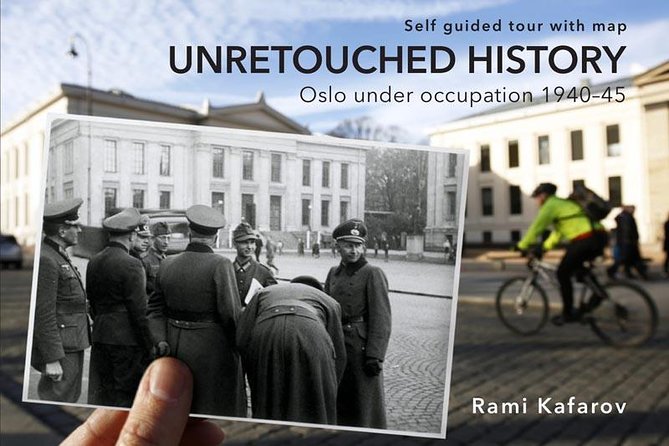
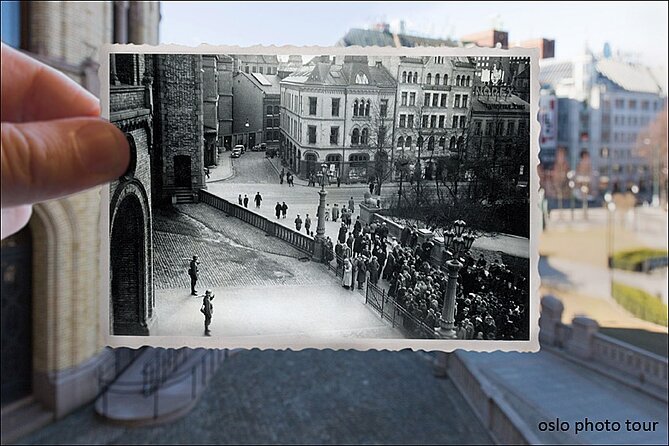
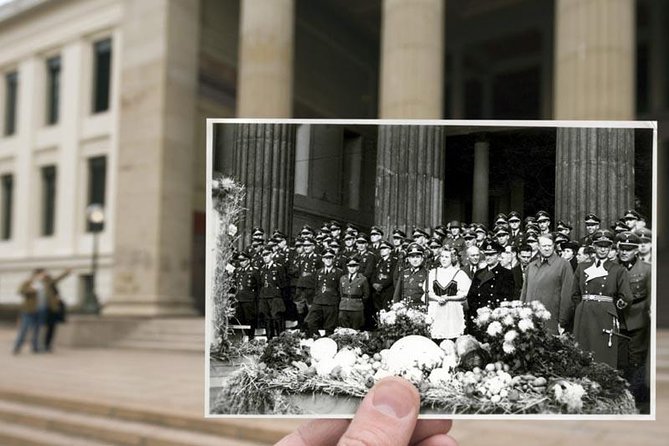
Oslo’s wartime story is easiest to grasp when you are standing in the places where it unfolded. This private walk links the Royal Palace, Parliament, University Square, Nationaltheatret, and Akershus Fortress with Norway’s occupation, resistance movement, and daily life under German rule. Guide Rami brings historic photographs to the street, often showing the same buildings as they looked during the war.
I especially like two things here. First, the old photographs turn an ordinary city stroll into a visual comparison between past and present. Second, the private format lets you ask questions, slow down for family members, or focus more on resistance history, civilian life, or Norway’s wider role in World War II. The main consideration is weather: this is an outdoor walking tour, and rain or cold can make the two and a half hours harder.
Key points
- Historic photographs at the exact locations: Rami uses period images to connect present-day Oslo with wartime events.
- A private group of up to five: You can shape the pace and discussion around your interests.
- Seven central Oslo stops: The route covers royal, political, academic, theatrical, and military sites.
- A useful pairing with the Resistance Museum: The walk ends at Akershus Fortress near the museum.
- A strong choice for history-focused visitors: The tour explains both resistance activity and everyday life during occupation.
- Plan for changing weather: Bring an umbrella or suitable clothing, since most of the experience takes place outside.
Oslo through the lens of 1940 to 1945
This is not a general city tour with a few wartime facts added at the end. The entire walk uses Oslo’s center as a setting for understanding the German occupation of Norway from 1940 to 1945.
That focus gives the tour a clear purpose. You are not simply checking off famous buildings. You are asking what these streets meant during the war, who controlled them, how Norwegian society responded, and where resistance stories fit into the city you see today.
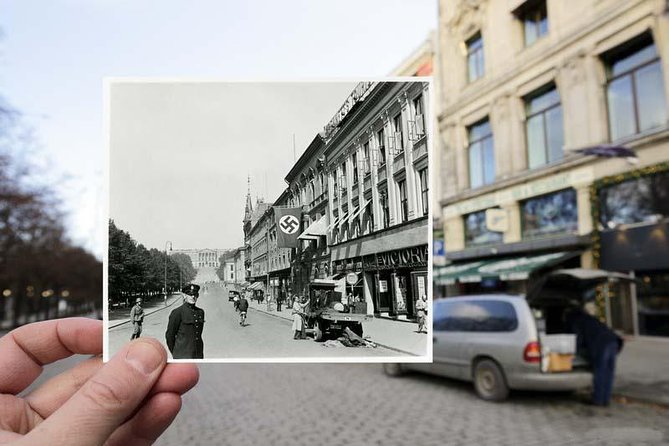
Rami’s presentation relies heavily on photographs from the period. That matters because many buildings remain in use, so you can compare the image in front of you with the scene from the war years. A photograph shown at the place where it was taken is far more useful than a long lecture detached from the city.
The tour also gives attention to ordinary people, not only famous leaders and resistance figures. That broader view helps explain occupation as a daily condition. You hear about Norway’s resistance movement, but also about how the period affected people living and working in Oslo.
Other days travellers book out of Oslo:
- Oslo: Scenic Fjord Cruise with Audio Guide Commentary
★ 4.5 · 5,375 reviews - Oslo Nature Walks: Island Hopping Tour
★ 4.8 · 2,713 reviews - Oslo: 100% Electric Oslofjord Sightseeing Cruise
★ 4.4 · 2,041 reviews
Starting at the Karl Johan Monument
The meeting point is the Karl Johan Monument in central Oslo, near Karl Johans gate. This is a practical place to begin because the route immediately places you in the city’s historic core.
You should arrive ready to walk and listen at the same time. The official stop times are listed as roughly 10 minutes each, but the full tour lasts about two hours and 30 minutes. That means walking between locations, transitions, questions, and the guide’s flexible explanations form an important part of the experience.
Because this is a private tour, you do not have to fit into the interests of a large group. If your family already knows the broad outline of World War II, you can ask for more detail about Norway. If the subject is new to you, Rami can build the story from the basic timeline and explain why each site matters.
The Royal Palace and Karl Johans gate
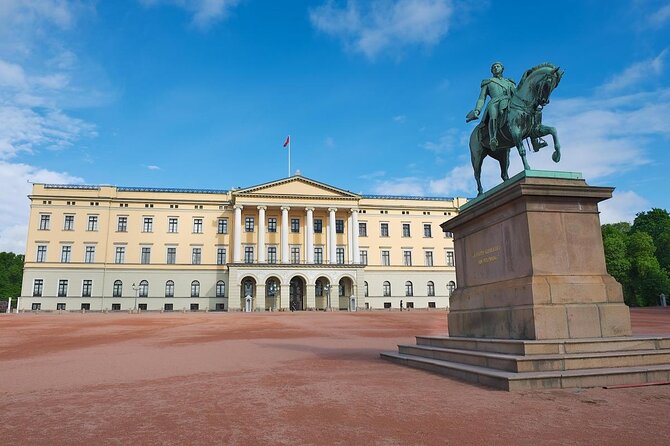
The Royal Palace is the first listed stop. The palace grounds provide an immediate connection to Norway’s national institutions and the wartime story of the capital.
The stop itself is brief, and admission is not included. This is primarily an exterior walking visit rather than a palace tour. You should not book this experience expecting indoor access or an extended look around the building.
From there, the route continues along Karl Johans gate, where several locations connect to World War II. This section works well early in the tour because it establishes Oslo as a living city rather than a museum set. You move along a major street while learning how familiar places were tied to the occupation.
I like this part for orientation. You see how close the major civic sites are to one another, and the guide can use the walk to connect separate events into one story. Since the route includes various locations along the street, the exact conversation may shift according to your questions and Rami’s chosen material.
Parliament and Stortorvet
The Norwegian Parliament is the next major civic stop. It gives the tour a natural way to discuss Norway’s political life during the war without leaving the central district.
Again, the listed stop is short and admission is not included. You should think of the Parliament visit as an exterior explanation, not a guided interior tour. Its value comes from the setting and the story attached to it.
The route then reaches Stortorvet, the market square. The square is a useful change of scene from formal government buildings. A public market place brings the story closer to daily life and the experience of ordinary residents.
The stop is free, and there is no admission ticket to worry about. I would use this point to ask Rami about civilian life, food, restrictions, and the difference between official wartime events and what people experienced on the street. The tour’s strength is its ability to move between national history and human scale.
Same base, a completely different day:
- Oslo: Fjord Evening Cruise with Shrimp Buffet
★ 4.5 · 1,956 reviews - Oslo: 3-Hour Highlights Bike Tour
★ 4.8 · 1,609 reviews - Oslo: 24 or 48-Hour Hop-On Hop-Off Sightseeing Bus Ticket
★ 4.1 · 1,470 reviews - Oslo: Guided Sightseeing Fjord Cruise on Premium Silent Boat
★ 4.7 · 1,390 reviews
University Square and the Faculty of Law
At the University of Oslo’s Faculty of Law, the tour reaches another part of the city’s institutional story. University Square offers an open setting and a chance to consider how education, public institutions, and civic life fit into the period.
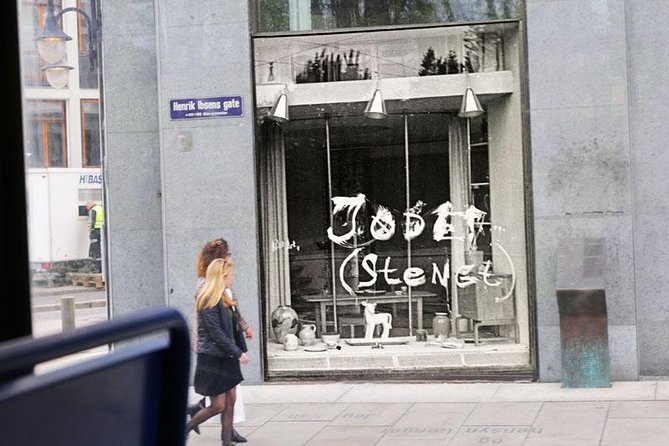
This is also one of the stops where photographs can do a lot of work. Seeing a familiar façade or square in its wartime form gives you a clearer sense of continuity. Many of the places connected to the tour still function today, so the past is not separated from modern Oslo by a museum wall.
The stop is free, and it is outside. If the weather is poor, this may be one of the less comfortable portions of the walk because there is no promise of indoor shelter. Bring an umbrella if rain is forecast. One family found that the guide was happy to clarify points while walking, but some older participants had difficulty catching every word outdoors. If anyone in your group has hearing concerns, ask Rami to repeat or slow down when needed.
Nationaltheatret and Gunnar Sønsteby
Nationaltheatret adds a cultural landmark to the route. The theatre is paired with the Gunnar Sønsteby monument, bringing the resistance story into sharper focus.
The tour uses the monument and surrounding area to show how public spaces can preserve memory. Rami’s wartime photographs help you connect the present monument and streetscape with the people and events being discussed.
The exact balance between broad context and individual stories will depend on your group. If you are especially interested in resistance figures, this is a good place to say so. The private setting makes that kind of adjustment possible, and the guide can spend more time on the subjects that matter most to you.
Admission is not included at Nationaltheatret. The advertised experience does not present this as an interior theatre visit, so you should expect to see the site from the walking route rather than attend a performance or take a backstage tour.
Ending at Akershus Fortress
The walk ends at Akershus Fortress, one of the most important locations on the route. The fortress gives the tour a strong finish because it brings together military, national, and resistance themes in one place.
The tour ends near the Norway’s Resistance Museum. Museum admission is not included in the tour price, but the location makes a self-guided visit afterward especially sensible. One effective plan is to take the walking tour first, then enter the museum while the sites and stories are still fresh.
The two experiences serve different purposes. Rami’s tour places the war in the streets and uses photographs to show what happened at specific locations. The museum can then provide a more formal collection-based experience. You do not need to combine them, but doing so can make a half-day of focused WWII history in Oslo.
The fortress is also a practical endpoint. If you are visiting Oslo on a short schedule, you finish near a major attraction rather than having to retrace your steps to the starting point. Check your onward plans carefully, especially if you have a fixed departure time.
What the private format adds
The price is $307.50 for the whole group, with up to five people included. For five participants, that works out to about $61.50 each. For two people, the effective cost is much higher, about $153.75 per person, so the value depends strongly on group size.
For a family or small group of history fans, the private arrangement has clear advantages. You can ask direct questions without waiting for a large group to move on. You can also let Rami know if you want more detail on the resistance, political events, daily life, or Norway’s contribution to the wider war.
The flexibility also matters for comfort. The guide has adjusted timing and arrangements for guests before, including offering alternative times when plans changed. You should still follow the stated cancellation rules, but the personal contact can be useful when your schedule is tight.
At the same time, this is not the cheapest way to get a general introduction to Oslo. If you want only a broad overview of the palace, Parliament, and fortress, a standard city walk may cover more sights for less money. This tour earns its price through its narrow subject, private attention, and visual material.
Who will get the most from this walk
I would recommend this tour most strongly if you already have an interest in World War II or want to understand Norway’s part in the conflict beyond the usual major battlefields.
It also works for families with different levels of background. Rami’s use of photographs gives younger participants something concrete to look at, while adults can ask about the political and military context. One family even used films about Norway’s wartime experience as preparation, which helped them follow the tour’s story. You do not need that preparation, but watching a relevant film beforehand could make the locations more meaningful.
The route is also useful early in an Oslo visit. Along with the wartime material, you get a quick introduction to central landmarks and the layout of the city. Several people have used it as a way to get their bearings, particularly when visiting Oslo on a cruise schedule.
I would be less likely to recommend it if you dislike outdoor walking, need a fully indoor activity, or want a general tour with many unrelated attractions. The route is compact, but the subject matter requires sustained attention. You will get more from it if you are willing to stop, look closely, and follow a story that moves between buildings, photographs, and historical events.
Timing, weather, and practical comfort
The advertised duration is approximately two hours and 30 minutes. The tour is offered in English and is private for your group alone.
The listed operating hours are Monday through Thursday from 9:00 a.m. to 4:00 p.m. Availability is subject to confirmation, so you should wait for the booking confirmation before treating a particular time as fixed.
Wear comfortable shoes. The route links several central locations, and even short stops add up when combined with walking and standing. Bring an umbrella or rain layer if the forecast is uncertain. A previous outing continued in wet weather, and the subject remained worthwhile, but rain clearly made the experience less comfortable.
Most people can participate, and service animals are allowed. Still, the tour is primarily outdoors and involves listening while walking. If someone in your group has trouble hearing, tell the guide at the beginning and ask to pause when necessary.
Free cancellation is available up to 24 hours before the start time for a full refund. Changes or cancellations made within 24 hours are not accepted for a refund. Poor weather or failure to meet the minimum number of participants can lead to a new date or a full refund.
Should you book this Oslo WWII tour?
Book it if you want a focused account of Norway under occupation, prefer a private guide, and value seeing historic photographs at the places they depict. Rami’s strongest contribution is the link between image and location. He does not leave the war in an abstract timeline. He puts it on the street in front of you.
The tour is especially good for a group of three to five, since the price becomes easier to justify. Add the Resistance Museum afterward if you want a fuller afternoon, but remember that museum entry is separate.
Skip it if your priority is an inexpensive overview of Oslo, indoor sightseeing, or a fast list of landmarks. For a history-minded visitor, though, this is one of the more purposeful ways to understand the capital. You leave with a clearer sense of how the occupation shaped the city and how much of that story remains visible in modern Oslo.
FAQ
Where does the tour start?
The tour starts at the Karl Johan Monument in central Oslo, at Karl Johan-monumentet, Sentrum, 0010 Oslo.
Where does the tour end?
It ends at Akershus Fortress, near Norway’s Resistance Museum, at 0150 Oslo.
How long does the experience last?
The walking tour lasts approximately two hours and 30 minutes.
Is the tour private?
Yes. Only your group participates, and the private booking can include up to five people.
Is the tour offered in English?
Yes. English is the offered language.
Is admission to the attractions included?
No. Admission tickets are not included for locations where entry may be required. The tour ends near Norway’s Resistance Museum, but museum admission is separate.
Just added around Oslo
- 4 hours Best View of the Oslofjord Winter Edition★ 4.0 · 15 reviews
- Oslo Winter Highlights Bike Tour★ 5.0 · 36 reviews
- The Ultimate Norwegian Skiing Experience★ 5.0 · 16 reviews
- Visit the Instaworthy Spots of Oslo’s Vigeland Park with a Local★ 5.0 · 4 reviews
- The Viking Planet Museum – Mini Group (4 adults)★ 4.0 · 16 reviews
- The Ultimate Study of the Human Form at Vigeland’s Sculpture Park with a Local★ 4.0 · 14 reviews
- Fjord Houseboat Cruise in Oslo. 100 % electric. BYO★ 5.0 · 3 reviews
- The Oslo Beer Adventure★ 4.5 · 11 reviews
Tours in Oslo, compared.

Scenic Fjord Cruise with Audio Guide Commentary
Read our review →

Guided Sightseeing Fjord Cruise on Premium Silent Boat
Read our review →
Browse the lists this tour appears in