
Reviewed · WALKING TOURS
Oslo: 3-hour Private Walking Tour of Bohemian Grünerløkka
The best part of this tour is the way it gets you away from Oslo’s grand civic sights and into a neighborhood of artists, old factories, and colorful wooden homes. You’ll follow the river, pass street art and music venues, and visit the cemetery where Edvard Munch is buried.
I like the stop at Blå, with its giant chandelier and changing street-art setting, and I like the practical finish at Mathallen, Oslo’s food hall. The main drawback is price: $461 for a private group of up to one person is a serious outlay, so this makes the most sense when you value a private guide and can share the cost within your booking arrangement.
Key points at a glance
- A creative side of Oslo: See Grünerløkka through its art, music, old industry, parks, and independent spirit.
- Edvard Munch’s Oslo: Visit Our Saviour’s Cemetery, where Munch rests alongside Henrik Ibsen and Bjørnstjerne Bjørnson.
- Strong photo stops: Blå, Damstredet, and Telthusbakken provide some of the tour’s most memorable views.
- A useful lunch finish: The walk ends by Mathallen in the Vulkan district, so you can eat immediately afterward.
- Private and multilingual: Choose from English, Spanish, French, German, Italian, or Norwegian, with a guide assigned to your own group.
- A true walking tour: Expect three hours on foot, including riverside paths, streets, and hillside lanes.
Why Grünerløkka is the right place to see another Oslo
Grünerløkka is often described with fashionable labels, but the appeal is more grounded than that. This former industrial quarter brings together brick buildings, small houses, public art, parks, music spaces, and the Akerselva river.
I like that the tour treats the district as a living part of Oslo rather than a collection of postcard stops. You’ll hear about artists and free thinkers, but you’ll also see how old industrial spaces have been given new uses.
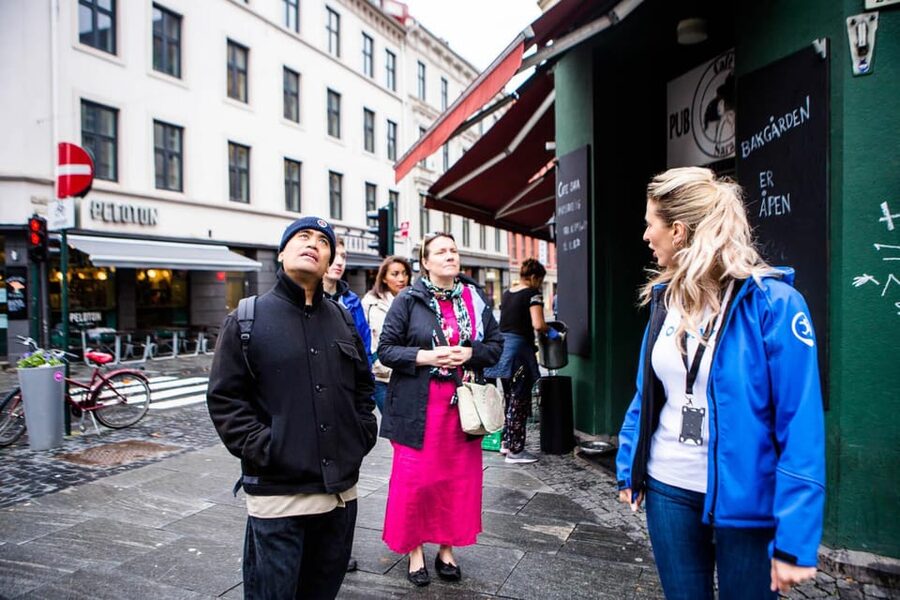
The route begins at Youngstorget, by the fountain in the middle of the square. The guide arrives about ten minutes before departure and carries a sign with the local partner’s name. From there, you move through Sentrum and along Torggata before reaching the streets and river paths of Grünerløkka.
Other guided walks in Oslo:
- Oslo Nature Walks: Island Hopping Tour
★ 4.8 · 2,713 reviews - Oslo Nature Walks: Island hopping
★ 5.0 · 570 reviews - Oslo: Best of Oslo Walking Tour
★ 4.5 · 458 reviews
From Youngstorget to the Akerselva
The opening half hour in central Oslo gives you a useful transition from the city center to the more informal streets ahead. You’ll pass through Torggata and see Kulturkirken Jakob, a church used as a cultural venue.
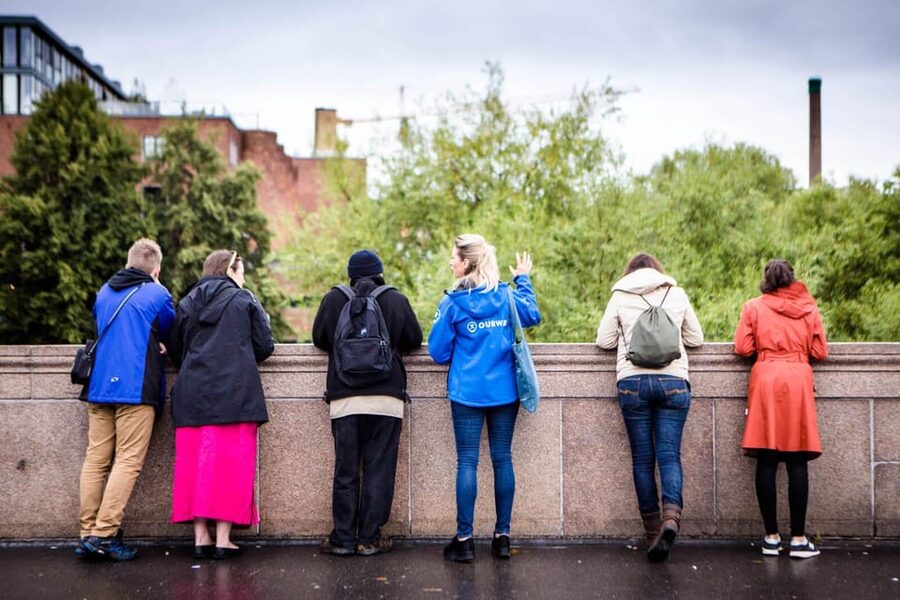
Ankerbrua marks an important change in mood. From here, the route moves toward the Akerselva and the Grünerløkka district. The river is one of the tour’s strongest threads. It brings water, old brick industry, and greenery into the middle of the city.
The walking is not difficult in the sense of a mountain hike, but it is continuous. Wear shoes that can handle three hours on pavement and uneven city paths. If rain is forecast, bring proper clothing rather than relying on a quick stop in a shop.
Olaf Ryes plass and the character of Grünerløkka
Olaf Ryes plass gives you a first clear look at the neighborhood’s social and visual character. The tour uses the square and surrounding streets to explain why Grünerløkka became associated with creative people, artists, and independent-minded locals.
This is one of the reasons a private format can work well. You can ask why certain buildings matter, how the area changed, or where Munch lived nearby. The tour description notes that Munch had several addresses in the area, which adds a local layer to the cemetery visit later.
The route is not built around grand monuments. Instead, you’ll be reading the city through smaller details: a building front, a wall painted with street art, an old factory structure, or a park tucked between streets. If you want a checklist of major Oslo sights, this is not the best choice. If you want to understand a neighborhood, it is a better fit.
Blå, Brenneriveien, and Oslo’s street-art side
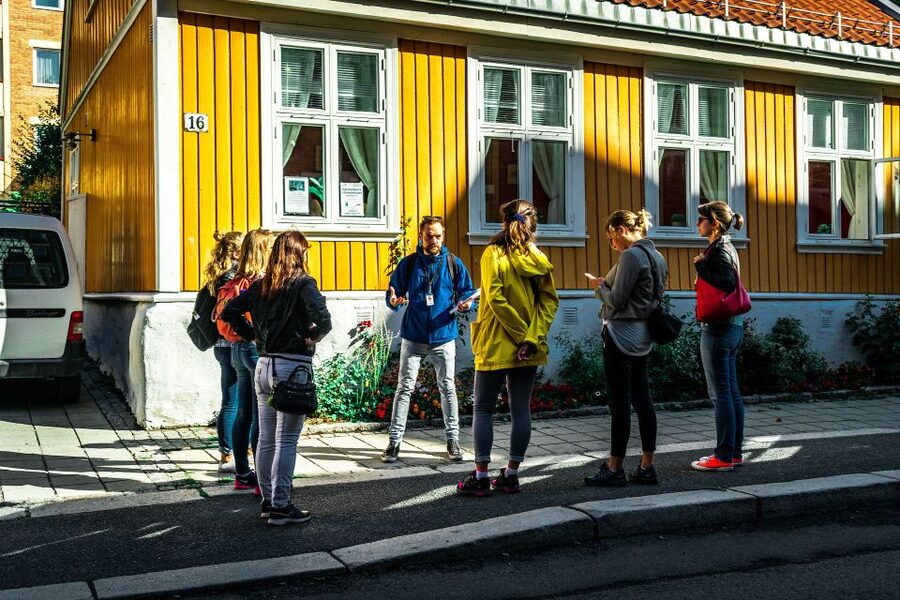
Blå is one of the tour’s most distinctive stops. This music venue is known for its colorful surroundings and a large chandelier, creating a memorable contrast with the industrial setting.
You’ll have time for a photo stop here, though it is worth keeping your expectations sensible. This is a sightseeing stop, not a scheduled concert or an inside tour of the venue. The appeal is the setting, the public art, and the way Blå represents Grünerløkka’s music and creative culture.
The walk continues along Brenneriveien, where old industrial brick buildings and graffiti become part of the story. I like this section because it explains why the district feels different from central Oslo. Instead of polished civic architecture, you get working-city textures and spaces that have been adapted for new cultural uses.
One verified account described the industrial part of the city and its artwork as a particular highlight. That matches the route well. The appeal is not just taking pictures. You see how art, music, and old industry share the same few blocks.
Same base, a completely different day:
- Oslo: Scenic Fjord Cruise with Audio Guide Commentary
★ 4.5 · 5,375 reviews - Oslo: 100% Electric Oslofjord Sightseeing Cruise
★ 4.4 · 2,041 reviews - Oslo: Fjord Evening Cruise with Shrimp Buffet
★ 4.5 · 1,956 reviews - Oslo: 3-Hour Highlights Bike Tour
★ 4.8 · 1,609 reviews
Damstredet and Telthusbakken: Oslo’s best small streets
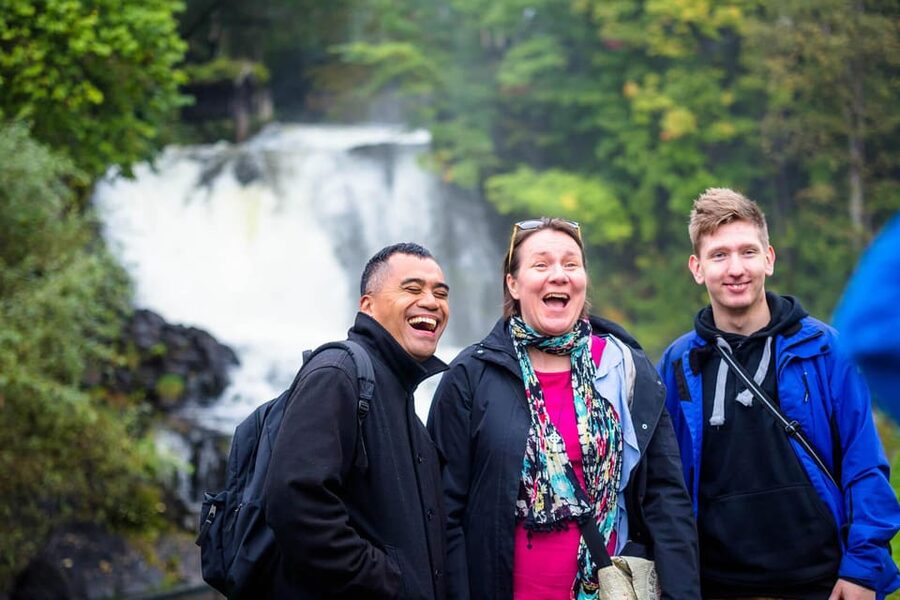
Damstredet is one of the prettiest sections of the walk. Its colorful houses sit close together and offer a strong contrast to the brick industrial areas near the river.
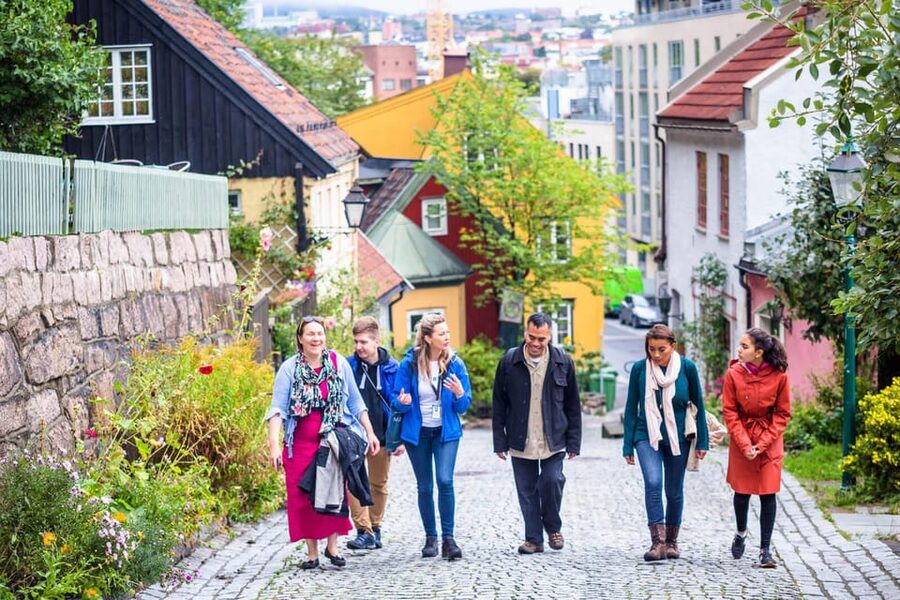
This is a natural place to pause for photos. The houses and gardens feel intimate, and the scale changes again when you reach Telthusbakken. The route takes you down this quaint hillside street, where small homes and planted gardens create one of the tour’s most appealing scenes.
You should know that picturesque streets are best appreciated at a walking pace. They are not large attractions with a visitor center or many formal displays. Your guide’s explanation is what gives the stop meaning, especially if you want to understand how these older residential pockets fit into modern Oslo.
The route may also include a look at Quan Thang Ancient House. The supplied details do not describe an interior visit, so treat this as a sightseeing point rather than a guaranteed house tour. Your guide can place it within the wider story of the district.
Our Saviour’s Cemetery and Munch’s Oslo
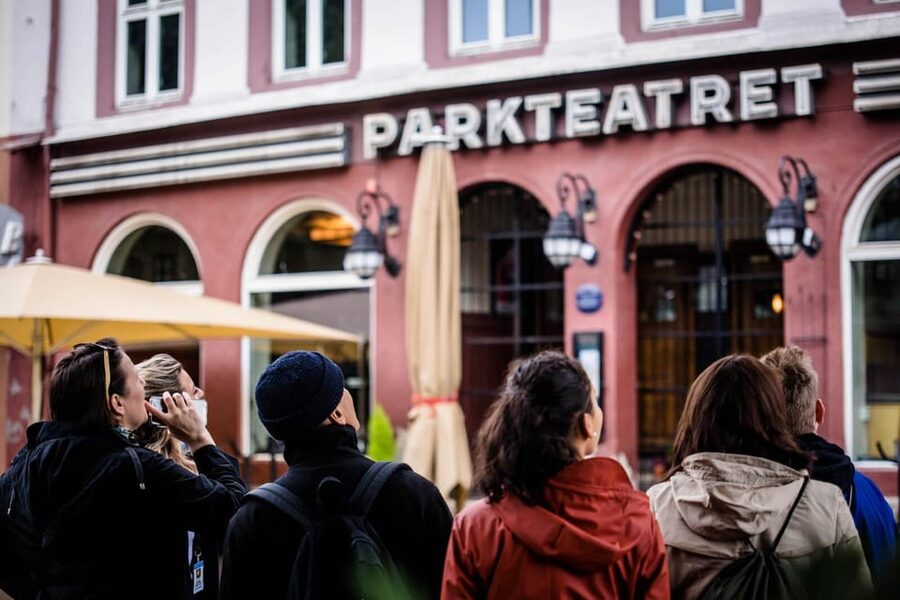
Our Saviour’s Cemetery gives the tour a quieter turn. Here you can visit the graves of three major Norwegian figures: Henrik Ibsen, Bjørnstjerne Bjørnson, and Edvard Munch.
Munch is the name most people will be watching for, especially after hearing that he lived at several addresses in the area. The cemetery stop connects the artist to the streets you have already walked, rather than presenting him as a distant museum figure.
This is also a useful stop for anyone interested in Norwegian culture beyond the usual tourist route. Ibsen, Bjørnson, and Munch represent different parts of the country’s literary and artistic identity, and seeing their graves together gives the neighborhood a strong cultural focus.
The cemetery is a sightseeing stop, not a long museum visit. If you want detailed art analysis or a full account of Munch’s work, plan a separate visit to Oslo’s art museums. Here, the value comes from place: you are seeing where Munch is buried while walking through an area tied to his life.
Finishing at Mathallen and Vulkan
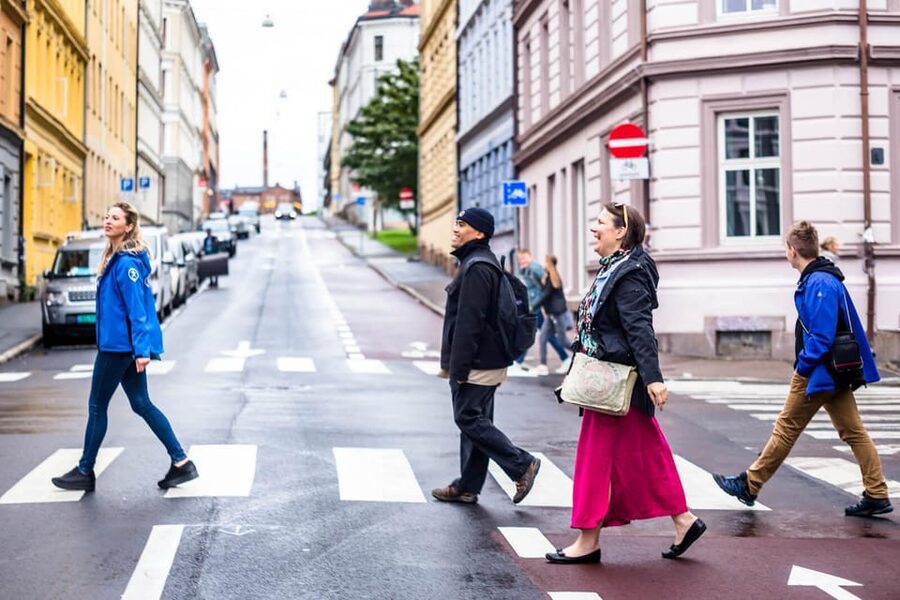
The tour ends at Vulkan 16, by the entrance to Mathallen Oslo. This is a smart finish. After three hours on foot, you can stop for lunch without having to work out where to go next.
Mathallen is located in the Vulkan neighborhood, a former industrial area developed with food and environmental themes in mind. The old industrial buildings and nearby graffiti continue the visual thread of the walk, while the food hall gives you an easy chance to pause, eat, and stay in the area.
The tour does not include lunch, so budget separately for food. That is not a flaw, but it matters when comparing the total cost. The guide leaves you at a place where you can choose your own meal rather than being tied to a set restaurant.
You can also continue exploring Grünerløkka after the tour. If you need to return to Youngstorget, allow about a 15-minute walk, roughly one kilometer, or use public transport. Your return ticket is not included.
What the private format adds
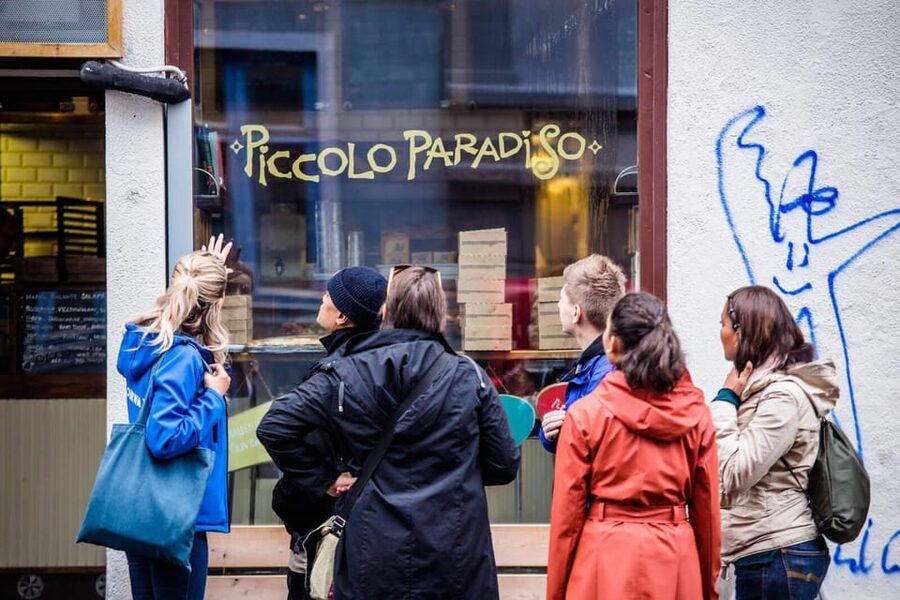
The price is listed at $461 for a private group of up to one person. That is expensive for a three-hour city walk if you are booking alone. The value improves if the booking arrangement allows the cost to be shared, or if having your own guide is especially important to you.
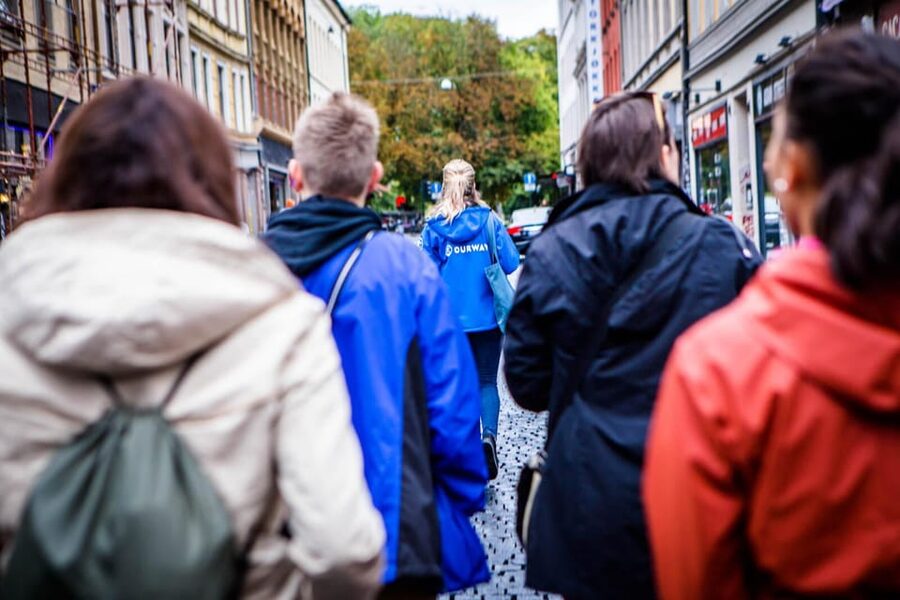
A private tour gives you a more flexible setting than a large group walk. You can ask more questions about Munch, street art, the river, or the neighborhood’s industrial past. You can also tell the guide what interests you most, although the exact amount of flexibility depends on the guide and the pace of your group.
The named guides in the supplied feedback include Diana and Tone. Diana was praised for being flexible and engaging, while Tone was singled out for strong knowledge of the city’s history and art. You should not assume you will receive either guide, but those comments suggest the experience can benefit greatly from the person leading it.
The tour is available in English, Spanish, French, German, Italian, and Norwegian. Confirm your preferred language when booking, since the quality of any walking tour depends heavily on clear communication.
The practical tradeoffs before you book
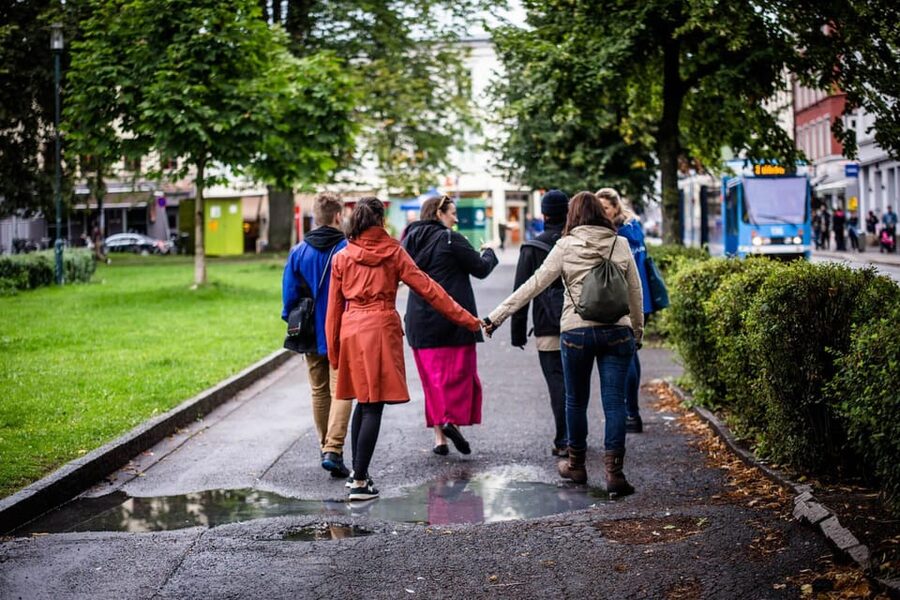
The 3-hour length is long enough to cover several distinct parts of Oslo without taking over your whole day. Ending around lunchtime is especially useful if you want to pair the walk with a meal at Mathallen.
The tradeoff is that you need to stay on your feet for the full route. Comfortable shoes and weather-appropriate clothing are essential. Oslo weather can change, and the tour does not become an indoor experience simply because conditions are poor.
The meeting point is easy to identify: Youngstorget fountain in the city center. Arrive with enough time to find the square, and look for a guide holding the local partner’s sign. The guide is expected to be there about ten minutes before departure.
Cancellation is flexible up to 24 hours before the start for a full refund, and you can reserve now and pay later. Those terms are useful if your Oslo schedule is still moving around, but they do not change the basic question: can you justify the private-tour price?
Who will enjoy this Grünerløkka walk?
I would choose this tour if you have already seen Oslo’s central sights and want a more local-feeling district. It suits people who enjoy street art, city history, music venues, old buildings, literary figures, and good photo stops.
It is also a good choice for a private group that wants a guide’s attention without spending a full day outside the city. The route gives you several different moods in one morning: central streets, riverside paths, industrial buildings, hillside homes, a cemetery, and a food hall.
I would hesitate if your main goal is a low-cost introduction to Oslo. At $461, this is not a casual budget walk. I would also hesitate if you want access to museums or inside visits, since most of the route is outdoor sightseeing.
Should you book this Oslo walking tour?
Book it if you want Grünerløkka explained through its people and places, not just photographed from a passing tram. Blå, Damstredet, Telthusbakken, Munch’s grave, and the Akerselva give the walk a varied and memorable shape.
Skip it if you are traveling alone on a tight budget or prefer major landmarks and indoor attractions. For everyone else, the best plan is to start with comfortable shoes, follow the river, ask about Munch’s local addresses, and keep your lunch hour free at Mathallen.
FAQ
Where does the tour start?
The tour starts at the fountain in the middle of Youngstorget, in Oslo’s city center. The guide arrives about ten minutes before departure and carries a sign with the local partner’s name.
Where does the tour end?
It ends at Vulkan 16, by the entrance to Mathallen Oslo in the Grünerløkka district.
How long is the walking tour?
The tour lasts three hours. The route includes about 30 minutes in Sentrum and about 2.5 hours focused on Grünerløkka.
Is this a private tour?
Yes. It is offered as a private group experience.
What languages are available?
The tour is available in English, Spanish, French, German, Italian, and Norwegian.
Does the price include lunch at Mathallen?
No. The tour ends near Mathallen, but lunch is not included in the stated price.
Can I visit Mathallen after the tour?
Yes. The tour ends by the entrance, so you can stay in the Vulkan area and visit Mathallen afterward.
How do I return to the starting point?
You can walk back to Youngstorget in about 15 minutes, a distance of roughly one kilometer, or use public transport. A public transport ticket is not included.
What should I bring?
Bring comfortable shoes and clothing suitable for the weather.
Can I cancel for a full refund?
Yes. You can cancel up to 24 hours in advance for a full refund. You can also reserve now and pay later.
Just added around Oslo
- 4 hours Best View of the Oslofjord Winter Edition★ 4.0 · 15 reviews
- Unknown war. Oslo and Norway during 1940-45★ 5.0 · 74 reviews
- The Ultimate Norwegian Skiing Experience★ 5.0 · 16 reviews
- Oslo Winter Highlights Bike Tour★ 5.0 · 36 reviews
- Visit the Instaworthy Spots of Oslo’s Vigeland Park with a Local★ 5.0 · 4 reviews
- The Viking Planet Museum – Mini Group (4 adults)★ 4.0 · 16 reviews
- The Ultimate Study of the Human Form at Vigeland’s Sculpture Park with a Local★ 4.0 · 14 reviews
- Fjord Houseboat Cruise in Oslo. 100 % electric. BYO★ 5.0 · 3 reviews
Walking Tours, compared.
Past & Present Small Group Guided Walking Tour
Read our review →
Walking Tour in Bergen of the Past and Present
Read our review →
Browse the lists this tour appears in