
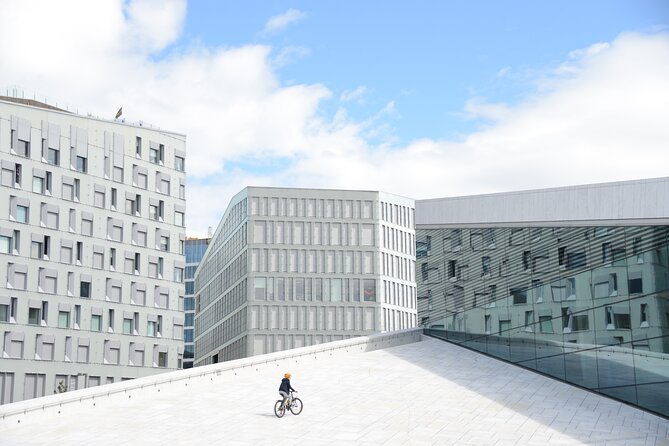
Reviewed · WALKING TOURS
Oslo City Walks: The City of Contrasts
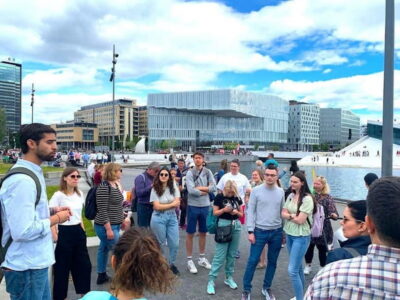
Oslo’s most interesting story is written in its buildings. On this two-hour walk, you’ll see how an industrial city is making room for new museums, public spaces, transport links, and bold architecture, with an authorized local guide explaining the changes as you go. The route leads from Østbanehallen across the Acrobat pedestrian bridge, through Bjørvika and Bispevika, and ends beside the Opera House and Deichman Library.
I like the tour’s focus on modern Oslo, rather than a quick checklist of famous sights. I also like the easy meeting point, the chance to ask questions, and the relaxed walking pace praised by one past participant. The main caution is that this is not a full introduction to every major sight in Oslo, and a large group or a less lively guide could make the experience feel flat.
Key points to know before you go
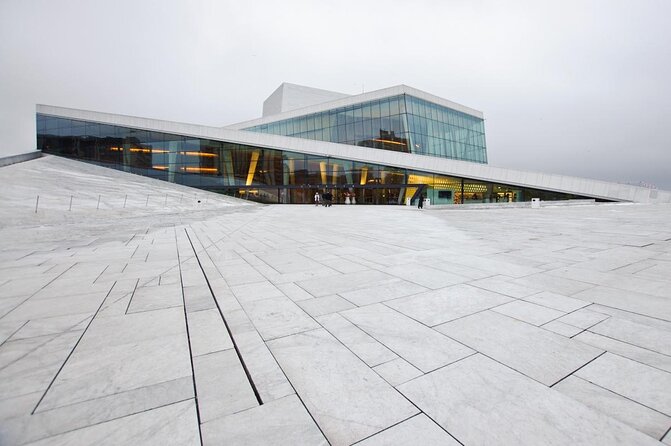
- A city-changing route: Walk from Oslo Central Station into Bjørvika, where old industrial ground meets new cultural buildings.
- Architecture is the main subject: The walk gives special attention to the Munch Museum, Deichman Library, the Opera House, and the contrast between older and newer structures.
- A useful first-evening activity: The Monday evening departure can help you get your bearings soon after arriving in Oslo.
- A steady two-hour walk: Wear good shoes and arrive 10 minutes early at the Oslo Visitor Centre in Østbanehallen.
- English and Norwegian guides: The tour is led in either English or Norwegian by an authorized Oslo guide.
- Good value for architecture fans: At $52 per person, the price makes the most sense if you want context and conversation, not just landmark photos.
Why Oslo’s new buildings tell the real story
Many city walks take you straight to old churches, royal residences, and postcard views. This one takes a different path. It treats Oslo as a city in the middle of a major rebuild, where transport, industry, museums, libraries, and public spaces are changing the feel of the waterfront.
That makes the tour useful if you want to understand why Oslo looks the way it does today. You are not simply moving from one sight to the next. You are watching the city connect its central station with the waterfront and build a new cultural district around Bjørvika and Bispevika.
I like that practical approach. A new building can look impressive in a photograph, but a guide can explain what it replaced, how it fits into the city, and why the area matters. The tour’s value rests on that commentary. Without it, much of the walk would be a pleasant route through modern architecture. With a good guide, it becomes a lesson in urban change.
The focus also means you should set your expectations correctly. This is not designed as a grand tour of Oslo’s entire past. You will not cover every central attraction in two hours. The appeal is narrower and clearer: old Oslo beside new Oslo, with the city’s expansion and industrial growth as the main thread.
Other guided walks in Oslo:
- Oslo Nature Walks: Island Hopping Tour
★ 4.8 · 2,713 reviews - Oslo Nature Walks: Island hopping
★ 5.0 · 570 reviews - Oslo: Best of Oslo Walking Tour
★ 4.5 · 458 reviews
Starting inside Østbanehallen
You meet in front of the Oslo Visitor Centre inside Østbanehallen, at Jernbanetorget 1. This is a practical place to begin because the hall is part of Oslo Central Station, making it easy to reach by public transport or on foot from nearby parts of the center.
Arrive about 10 minutes before departure. That small buffer matters in a station setting, where several entrances and indoor walkways can make a first visit slightly confusing. Look for the Visitor Centre rather than waiting outside on an open street.
The tour is listed for Monday evening. That timing gives the outing a useful role in your trip. If you have just arrived, you can get an early sense of the central station, waterfront connections, and new cultural quarter before exploring them on your own.
An evening start also affects photographs and comfort. Oslo weather can change quickly, and light levels vary with the season. Bring a weatherproof outer layer and wear walking shoes. High heels are not allowed, and they would be a poor choice for the bridge and city streets in any case. Drones are also prohibited.
Crossing the Acrobat pedestrian bridge
The first memorable part of the route is the walk over the Acrobat bridge by Oslo Central Station. The bridge carries pedestrians toward Bjørvika and gives you a clear example of how Oslo links its railway hub with the waterfront redevelopment area.
This is more than a crossing from one neighborhood to another. It helps you see the city as a connected project. The station, new buildings, pedestrian routes, and waterfront spaces are being tied together so the center works for people on foot as well as for trains and roads.
You will want to pause for photographs, but keep in mind that the tour is moving. The walk is guided rather than a private photo session, so you should be ready to listen and keep pace with the group. If you like architecture, notice the bridge itself as well as the buildings around it. The contrast between practical transport infrastructure and showpiece cultural buildings is central to the tour.
The bridge section may also be one of the points where group size matters most. A larger group can make it harder to hear commentary or gather around a particular view. One past participant specifically disliked the size of the group, so ask yourself how much you value an intimate setting before booking.
Reading Bjørvika as Oslo’s new front door
After crossing the bridge, the walk continues into Bjørvika. This district is the clearest expression of the tour’s theme. Former industrial and working areas are now being reshaped with cultural buildings, housing, walkways, and public spaces.
You will pass through Bispevika and see how older parts of the city meet newer construction. The point is not that the old has vanished. The point is that Oslo is adding a new layer beside it, and the sharp change in materials, scale, and purpose gives the district its character.
A guide can make this section much more useful by explaining the city’s industrial growth and expansion. The tour description places that modernization at the center, so expect discussion of how Oslo developed into an industrial hub and how its infrastructure supports continued growth.
This is also where the tour may feel less traditional than a standard sightseeing walk. If you want castles, historic interiors, or long stories about medieval Oslo, the route may leave you wanting more. If you want to see the city’s present direction, Bjørvika gives you plenty to consider.
I would bring a camera, but I would also pay attention to the transitions. Look at where older structures remain, where new walkways begin, and how the public buildings face the water and station area. Those details help you understand the city better than a single landmark does.
Same base, a completely different day:
- Oslo: Scenic Fjord Cruise with Audio Guide Commentary
★ 4.5 · 5,375 reviews - Oslo: 100% Electric Oslofjord Sightseeing Cruise
★ 4.4 · 2,041 reviews - Oslo: Fjord Evening Cruise with Shrimp Buffet
★ 4.5 · 1,956 reviews - Oslo: 3-Hour Highlights Bike Tour
★ 4.8 · 1,609 reviews
The new Munch Museum and Oslo’s cultural shift
The route passes by the new Munch Museum, one of the strongest examples of Oslo’s contemporary architectural ambition. Even if you do not enter the museum, seeing it as part of the walk gives you a chance to think about how art institutions are being used to reshape the waterfront.
The museum is important here less as an art stop and more as an urban marker. It signals that Bjørvika is not only a transport or commercial district. Oslo is making culture part of the area’s identity, alongside public access and new construction.
Do not expect a museum visit during this activity. The walk passes by the building, and the two-hour schedule is built around outdoor sightseeing and commentary. If you want to visit the Munch Museum, plan that separately and leave enough time for it.
This stop also shows why the tour suits repeat visitors to Oslo. If you have already seen the classic center, this walk gives you a different way to read the city. You get a closer look at the newer districts and the choices behind them rather than another quick circuit of familiar monuments.
Finishing beside Deichman Library and the Opera House
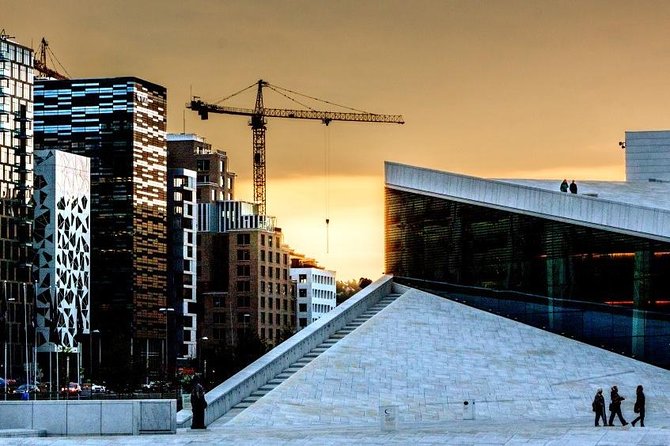
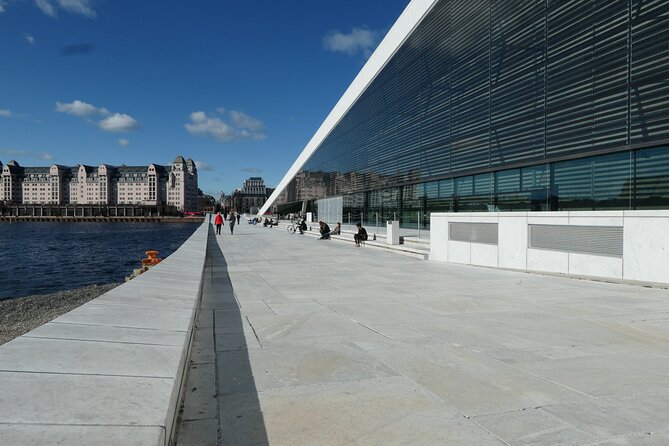
The tour ends at Deichman Library, next to the Opera House. This is a strong finish because both buildings help explain Oslo’s effort to create public cultural spaces in the newer waterfront district.
The library represents everyday public use. The Opera House represents a major cultural institution and one of the city’s most recognizable modern buildings. Together, they show that the new Oslo is not only about offices and transport. It is also about places where people can read, gather, attend performances, and spend time in the city center.
The Opera House is especially useful as a final reference point. Its setting gives you a natural place to continue exploring after the tour, take photographs, or find your way back toward central Oslo. Since the walk ends there rather than returning you to the Visitor Centre, check your plans before starting.
The finish is also a reminder of the tour’s limited scope. You see important modern landmarks, but you do not get a complete city tour. One past participant felt the outing covered too few Oslo sights, which is a fair criticism if you are visiting for only a short time and want maximum landmark coverage.
For that reason, I would pair this walk with a separate visit to the traditional sights you most want to see. This tour works best as the part of your Oslo plan that explains the city’s newer face.
How the guiding can shape the experience
The guide is the heart of this activity. The route itself is straightforward, but the meaning of the buildings, bridge, industrial areas, and waterfront depends on the explanation you receive along the way.
The tour is led by an authorized Oslo guide, in English or Norwegian. You should have opportunities to ask questions, and one especially positive account praised the guide, the ability to ask anything, and the comfortable pace. That is exactly what this route needs. A steady walk with room for questions is more useful here than a hurried march between photo stops.
At the same time, guide quality can vary. One past participant described the guide as lacking personality, while another found the guide fantastic. That mixed experience is worth taking seriously. If your guide delivers clear context and responds well to questions, the tour can feel personal and informative. If the commentary is dry, the modern buildings may not hold your attention for two hours.
The group size matters too. A big group can make the walk less flexible and make questions harder to hear. If you prefer small, quiet tours, this may not be your ideal format. If you like a scheduled route and do not mind sharing the experience, the group setting is less of a concern.
What $52 buys you
The price is $52 per person, and the only listed inclusion is the authorized guide. You are paying for the route, local explanation, organization, and two hours of guided walking. Museum admission, food, and transport beyond the walking route are not included.
That can be fair value if you are interested in architecture, planning, and Oslo’s industrial transformation. A good guide can help you understand details you would likely pass without noticing. The bridge, Munch Museum, library, and Opera House are all easy to see independently, but the added value comes from learning how they fit into the city’s larger change.
The price is harder to justify if your main goal is to collect as many famous sights as possible. The route covers a limited part of Oslo, and the tour does not promise entry to the major buildings. You could walk around Bjørvika on your own, take photographs, and see the same exterior landmarks for less money.
I would think of the $52 as a payment for interpretation, not admission. Book it if you enjoy asking questions and want a clear explanation of Oslo’s current development. Skip it if you prefer self-guided walks or need a broad overview of the city’s traditional sights.
The free cancellation option up to 24 hours before departure and the reserve-now, pay-later choice reduce the risk of committing early. Still, the practical value depends on showing up prepared and making use of the guide. Ask questions. Stop when the guide points out a detail. That is where the fee earns its keep.
Who should book this walk
I would recommend this activity to you if you like modern architecture, public transport systems, city planning, and the way old districts change over time. It also suits a first evening in Oslo, especially if you want a structured introduction without spending half a day on a long excursion.
It is a good match for repeat visitors who have already covered the main historic sights. The walk gives you a reason to visit Bjørvika and Bispevika with more attention than you might give them alone.
Families and mixed-age groups may also find the two-hour length manageable, though everyone should be ready for steady walking and outdoor weather. Good shoes matter more than dressy clothes, and high heels are not permitted.
I would be cautious about booking it if you want a small group, a highly theatrical guide, or entry into museums and landmark buildings. The tour is educational sightseeing, not a performance and not an attraction ticket.
Practical advice for a better two hours
Wear comfortable walking shoes and dress for the weather. The route includes outdoor sections, and the information specifically recommends good shoes and weather-appropriate clothing.
Arrive 10 minutes early at the Oslo Visitor Centre in Østbanehallen. The meeting point is indoors at Oslo Central Station, but you should still allow time to find the centre and locate the guide.
Keep your expectations focused on the city’s newer districts. The route includes the Acrobat bridge, Bjørvika, Bispevika, the Munch Museum, Deichman Library, and the Opera House. It is not meant to cover every important sight in Oslo.
Use the question time. Ask how the industrial areas changed, why the new buildings were placed where they are, or how the station and waterfront connect. The tour becomes more worthwhile when you take part rather than simply follow.
Plan what comes next at the Opera House. Since the walk finishes there, you can continue your evening from that area, but the tour does not return you to Østbanehallen.
Should you book Oslo City Walks?
Book this walk if you want to understand Oslo’s modern transformation and prefer explanation over a basic photo route. At $52, it is reasonable for a two-hour guided experience, especially when the guide is engaging and the group is not too large.
Do not book it as your only Oslo sightseeing activity if you want a broad survey of historic landmarks. The route is selective, and its main subject is the changing waterfront and the meeting of old and new architecture.
My advice is simple: choose it for the story of Bjørvika, the Acrobat bridge, the Munch Museum, Deichman Library, and the Opera House. Bring good shoes, arrive early, and treat the guide as your source of context. If modern cities interest you, this focused walk can add a useful layer to your Oslo visit. If you want a classic greatest-hits tour, spend the $52 elsewhere.
FAQ
Where does the Oslo City Walks tour begin?
The tour begins in front of the Oslo Visitor Centre inside Østbanehallen at Oslo Central Station, Jernbanetorget 1, 0154 Oslo.
How long does the tour last?
The walking tour lasts approximately two hours.
What languages are available?
The live guide leads the tour in English or Norwegian.
When does the tour take place?
The stated departure is on a typical Monday evening. You should check availability for the exact starting time.
Where does the tour finish?
The walk ends at Deichman Library, next to the Opera House.
What sights are included on the route?
The route includes the Acrobat pedestrian bridge at Oslo Central Station, Bjørvika, Bispevika, the new Munch Museum, Deichman Library, and the Opera House area.
What should I wear?
Wear good walking shoes and dress according to the weather. High-heeled shoes are not allowed.
Can I cancel my booking?
You can cancel up to 24 hours in advance for a full refund. The activity also offers a reserve-now, pay-later option.
Just added around Oslo
- 4 hours Best View of the Oslofjord Winter Edition★ 4.0 · 15 reviews
- Unknown war. Oslo and Norway during 1940-45★ 5.0 · 74 reviews
- The Ultimate Norwegian Skiing Experience★ 5.0 · 16 reviews
- Oslo Winter Highlights Bike Tour★ 5.0 · 36 reviews
- Visit the Instaworthy Spots of Oslo’s Vigeland Park with a Local★ 5.0 · 4 reviews
- The Viking Planet Museum – Mini Group (4 adults)★ 4.0 · 16 reviews
- The Ultimate Study of the Human Form at Vigeland’s Sculpture Park with a Local★ 4.0 · 14 reviews
- Fjord Houseboat Cruise in Oslo. 100 % electric. BYO★ 5.0 · 3 reviews
Walking Tours, compared.

Past & Present Small Group Guided Walking Tour
Read our review →
Walking Tour in Bergen of the Past and Present
Read our review →
Browse the lists this tour appears in