
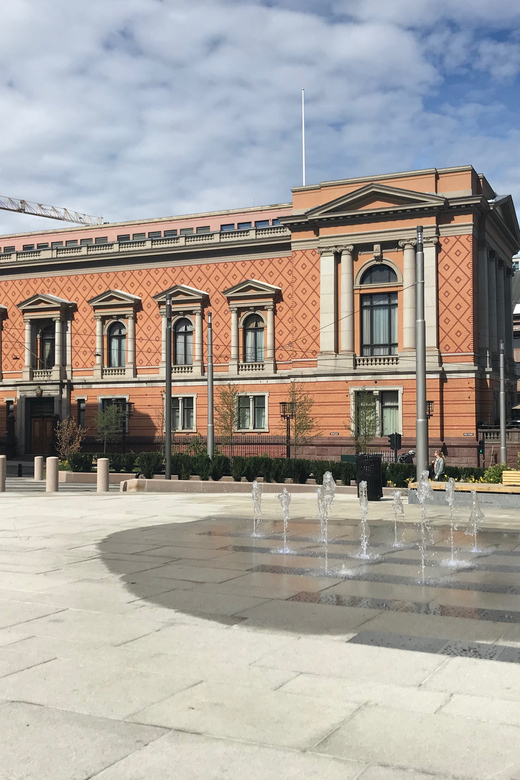
Reviewed · CITY SIGHTSEEING TOURS
Oslo: City Highlights Walking Tour
Oslo’s story makes the most sense when you walk it from old to new. This two-hour German-language tour links the Nobel Peace Center, Akershus Fortress, Christiania Torv, Karl Johan Street, and the Opera House, showing how Oslo grew from a medieval settlement into a modern capital.
I like the route for two clear reasons: it gives you a useful first map of central Oslo, and the guides cover more than buildings. You’ll hear about Norwegian language, government, relations with Denmark and Sweden, and daily life in the city. The main drawback is the pace: moderate walking is required, and the tour continues in ordinary rain or cold unless severe storms make it unsafe.
Key points to know before booking
- A practical old-to-new route: Begin near the Nobel Peace Center, pass the medieval fortress and original city district, then finish near the University of Oslo.
- German-language guiding: The tour is offered with a live guide in German, making it a strong choice for German-speaking visitors.
- Two hours of central Oslo: You cover many major sights without spending a full day on your feet.
- Good city orientation: Karl Johan Street, the Cathedral, Parliament, the National Theater, and the Royal Palace view help you understand where the main center lies.
- Weather matters: The tour runs in normal rain and cold, so dress for Norwegian conditions.
- Wheelchair accessible: Accessibility is listed, though the route still involves a moderate amount of walking.
Why this route works so well for a first look at Oslo
A walking tour can be a better introduction to Oslo than a string of indoor visits. You move through the city’s main chapters in order, with the guide explaining how the pieces fit together. That matters here because Oslo’s center mixes fortress walls, 19th-century civic buildings, modern architecture, and waterfront redevelopment within a fairly compact area.
The route begins near the Nobel Peace Center. This is a useful meeting point because it sits close to the waterfront and several of the city’s most important central sights. Find your guide near the entrance rather than wandering around the surrounding streets.
From there, the walk moves toward the older part of town. You will not simply collect photographs of famous buildings. The guide connects each stop to Oslo’s past, government, culture, and changing city plan. Past guides have included Emily, Anna Marie, Maria, Olav, Ulaf, and a guide identified in one account as Ehaw, though the guide for your departure can vary.
The tour has earned a 4.8 rating from 197 reviews, with especially strong praise for clear explanations, friendly guiding, and the amount of ground covered in two hours. I would treat that as a sign of consistent delivery, not a guarantee that every guide will use the same style.
Other ways to see the whole town in Oslo:
- Oslo: 3-Hour Highlights Bike Tour
★ 4.8 · 1,609 reviews - Oslo: 24 or 48-Hour Hop-On Hop-Off Sightseeing Bus Ticket
★ 4.1 · 1,470 reviews - Oslo Highlights Bike Tour
★ 5.0 · 979 reviews
Starting beside the Nobel Peace Center
The Nobel Peace Center is not just a convenient place to meet. It puts you near the western edge of Oslo’s central waterfront, where the older city center meets newer cultural and public spaces.
Your guide uses the area as a starting point for Oslo’s historical heart. The opening section helps you get your bearings before the route turns toward the fortress and the old town grid. If you arrive early, the waterfront gives you a simple place to wait, but the stated meeting point is specifically near the entrance.
This opening also sets the tone for the experience. You are not being taken directly from one attraction entrance to the next. Instead, the walk uses streets and public spaces to explain how Oslo functions as a capital.
The tour is guided in German. That is the central reason to choose it over a general English-language city walk. If you understand German more easily than English, historical names, political context, and cultural details should be easier to follow.
Akershus Fortress and Oslo’s medieval beginnings
Akershus Fortress gives the tour its strongest link to medieval Oslo. The imposing complex helps explain why this part of the city mattered before modern streets, trams, and waterfront buildings took shape.
Expect to learn about Oslo’s medieval origins as you pass the fortress. The information provided does not promise a full interior visit, so think of this as a guided city walk with exterior views rather than a fortress admission tour. You should have opportunities for photographs, but the exact amount of stopping time depends on the guide and group pace.
This is one of the places where a guide adds real value. A fortress can look impressive without making much sense. With context, you begin to understand Oslo as a city shaped by defense, royal power, trade, and later redevelopment.
The route does not linger at one sight for a long time. That is good if you have only a day in Oslo and want a broad introduction. It is less suitable if you prefer detailed museum-style discussion of one building.
Christiania Torv and the original city grid
Next comes Christiania Torv and the Kvadraturen district. The name Kvadraturen refers to the old grid-like street plan, and this section gives you a clearer picture of how Oslo was organized after the city developed beyond its medieval beginnings.
I find this part especially useful because it turns ordinary streets into evidence of the city’s past. Instead of seeing a collection of façades, you can look at the shape of the district and understand that the street plan itself carries historical information.
Christiania Torv is also a good transition point. The walk shifts from medieval Oslo to the later city that grew around planned streets and civic buildings. The guide may discuss how Oslo changed over time, including its connections with Denmark and Sweden and the development of different districts.
One particularly useful theme is language. A previous participant described a discussion of the languages used in Norway, along with the country’s relationships with its Scandinavian neighbors. Those topics help you understand that Norwegian identity is not only about old monuments. It is also tied to language, politics, and regional history.
Other guided walks in Oslo:
- Oslo Nature Walks: Island Hopping Tour
★ 4.8 · 2,713 reviews - Oslo Nature Walks: Island hopping
★ 5.0 · 570 reviews - Oslo: Best of Oslo Walking Tour
★ 4.5 · 458 reviews - Oslo: Guided Walking Tour of Central Oslo
★ 4.7 · 438 reviews
The Opera House and modern Oslo by the fjord
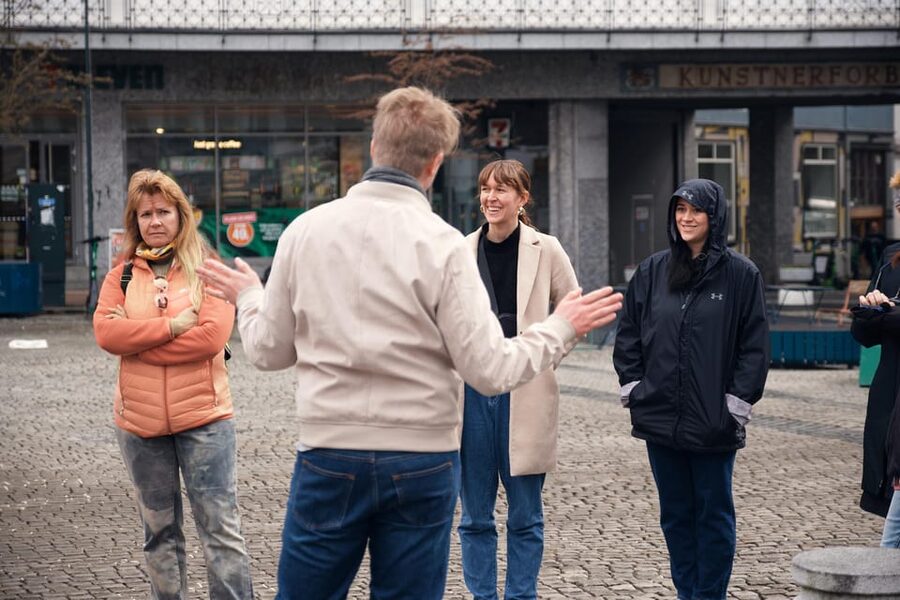
The Oslo Opera House provides the route’s sharpest change of mood. After the fortress and older streets, you reach a modern landmark by the fjord that has become a symbol of present-day Oslo.
This is one of the tour’s best photo stops. The building’s striking design and waterfront setting give you a different view of the city from the stone streets around Akershus. You should have time to look around and take pictures, although this is still a moving walking tour rather than a dedicated architecture visit.
The Opera House also helps explain Oslo’s modern identity. The route places it within the larger story of urban growth, rather than presenting it as an isolated piece of new construction. You see how the capital has turned attention toward the waterfront while keeping its older center within walking distance.
If you want to visit the Opera House interior or spend time exploring its roof and public spaces, plan to return separately. The tour’s purpose is to introduce the building and its place in Oslo, not to provide an extended visit.
Karl Johan Street, the Cathedral, and Parliament
The walk then heads along Karl Johan Street, Oslo’s main thoroughfare. This is the central civic spine of the tour, linking the Cathedral, Parliament, the National Theater, the University of Oslo, and the view toward the Royal Palace.
Karl Johan Street gives you a strong sense of how Oslo presents itself as a capital. Here, the focus shifts to public institutions, national ceremony, architecture, and everyday city movement. It is also the part of the route where you may encounter the most activity, so listen carefully and stay with the group while the guide talks.
The Oslo Cathedral adds a religious and architectural landmark to the route. The tour passes by it rather than promising an extended interior visit. That makes the Cathedral a useful visual marker as you continue west along Karl Johan Street.
Parliament provides another important stop. The guide can place Norway’s political system within the city itself, which is more helpful than simply identifying the building. Several tour accounts praised explanations about Norwegian government and the city’s three city halls, along with wider civic history.
The National Theater and the University of Oslo’s historic Aula continue the civic and cultural theme. These buildings show how 19th-century Oslo expressed national culture through education, performance, public ceremony, and architecture.
Finishing near the University and the Royal Palace view

The tour concludes near the University of Oslo, with a view toward the Royal Palace. It is a fitting ending because the route has moved from old fortifications and planned streets to the institutions of modern Norway.
The final view also helps you place the city’s major landmarks on a mental map. After two hours, you should have a better idea of where the waterfront, fortress, central shopping street, university area, and palace sit in relation to one another.
One participant said the tour made it easier to find their way around Oslo during the following three days. That is exactly the practical benefit I would expect from this route. You are not just collecting facts. You are learning the basic shape of central Oslo, which makes later independent exploring less confusing.
The ending near the University may not be the same place as the start, so keep that in mind when planning your next activity. The tour information does not provide a precise final address, only the area near the university and the palace view.
What the guides add to the experience
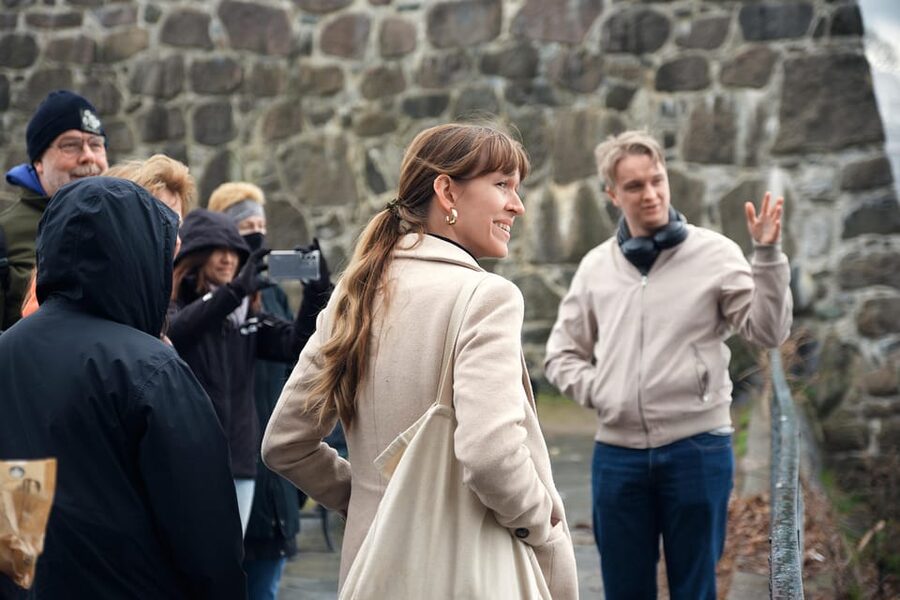
The strongest theme in the feedback is the quality of the guiding. Descriptions repeatedly point to clear explanations, good energy, friendly manners, and the ability to answer questions.
One German-language tour was private in practice because only one person attended. That meant plenty of time for questions about Oslo’s growth from the Viking period to the present, different districts, Scandinavian relationships, and Norwegian languages. You cannot count on having a one-person tour, but a small group would offer a similar advantage.
The guides also seem willing to explain modern life, not only dates and architecture. One guide discussed what it is like to live in Oslo and aspects of Norwegian culture. That is important because a city tour can otherwise become a parade of façades.
Names attached to past departures include Emily, Anna Marie, Maria, Olav, Ulaf, and Ehaw. The available information does not promise a particular guide, so do not book expecting one of these people. Instead, use the repeated pattern as a guide to what the experience aims to provide: a personable German-speaking guide with room for questions.
There is one useful caution about the guiding style. One participant wanted a clearer pause after each explanation for photographs and felt rushed when the guide moved on. If you take pictures, tell the guide or group that you need a moment. That small bit of communication can make the walk more comfortable.
Walking, weather, and accessibility
Two hours is not a long time for a city walk, but the route covers many central sights. You need to be comfortable walking at a moderate pace and staying with the group. Wear shoes you can use on city streets, and bring layers.
The tour is not normally canceled for bad weather. Severe storms are the exception. Rain, cold, and snow can still be part of the experience, so check the forecast and dress accordingly.
Winter conditions have not necessarily stopped the tour. A December departure continued on a particularly chilly day, with a warm chocolate stop at markets. Another departure finished after a three-day snowstorm. These details show that weather is a real part of the planning, not a minor footnote.
That said, poor weather can affect how much you enjoy the outdoor sights. You may spend less time taking photos, and wet or cold conditions can make two hours feel longer. On a clear day, the route’s waterfront views and architecture should be easier to appreciate.
The tour is listed as wheelchair accessible. You should still contact the provider if you have specific mobility needs, since the activity involves a moderate amount of walking and the information provided does not describe every surface or possible obstacle.
Is $37 a fair price?
At $37 per person, this is not the cheapest way to see Oslo’s center, but the price is reasonable if you want live guiding in German and a strong overview in two hours.
You are paying for the guide’s explanations and route planning, not entrance tickets. The included service is the walking tour and guide, so budget separately if you decide to enter museums or attractions later.
I think the value is best for three types of visitors:
- You have one day in Oslo and need a well-planned introduction.
- You want to understand the city in German.
- You prefer context and questions over simply following a map.
If you already know Oslo well, the route may feel basic. It also will not satisfy you if your main goal is a long visit inside Akershus Fortress, the Opera House, the Cathedral, or the University. In that case, use the tour as an orientation, then return to the places that interest you.
Free cancellation up to 24 hours before the start and a reserve-now, pay-later option reduce the risk of booking ahead. Those policies are useful in Oslo, where weather can change your plans, but ordinary bad weather does not automatically cancel the walk.
Who should book this Oslo walking tour?
I would book it if you want a clear introduction to central Oslo, especially in German. The route covers the city’s key eras, from medieval fortress to modern fjord architecture, while also bringing in government, language, culture, and city life.
It suits first-time visitors, short-stay visitors, and anyone who wants help getting oriented before exploring alone. It is also a good choice if you like asking questions and learning how a city works, not just hearing a list of dates.
I would think twice if you dislike outdoor activities in cold or wet weather, need frequent long stops, or want extensive time inside each landmark. The walk moves steadily, and the guide may not pause as long as you would like for photographs.
For the best experience, arrive near the Nobel Peace Center entrance a little early, dress for the forecast, wear practical shoes, and say when you need a photo break. Those simple steps should help you get the most from a compact and information-heavy introduction to Oslo.
FAQ
Where does the Oslo City Highlights Walking Tour begin?
Meet the guide near the entrance of the Nobel Peace Center in Oslo.
How long does the walking tour last?
The tour lasts two hours.
What language is the tour conducted in?
The live tour guide speaks German.
What sights are included on the route?
The route includes the Nobel Peace Center area, Akershus Fortress, Christiania Torv, the Kvadraturen district, Oslo Opera House, Karl Johan Street, Oslo Cathedral, Parliament, the National Theater, the University of Oslo’s historic Aula, and a view toward the Royal Palace.
Does the tour include entry tickets?
The included services are the guide and walking tour. Entry tickets to attractions are not listed as included.
How much walking is required?
A moderate amount of walking is required.
Is the tour wheelchair accessible?
Yes, the activity is listed as wheelchair accessible.
Does the tour operate in bad weather?
The tour is not canceled for ordinary bad weather. Cancellation due to weather applies only in severe storms, so dress appropriately.
What does the tour cost?
The listed price is $37 per person.
Can I cancel for a refund?
You can cancel up to 24 hours in advance for a full refund. A reserve-now, pay-later option is also available.
More city sightseeing tours in Oslo
- Oslo: City Sightseeing Hop-On Hop-Off Bus Tour
★ 3.6 · 724 reviews - Oslo: Grand City Sightseeing Tour by Bus with Fjord Cruise
★ 4.6 · 647 reviews - Oslo Combo Tour: Grand City Tour and Oslo Fjord Cruise
★ 4.5 · 555 reviews - City Sightseeing Oslo Hop-On Hop-Off Bus Tour
★ 3.0 · 455 reviews
More walking tours in Oslo
- Oslo: Historic Myths & Legends Evening Walking Tour
★ 4.8 · 408 reviews - Taste of Oslo Walking Tour
★ 4.5 · 282 reviews - Central Oslo Guided Walking Tour with Local Guide
★ 4.5 · 278 reviews - Oslo: Snowy Forest Torchlight Walk with Campfire
★ 4.6 · 254 reviews
Just added around Oslo
- Oslo Sea Kayak Tour “Fjord City”★ 4.5 · 39 reviews
- Akerselva River Kayak/Packraft Tour: Urban Adventure in Oslo★ 4.5 · 42 reviews
- Maral Kunst : Jewelry Bar Experience (Jewelry Making)★ 5.0 · 3 reviews
- Oslo: Perfect Escape – Fun and exciting Escape Rooms★ 3.9 · 4 reviews
- Oslo: 3-hour Kayaking Trip on the Oslofjord★ 4.9 · 43 reviews
- Oslo Sea Kayak Tour: Explore The Incredible Oslofjord★ 4.5 · 31 reviews
- Private Transfer from Oslo Airport to Oslo City Centre★ 5.0 · 15 reviews
- Oslo Private Transfer Between Gardermoen Airport and City★ 4.0 · 27 reviews
City Sightseeing Tours, compared.
Grand City Sightseeing Tour by Bus with Fjord Cruise
Read our review →
Nærøyfjorden, Flåm, and Stegastein Guided Bus Tour
Read our review →
Oslo Combo Tour: Grand City Tour and Oslo Fjord Cruise
Read our review →
Atlantic Ocean Road & Varden Audio Guide Bus Tour
Read our review →Browse the lists this tour appears in