
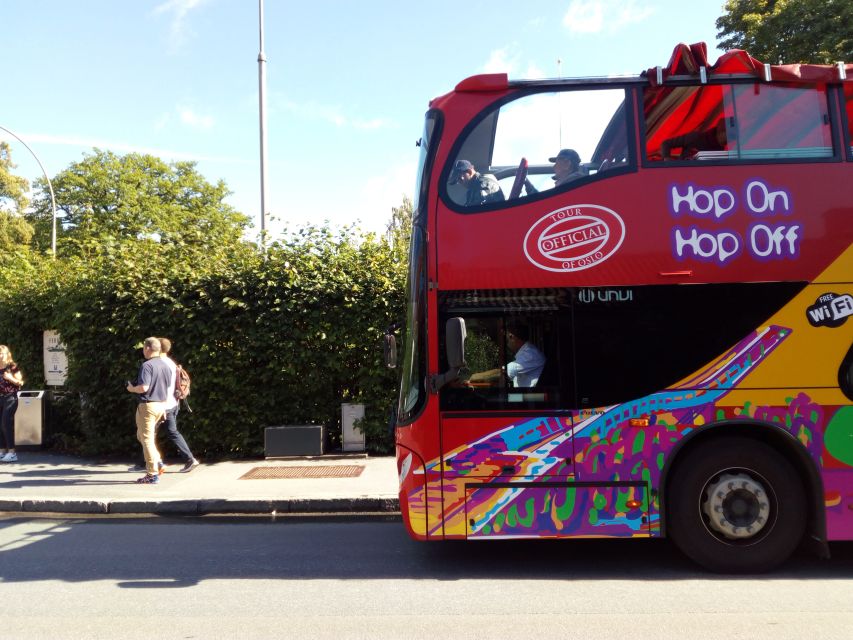
Reviewed · CITY SIGHTSEEING TOURS
Oslo: City Sightseeing Hop-On Hop-Off Bus Tour
Oslo’s hop-on hop-off bus is most useful as a first look at a spread-out city. One loop links the Royal Palace, Vigeland Sculpture Park, Bygdøy’s museum cluster, the cruise terminals, Akershus Fortress, and the Opera House, giving you a quick sense of where everything sits. I especially like the well-placed stops and the cruise-terminal access.
You can use the ticket for 24 or 48 hours, and the voucher remains flexible for 12 months from the selected travel date. The catch is the limited operating window: the first bus leaves Nationaltheatret at 10am, the last leaves at 4pm, and buses run about every 30 minutes. Audio quality has also been uneven, and some buses have plastic-covered upper decks that make photos harder.
Key points at a glance
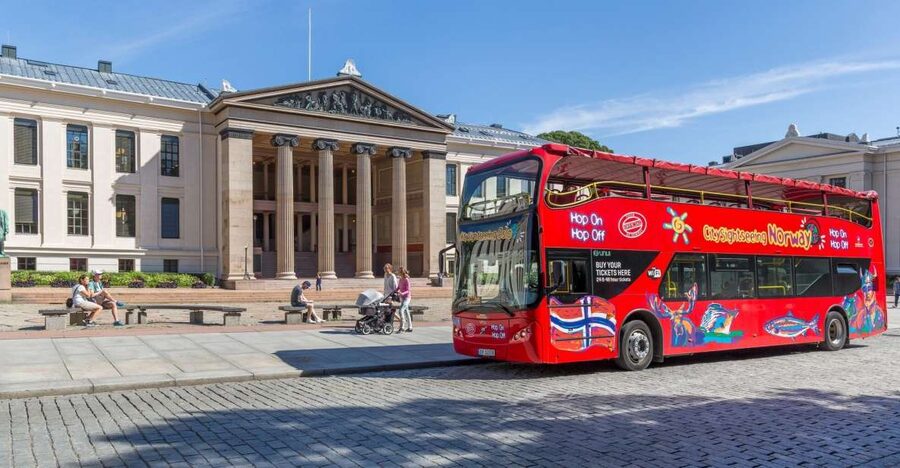
- Best for a first day in Oslo: The loop gives you quick bearings before you choose which museums and sights deserve more time.
- Strong cruise-port connections: You can board near Oslo Cruise Terminal, Color Line Terminal, and the Oslo Ferry Port.
- A 90-minute full loop: Stay aboard for an overview, then use the bus as transport between selected stops.
- Excellent museum access: The Bygdøy stops serve the Viking Ship Museum, Fram Museum, Kon-Tiki Museum, Maritime Museum, and Norwegian Museum of Cultural History.
- Useful in poor weather: The bus lets you see parts of Oslo without walking between every sight in rain or cold.
- Plan around the timetable: Service runs roughly every 30 minutes, from 10am to 4pm at the main starting stop.
Why this bus works well for seeing Oslo

Oslo is easy to walk in sections, but its major sights are not all packed together. The Royal Palace and Karl Johans Gate sit near the center, while Vigeland Sculpture Park and the Bygdøy museums require separate trips. The harbor sights sit in another direction.
That is where this bus earns its fare. For $46 per person, you are not buying admission to museums or a guided walking tour. You are paying for a moving overview and a simple way to connect several parts of the city.
I would use it in one of two ways. First, stay aboard for the full 90-minute circuit to get your bearings. Then repeat selected sections, hopping off at places you want to explore. Or use it as a practical shuttle between two or three major stops, especially if you have only one day in Oslo.
The open upper deck gives you broad views of streets, buildings, harbor areas, and public spaces. The lower deck is more useful when the weather turns wet. You also receive headphones for commentary in English, Spanish, German, French, Chinese, Italian, Dutch, or Japanese. You can use the provided audio guide or listen on your own device.
The commentary is informative, though you should not expect a full, expert-led city tour. One recurring weakness has been sound: some audio ports have not worked well, and the narration can be hard to hear. Bring your patience, test the headset early, and move seats if needed.
Other ways to see the whole town in Oslo:
- Oslo: 3-Hour Highlights Bike Tour
★ 4.8 · 1,609 reviews - Oslo: 24 or 48-Hour Hop-On Hop-Off Sightseeing Bus Ticket
★ 4.1 · 1,470 reviews - Oslo Highlights Bike Tour
★ 5.0 · 979 reviews
Starting at Nationaltheatret and Karl Johans Gate
The main boarding point is near the National Theatre on Karl Johans Gate. This is a sensible starting place because it puts you close to the Royal Palace, the main central avenue, and several downtown sights.
The stop can be harder to identify than you might expect. Look for the City Sightseeing bus near the National Theatre rather than relying only on a map pin. You can also redeem a mobile or printed voucher at any stop, which is useful if you are already near the harbor or a museum.
The route begins near the center and passes the Royal Palace and Karl Johans Gate. The palace is the official residence of Norway’s monarch, and the nearby avenue leads through the city center toward Oslo Central Station. This section is good for a first orientation, but traffic can slow the ride.
That matters if you are trying to fit several museums into one short day. The timetable is not a guarantee of an exact arrival time, especially in the city center. Give yourself extra room before a fixed museum booking, ferry departure, or cruise sailing.
Majorstuen and Frogner Park
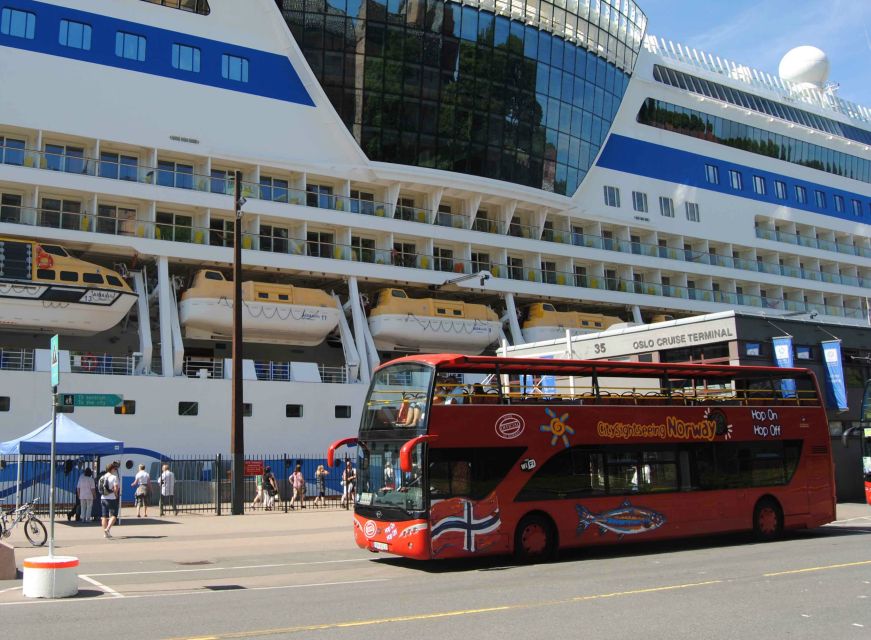
The bus passes through the Majorstuen area on the way toward Frogner Park. You may not need to get off at Majorstuen unless you have a particular reason to visit that part of the city, but it helps show how quickly central Oslo gives way to quieter residential districts.
Frogner Park is the key stop here. It is home to Vigeland Sculpture Park, one of Oslo’s best-known public spaces. The sculpture area is a major reason to use the bus, since it sits away from the central palace and harbor sights.
Plan time to walk rather than treating this as a quick photo stop. The park is spread out, and the sculptures are encountered along paths and open areas. If you get off here, check the next departure time before wandering too far. Buses usually come about every 30 minutes, but the final departures of the day require care.
The stop also serves the Oslo Museum. This makes Frogner Park a good pairing with a central morning, but it is too much to combine casually with every museum on Bygdøy in a single short day.
Bygdøy and Oslo’s museum cluster
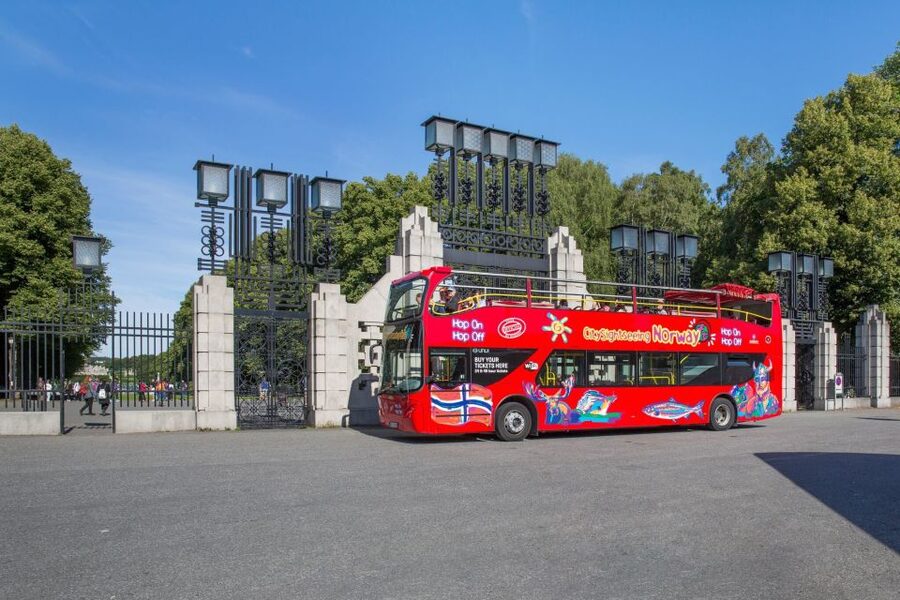
The museum section is the strongest part of the route for many visitors. The bus passes or stops near the Norwegian Museum of Cultural History, Viking Ship Museum, Fram Polar Ship Museum, Kon-Tiki Museum, and Norwegian Maritime Museum.
These museums are close enough to treat as one sightseeing area, but not so close that you will want to walk between all of them without planning. The bus gives you a useful connection from the city center and then lets you choose how much time to spend on Bygdøy.
The Norwegian Museum of Cultural History presents Norwegian buildings and cultural traditions. The Viking Ship Museum is listed on the route, along with the Fram Museum, which focuses on polar exploration. The Kon-Tiki Museum covers the expeditions associated with Thor Heyerdahl, while the Norwegian Maritime Museum looks at Norway’s seafaring past.
Entry fees are not included, so the $46 bus ticket makes the most sense if you plan to visit several places or need transport between them. If you only want one museum and are comfortable using other city transport, the value is less clear.
Allow more time than the bus timetable might suggest. Getting off, finding the correct museum entrance, visiting the collection, and returning to the stop can easily occupy several hours. Do not count on making every museum in one pass.
Same base, a completely different day:
- Oslo: Scenic Fjord Cruise with Audio Guide Commentary
★ 4.5 · 5,375 reviews - Oslo Nature Walks: Island Hopping Tour
★ 4.8 · 2,713 reviews - Oslo: 100% Electric Oslofjord Sightseeing Cruise
★ 4.4 · 2,041 reviews - Oslo: Fjord Evening Cruise with Shrimp Buffet
★ 4.5 · 1,956 reviews
Oslo Cruise Terminal and the harbor stops
Cruise passengers get one of the clearest benefits from this service. Stops serve the Oslo Cruise Terminal, Color Line Terminal at Hjortnes, and the Oslo Ferry Port used by Go Nordic Cruiseline and DFDS.
That makes the bus practical when you have a limited shore visit and do not want to spend much of your day working out local connections. You can board near the ship, ride toward the palace or museums, and return to a nearby terminal stop later.
Check your ship’s actual berth and the correct terminal before setting off. Oslo has more than one harbor boarding area, and the route lists several separate stops. The bus is convenient, but convenience depends on choosing the right one.
The harbor ride also gives you a different view of Oslo. You will pass working waterfront areas and newer waterside districts before reaching central sights. It is not a substitute for a fjord cruise, which is not included, but it provides a useful city-level view from the road.
Tjuvholmen, Akershus Fortress, and the ferry port
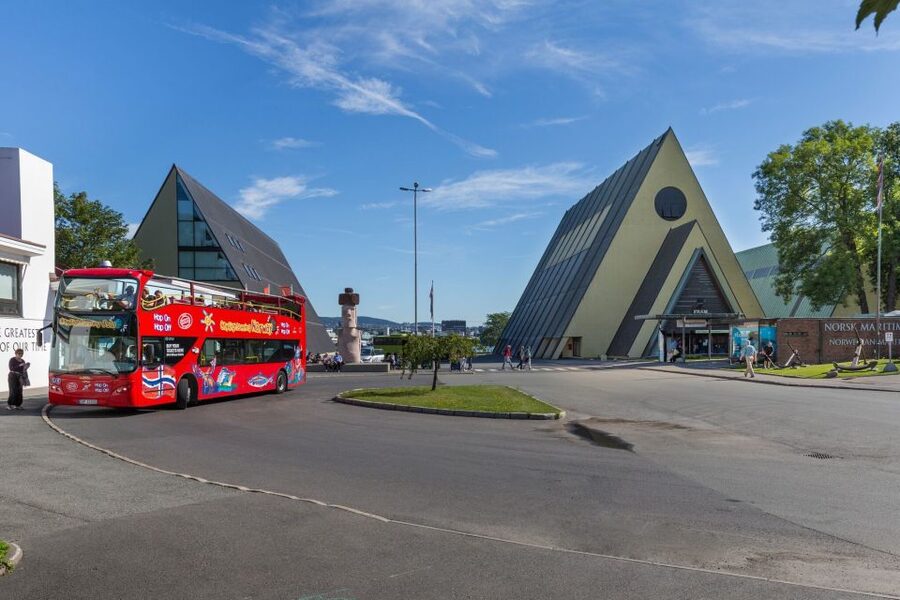
Tjuvholmen is listed as an alternative stop, giving you access to a modern waterfront area. This is a possible break from the museums and royal sights, especially if you want time near the harbor.
The Oslo Cruise Ship Terminal and Akershus Fortress share another important part of the route. The fortress is one of the city’s major historic sights and a useful stop if you want to get out and walk around rather than spend the entire day on the bus.
The Oslo Ferry Port stop serves Go Nordic Cruiseline and DFDS. If you are arriving or departing by ferry, this can save a transfer. As always, check the final bus timing before exploring. The last departure from the main stop is at 4pm, and a missed bus late in the day can change your plans quickly.
Langkaia, the Opera House, and MUNCH
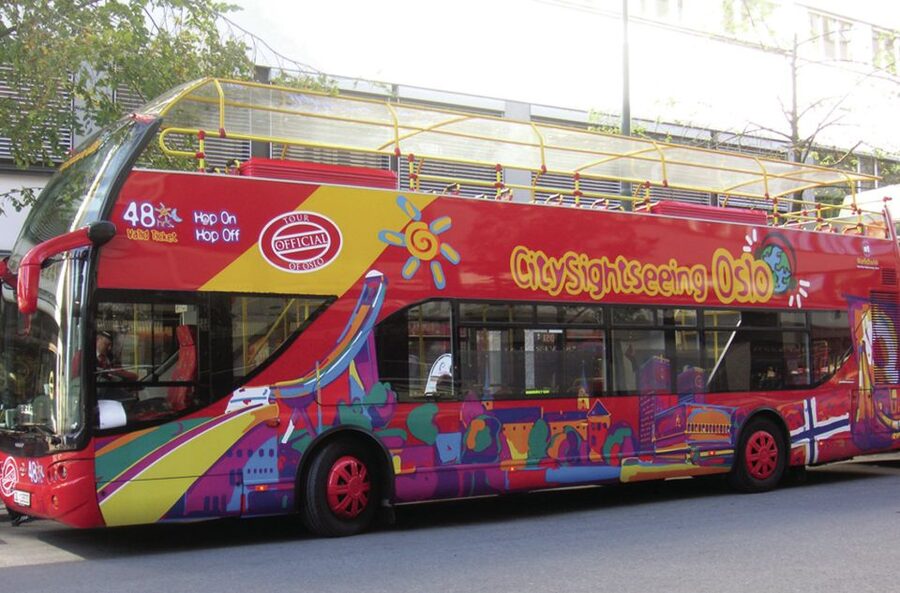
Langkaia leads you toward some of Oslo’s most recognizable modern buildings. The Opera House is a natural stop, and its broad roof is one of the city’s most distinctive public spaces.
The route also serves the MUNCH Museum. If you want to see Edvard Munch’s work, this is a key stop to plan in advance. The bus makes it easy to combine the museum with central Oslo, though you still need to budget for admission and the time spent inside.
Oslo Central Station is also on the circuit. That makes the route useful for visitors arriving by train, although the official first boarding point remains near Nationaltheatret. The final stop returns to the National Theatre and Royal Palace area.
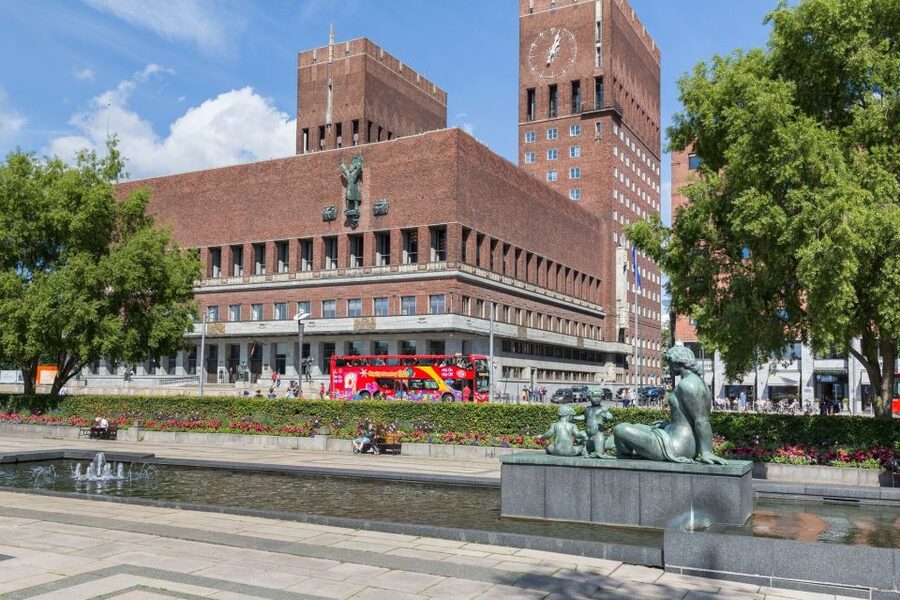
The Opera House and MUNCH stop is one of the better choices for a short visit because it combines architecture, the waterfront, and a major museum. Just remember that the bus offers transport only. Museum entry is separate.
What the 24-hour and 48-hour tickets really offer
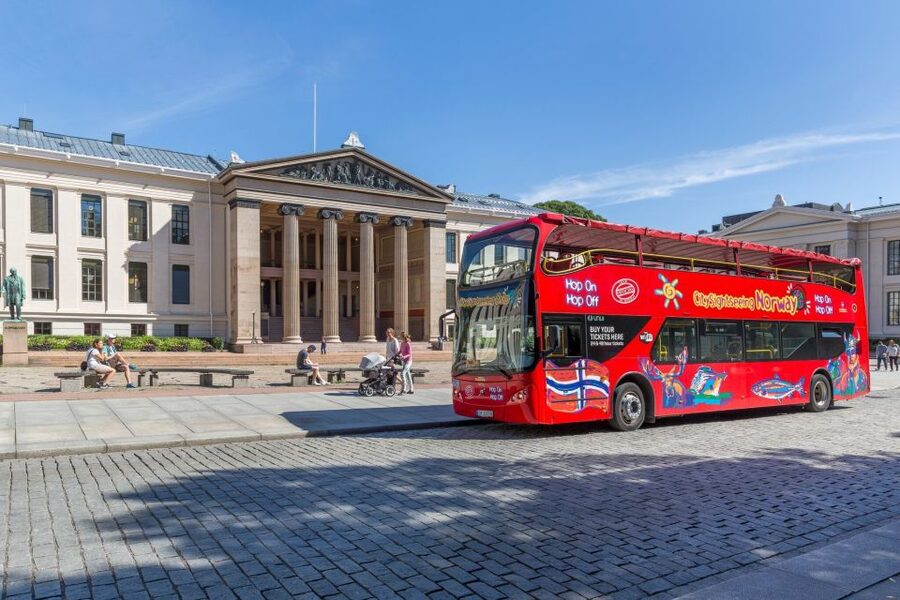
A 24-hour ticket is enough for a compact introduction. You can ride the full loop, choose one museum cluster, and stop at the palace, Frogner Park, or the Opera House if the schedule allows.
The 48-hour option is more useful if you want to visit several museums without rushing. You can use one day for the city center and Frogner Park, then return for Bygdøy and the harbor on the next day. The second day also gives you protection against rain or a delayed start.
The flexible 12-month voucher is especially helpful if your plans change before you arrive. The voucher can be used on any day within 12 months of the travel date selected at checkout. Once you activate the pass, the useful period is the 24 or 48-hour window you purchased.
At $46, the ticket is not automatically a bargain. It becomes reasonable when you value the audio commentary, the open-top views, the cruise-port pickup points, and the ability to link distant sights without arranging separate transport. It is less attractive if you plan to walk central Oslo and visit only one nearby attraction.
Discounts on attractions are included, but the specific savings are not stated here. Check the current terms before counting them as part of your budget.
Weather, seating, and audio tips
Oslo weather can change quickly, and the open top is not always the best place to sit. Rain covers may limit the view, and one practical issue is the difference between glass and plastic upper sections. Plastic panels can make photographs look cloudy or distorted when the top is closed.
I would choose the upper deck in dry weather, then move downstairs when rain or cold makes the view uncomfortable. The lower deck is also a better choice if you need a steadier ride or want to protect a camera.
Test the audio guide as soon as you board. Some headset ports have not worked, and the commentary has occasionally been difficult to hear. If the sound fails, ask the driver or staff member for another seat or headset rather than waiting until the next stop.
The guide is available in eight languages, and the service includes free Wi-Fi. Do not confuse the audio commentary with a live guide. You receive recorded information through headphones, not personal advice about what to see next.
Who should book this Oslo bus tour
I would recommend it to first-time visitors who want a broad introduction before choosing their stops. It is also a strong fit for cruise passengers, families who do not want a full day of walking, and anyone visiting Oslo when rain may disrupt an outdoor plan.
The route is useful for visitors with a museum list. Bygdøy has several major institutions, and the bus removes some of the friction of reaching them from the center. The 48-hour option is the better choice if you prefer a slower pace.
I would think twice if you already know Oslo well, plan to stay mostly around Karl Johans Gate, or want detailed personal guidance. The audio narration is serviceable but can be superficial, and the timetable leaves little room for late starts.
Book ahead if the flexible cancellation terms matter to you. You can cancel up to 24 hours before the activity for a full refund, and you can reserve now and pay later. Bring a passport or ID card, since that is listed among the required items. Pets and smoking are not allowed.
Should you book it?
Book this tour if you want a simple way to connect Oslo’s center, Frogner Park, Bygdøy museums, harbor terminals, and the Opera House. Start at Nationaltheatret if you want the best chance of finding a seat, and use the first full loop to decide where to get off.
For one day, choose two or three major stops rather than trying to see everything. For two days, combine the center and Frogner Park on one outing, then give Bygdøy and the harbor their own time.
The main tradeoff is clear: you get convenience and a broad view, but not a flawless timetable or a deeply personal guide. At $46, I would book it for a short Oslo stay or a cruise day, especially when museum access and easy port connections matter more than saving every dollar.
FAQ
How long is the complete bus loop?
The full tour takes about 90 minutes without getting off.
How often do the buses run?
Buses operate approximately every 30 minutes.
What time does the first bus leave?
The first departure from Stop 1 near Nationaltheatret is at 10am.
What time is the last departure from Stop 1?
The last departure from Stop 1 is at 4pm.
Where can I board the bus?
The first stop is near the National Theatre on Karl Johans Gate. You can also board near Frogner Park, the Norwegian Museum of Cultural History, the Viking Ship Museum, the Kon-Tiki and Fram museums, the Maritime Museum, Oslo Cruise Terminal, and the Opera House.
Is museum admission included?
No. Entry to attractions, food, and drinks are not included, though discounts on attractions are provided.
Which languages are available for the audio guide?
Audio commentary is available in English, Spanish, German, French, Chinese, Italian, Dutch, and Japanese.
Can I use a mobile voucher?
Yes. Mobile and printed paper vouchers are accepted, and they can be redeemed at any stop along the route.
Just added around Oslo
- Oslo: 3-hour Kayaking Trip on the Oslofjord★ 4.9 · 43 reviews
- Oslo Sea Kayak Tour: Explore The Incredible Oslofjord★ 4.5 · 31 reviews
- Oslo Sea Kayak Tour “Fjord City”★ 4.5 · 39 reviews
- Akerselva River Kayak/Packraft Tour: Urban Adventure in Oslo★ 4.5 · 42 reviews
- Maral Kunst : Jewelry Bar Experience (Jewelry Making)★ 5.0 · 3 reviews
- Oslo: Perfect Escape – Fun and exciting Escape Rooms★ 3.9 · 4 reviews
- Oslo Private Transfer Between Gardermoen Airport and City★ 4.0 · 27 reviews
- Private Transfer from Oslo Airport to Oslo City Centre★ 5.0 · 15 reviews
City Sightseeing Tours, compared.


Grand City Sightseeing Tour by Bus with Fjord Cruise
Read our review →
Nærøyfjorden, Flåm, and Stegastein Guided Bus Tour
Read our review →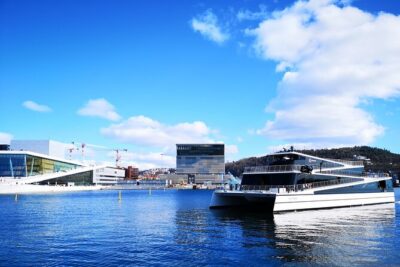
Oslo Combo Tour: Grand City Tour and Oslo Fjord Cruise
Read our review →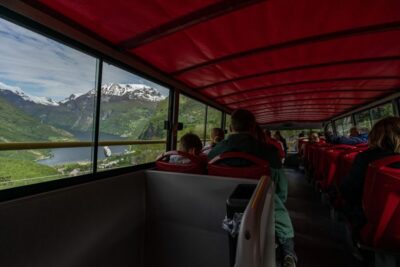

Atlantic Ocean Road & Varden Audio Guide Bus Tour
Read our review →Browse the lists this tour appears in