
Reviewed · WALKING TOURS
Central Oslo Guided Walking Tour with Local Guide
Oslo’s best introduction may be on foot, and this tour gives you a useful route through the city center in about two hours. You’ll begin beside the Tiger sculpture at Jernbanetorget, pass the Opera House and Akershus Fortress, then finish at the Royal Palace. Along the way, the guide connects Oslo’s buildings with Norway’s ties to Denmark and Sweden, its royal past, and modern city life.
I like the low price of $16.94 and the route’s sensible shape. I also like that the guides, including Suzanne, Alexia, Marta, and Daniel, are praised for mixing facts with humor rather than delivering a dry lecture. The main drawback is that the tour does not take you inside any buildings, and the distance across central Oslo may be tiring for anyone who has trouble walking.
Key points to know before booking
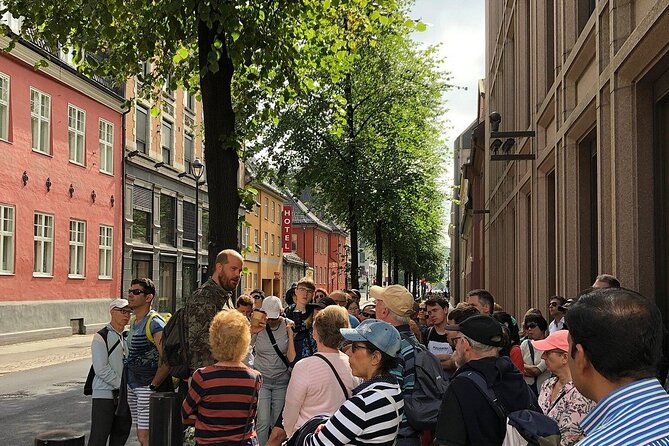
- The route covers the main central sights: You’ll see the Opera House, Akershus Fortress, City Hall, Cathedral, Karl Johans gate, Aker Brygge, Parliament, and the Royal Palace.
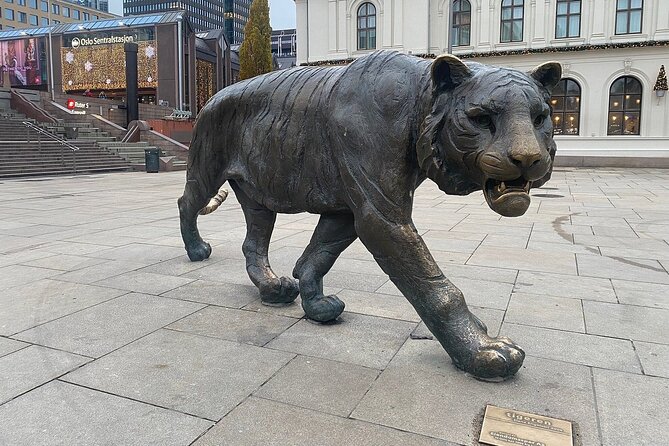
- The Tiger sculpture is the starting landmark: The statue at Jernbanetorget commemorates Oslo’s millennium and explains the city’s Tiger City nickname.
- The tour is built around history and orientation: It works especially well on your first day, helping you decide which places deserve a longer visit.
- You stay outside the major buildings: Akershus Fortress, City Hall, the Cathedral, and other sites are viewed from outside rather than visited inside.
- Guide quality is a major part of the experience: Suzanne, Alexia, Marta, Kamil, and Daniel are among the guides praised for clear explanations, humor, and helpful answers.
- Plan for steady walking: The pace is generally described as easy or leisurely, but the route covers many blocks and may be less suitable for people with limited mobility.
Why this two-hour route works well in Oslo
Oslo’s center is compact enough to explore on foot, but its sights are spread across several distinct areas. A train arrival point, medieval fortress, waterfront district, government buildings, shopping street, and royal palace all tell different parts of the city’s story.
This tour ties them together without asking you to spend half a day on a large coach. You walk from Jernbanetorget toward the harbor, then through the historic center and up Karl Johans gate to Slottsplassen. That gives you a practical sense of where Oslo’s main districts sit in relation to one another.
I would book it near the start of a stay. You can use the route to mark places for later, such as the Opera House, Aker Brygge, or Akershus Fortress. Several guides also offer suggestions for other places to visit, which adds value beyond the two-hour walk.
The group can reach up to 27 people. That is not a private experience, but it is still small enough for a good guide to keep the group together. The strongest feedback centers on guides who used portable speaker systems, answered questions, and kept the tone conversational. On a noisy street, a microphone matters, though one person found a guide spoke quickly and was sometimes hard to follow despite using one.
Other guided walks in Oslo:
- Oslo Nature Walks: Island Hopping Tour
★ 4.8 · 2,713 reviews - Oslo Nature Walks: Island hopping
★ 5.0 · 570 reviews - Oslo: Best of Oslo Walking Tour
★ 4.5 · 458 reviews
Starting beside Oslo’s Tiger sculpture
The meeting point is the Tiger sculpture at Jernbanetorget, close to Oslo Central Station. This makes the start convenient if you are arriving by train or using central public transport.
The statue was put in place in 2000 for Oslo’s millennium. It refers to the city’s nickname, Tiger City, and provides an easy first story about how Oslo presents itself. You get roughly ten minutes here, enough for an introduction and a few photographs before setting off.
This is a practical meeting point because the sculpture is easy to identify. Still, arrive with enough time to find the exact spot in the square, especially if you are unfamiliar with Oslo Central Station and its surrounding streets.
The Opera House and Oslo’s waterfront setting
The Oslo Opera House is one of the city’s most recognizable modern buildings. Completed in 2008, it is home to the Norwegian National Opera and Ballet and is known for its unusual waterfront design.
The tour treats it as an exterior sight, so you should not expect a performance or an indoor architectural visit. The value here is seeing how the building fits into Oslo’s relationship with the harbor. Its contemporary style also provides a useful contrast with the fortress, Cathedral, and nineteenth-century buildings encountered later.
The Opera House is an attractive early stop because it shows you a newer side of Oslo before the walk turns toward older streets and political landmarks. If modern architecture interests you, make a note to return for a closer look after the tour.
Rådhusgata and the older central streets
Rådhusgata dates from the 1620s and leads toward Oslo City Hall. This is one of the points where the walk shifts from broad waterfront views to older urban history.
The street helps explain how central Oslo developed around important civic buildings and routes. You will hear about the city’s past and its links with Denmark and Sweden, themes that several guides bring into the walk. Those connections give the buildings more meaning than a simple list of dates.
The stop is brief, around ten minutes, so expect a compact explanation rather than a detailed architectural study. That suits the tour’s purpose. You are getting a framework for the city, not a specialist history seminar.
Same base, a completely different day:
- Oslo: Scenic Fjord Cruise with Audio Guide Commentary
★ 4.5 · 5,375 reviews - Oslo: 100% Electric Oslofjord Sightseeing Cruise
★ 4.4 · 2,041 reviews - Oslo: Fjord Evening Cruise with Shrimp Buffet
★ 4.5 · 1,956 reviews - Oslo: 3-Hour Highlights Bike Tour
★ 4.8 · 1,609 reviews
Akershus Fortress, Oslo’s medieval stronghold
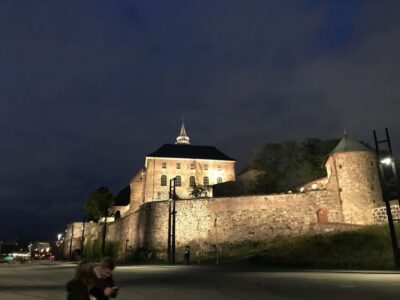
Akershus Fortress is one of the most important sights on the route. Construction began around 1299 as protection against invasion, and the complex later served as a military base and prison. Today it is a museum and historical site.
The tour includes the fortress area, but the stated experience does not include entry inside buildings. This distinction matters. You can see the setting and hear about its role, but you should plan a separate visit if you want a full interior tour or more time with the exhibits.
Akershus adds a strong historical anchor to the walk. After the modern Opera House, you are suddenly dealing with medieval defense, royal power, military life, and the long development of Oslo. The setting also helps you understand the city’s position beside the water.
Oslo City Hall and the Nobel Peace Prize connection
Oslo City Hall is a major civic landmark, built between 1931 and 1950. The building represents Norwegian government and public life, and it hosts the Nobel Peace Prize ceremony each year.
The tour allows about 15 minutes here, one of the longer stops. That gives the guide time to explain why this building matters and to place it within Norway’s modern political and cultural identity.
Again, this is an exterior visit rather than an interior tour. If you want to see the art and rooms inside City Hall, you will need to return on your own. The guided stop is still useful because it gives you a reason to notice the building rather than simply pass it on the way to the harbor.
Oslo Cathedral and Karl Johans gate
Oslo Cathedral dates from 1697 and is known for its Baroque design. It has been renovated several times, particularly during the twentieth century, and remains both a religious and cultural landmark.
The Cathedral is followed by Karl Johans gate, Oslo’s main street. The road stretches from Oslo Central Station to the Royal Palace and gathers shops, restaurants, historic buildings, and cultural sights along the way.
This part of the route gives you a good feel for everyday central Oslo. It is not only a string of monuments. You see the street used as a main city corridor, with public buildings and commercial life close together.
The guide’s storytelling is especially useful here. A good explanation of Norway’s relationship with Denmark and Sweden can turn a pleasant walk into a clearer picture of why Oslo’s institutions and architecture look the way they do.
Aker Brygge and the harbor district
Aker Brygge is the tour’s main dining, shopping, and waterfront stop. The area began as a shipyard in 1854 and was converted into its current form during the 1980s.
That change tells you something important about Oslo. The harbor is not only an old working area or a collection of monuments. It has been reshaped for restaurants, shops, entertainment, and public use.
You may want to return here after the walk for a meal or a slower look at the waterfront. The tour itself keeps moving, so it will not give you time to explore every shop or restaurant. Think of the stop as an introduction and a useful pointer for later.
Parliament and the walk to the Royal Palace
The Storting building houses Norway’s Parliament and was built between 1861 and 1866. It is a central symbol of the country’s legislative system and nineteenth-century architecture.
The route then finishes in front of the Royal Palace at Slottsplassen. This is a fitting end because the walk has moved through military history, civic government, religion, commerce, and monarchy. You finish with a clear sense of how the main parts of central Oslo connect.
The Royal Palace stop is primarily for the view. No interior visit is included, so you should not book this tour expecting access to palace rooms. Still, ending at Slottsplassen is convenient, and you can continue exploring central Oslo from there.
The guides and the style of the walk
The best part of this experience is likely to be the individual guide. Suzanne is praised for being friendly and informative. Alexia is described as mixing Norwegian culture with history, while Marta is noted for a conversational style and useful recommendations. Daniel receives particular credit for handling a large group while keeping the mood light.
Those details matter because the route itself is made up of public sights you can visit without paying admission. The guide is what turns the walk into a tour. A strong guide gives you context, points out connections, and helps you decide where to spend more time later.
The tone is generally relaxed rather than academic. You should expect stories, historical background, fun facts, and time for questions. One guide was described as particularly humorous, and several people appreciated that the tour did not feel like a lecture.
There is some variation from one guide to another. One experience was judged too surface-level, and another person found the guide’s quick speaking difficult to follow. A portable speaker usually helps, but stay near the guide if the group is large or the streets are noisy.
Price, pace, and practical value
At $16.94 per person, this is an inexpensive way to get a structured introduction to Oslo. Since the tour does not include entry tickets, the price is paying for the guide, the route, the explanations, and the time saved planning your own walk.
I consider that good value if you are visiting Oslo for the first time. You see many of the city’s central landmarks in two hours, then decide which ones deserve a separate visit. It is less valuable if you already know central Oslo or want long interior visits at the fortress, City Hall, Cathedral, or palace.
The advertised duration is about two hours. The pace is often described as gentle or easy, but the route covers many blocks. Wear comfortable shoes and take the weather seriously. The experience requires good weather, and rain can make the walk less pleasant even when the guide keeps the group moving.
The tour is offered in English and uses a mobile ticket. Service animals are allowed, and the meeting point is near public transportation. Most people can participate, but anyone concerned about walking distance should take the route’s size into account.
Free cancellation is available until 24 hours before the start time. If poor weather or an insufficient number of bookings causes cancellation, you are offered another date or a full refund.
Who should book this Oslo walk?
I would choose this tour for a first morning or afternoon in Oslo, especially if you like history but do not want a formal museum lecture. It also suits families, since the route includes striking sights and guides often use humor to keep the information moving.
It works well for a short city break, a cruise stop, or anyone who wants quick bearings before exploring alone. The low price makes it a sensible first step before paying for museums or other activities.
I would think twice if you need frequent rests, want to visit interiors, or prefer a very small private group. The maximum group size is 27, and the route is longer than the brief stop descriptions might suggest.
Should you book the Central Oslo Guided Walking Tour?
Book it if you want a low-cost first look at Oslo, clear directions between the main sights, and a guide who can add history and humor to a straightforward city walk. The strongest guides turn the tour into more than a checklist, especially Suzanne, Alexia, Marta, Kamil, and Daniel.
Skip it if your priority is entering Akershus Fortress, City Hall, the Cathedral, or the Royal Palace. For most first-time visitors, though, the combination of price, central route, and useful orientation makes this a practical way to begin your Oslo stay.
FAQ
How long is the Central Oslo Guided Walking Tour?
The tour lasts approximately two hours.
Where does the tour start?
It starts at the Tiger sculpture at Jernbanetorget, 0154 Oslo, Norway.
Where does the tour finish?
It finishes in front of the Royal Palace at Slottsplassen 1, 0010 Oslo, Norway.
Is the tour offered in English?
Yes. The experience is offered in English.
Does the tour include entry inside the buildings?
No. The tour does not include visits inside any buildings.
How many people can join the tour?
The maximum group size is 27 people.
What happens if the tour is canceled because of poor weather?
You will be offered a different date or a full refund.
Just added around Oslo
- Oslo Sea Kayak Tour: Explore The Incredible Oslofjord★ 4.5 · 31 reviews
- Oslo Sea Kayak Tour “Fjord City”★ 4.5 · 39 reviews
- Akerselva River Kayak/Packraft Tour: Urban Adventure in Oslo★ 4.5 · 42 reviews
- Maral Kunst : Jewelry Bar Experience (Jewelry Making)★ 5.0 · 3 reviews
- Oslo: Perfect Escape – Fun and exciting Escape Rooms★ 3.9 · 4 reviews
- Oslo: 3-hour Kayaking Trip on the Oslofjord★ 4.9 · 43 reviews
- Oslo Private Transfer Between Gardermoen Airport and City★ 4.0 · 27 reviews
- Private Transfer from Oslo Airport to Oslo City Centre★ 5.0 · 15 reviews
Walking Tours, compared.


Past & Present Small Group Guided Walking Tour
Read our review →
Walking Tour in Bergen of the Past and Present
Read our review →
Browse the lists this tour appears in