
Reviewed · HISTORICAL TOURS
Trondheim’s Regalia Self-Guided Tour of Norway’s Historic Centre
Trondheim’s story comes together nicely on this self-guided walk, which links music, royal buildings, medieval churches, wooden neighborhoods, and hilltop defenses. I like the route’s strong variety and its finish at Kristiansten Fortress, where you get a broad view of the city. I also like the freedom to pause, detour, or linger without holding up a group.
The main catch is that this is an app-based tour, not a person waiting to answer questions. The starting point near Clarion Hotel Trondheim can also take a little patience: the app may not start by itself when you reach the general area, so you may need to start it manually.
Key points to know before you go
- Nine major sights in about one hour: The route connects Rockheim, the river, the cathedral, Bakklandet, and other central landmarks.
- A flexible English audio guide: Pause and resume whenever you like, with unlimited use before and after your booking date.
- A scenic finish: Kristiansten Fortress brings the walk uphill and rewards you with wide views over Trondheim.
- Download before leaving Wi-Fi: Offline audio, maps, and location data help the tour work during a cruise or short port stop.
- A useful introduction, not a full museum tour: The walking time excludes any time you spend inside attractions.
- Good value at $9.99: You are paying for route design, narration, and access to the app rather than a live guide.
A compact way to get your bearings in Trondheim
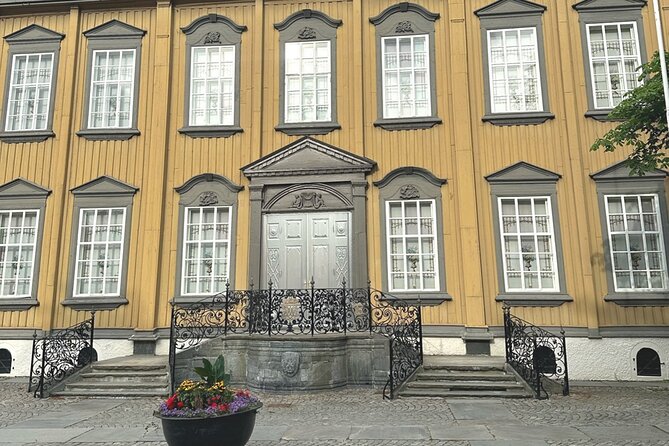
I see this tour as an orientation walk first and a sightseeing tour second. In roughly 60 to 75 minutes of walking, you cross much of central Trondheim and get a feel for how its river, old neighborhoods, church, commercial centre, and military defenses fit together.
The route starts at Clarion Hotel Trondheim on Brattørkaia. That is a practical meeting point if you arrive by train, coastal ship, or public transport, and the tour provides directions to get there. From the hotel, you follow the audio instructions toward the city’s main sights and finish at Kristiansten Fortress.
The stated duration covers walking between the stops. It does not include time inside the cathedral, Rockheim, the National Museum of Decorative Arts, or other attractions. If you enter several of them, your morning or afternoon will stretch well beyond the advertised hour.
This is a private self-guided experience, so your group sets the pace. You do not wait for strangers, and you can pause the narration for coffee, photographs, shopping, or a closer look at a building.
More of the past around Trondheim:
- Tromsø: Reindeer Camp and Sami Cultural Tour with Lunch
★ 4.7 · 3,326 reviews - Oslo: Historic Myths & Legends Evening Walking Tour
★ 4.8 · 408 reviews - Tromsø: Fjord History Cruise with Snack and Drinks
★ 4.9 · 364 reviews
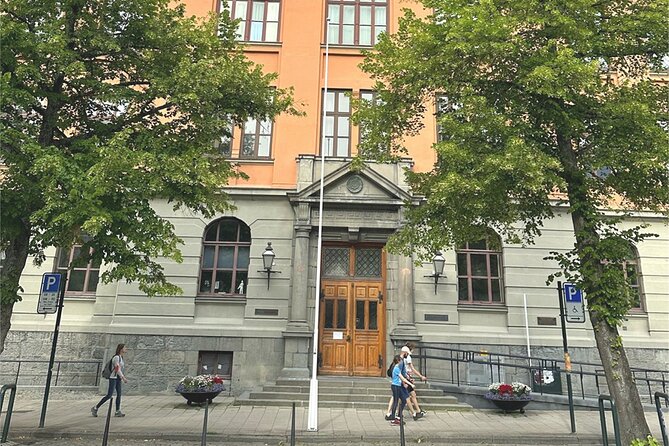
Rockheim opens the story with modern Norway
Rockheim, Norway’s national museum of popular music, gives the route an unusual opening. Instead of beginning with medieval stonework, the tour starts with Norway’s music culture across different genres and decades.
That makes the first stop useful for putting Trondheim in a wider cultural frame. You are not simply walking past another old building. You are introduced to a part of Norwegian identity that reaches beyond royal history and church architecture.
The important practical point is that Rockheim is a stop on the walking route, not an included museum visit. The audio tour gives you an introduction from outside or during the walk, while entry and extra time inside are separate matters. If music interests you, you may want to return later with more time.
The Nidelva River explains Trondheim’s shape
The Nidelva River is one of the best places to understand why Trondheim developed where it did. The audio explains its role in trade and its connection with salmon, giving you more than a pretty waterside view.
As you walk beside or toward the river, pay attention to how it divides and frames the city. It helps explain the position of the old centre, the bridges, and Bakklandet. This is one of the tour’s strongest features: ordinary streets become easier to read once you know what shaped them.
The river section also gives the walk a welcome change of pace. You move from cultural institutions and central streets to open views and water. It is a good moment to pause the audio for photographs, then resume when you are ready.
Stiftsgården brings royal style into the city centre
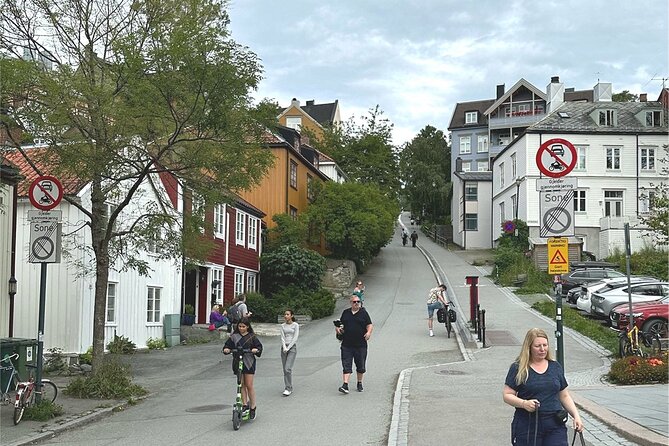
Stiftsgården is Trondheim’s royal residence and one of Scandinavia’s largest wooden buildings. Its neoclassical design makes it an important contrast to the cathedral and the older wooden streets nearby.
The stop helps you notice the city’s civic and royal side. Trondheim is not only a medieval pilgrimage destination. It has also served as a place of ceremony and national importance, and Stiftsgården gives that story a physical setting.
You should treat this as an exterior-focused stop unless you have separately arranged a visit inside. The walking tour does not promise admission, and the total tour time does not include optional visits. Still, the narration gives you a reason to stop and look closely rather than simply pass another impressive facade.
Other tours you can do at your own pace around Trondheim:
- Trondheim’s Inner Circle: A Self-Guided Audio Tour
★ 4.0 · 15 reviews - Trondheim: Audio Guide Panorama Bustour
★ 4.0 · 9 reviews - Panorama Bus Tour with Audio Guide
★ 4.0 · 3 reviews - Oslo: Scenic Fjord Cruise with Audio Guide Commentary
★ 4.5 · 5,375 reviews
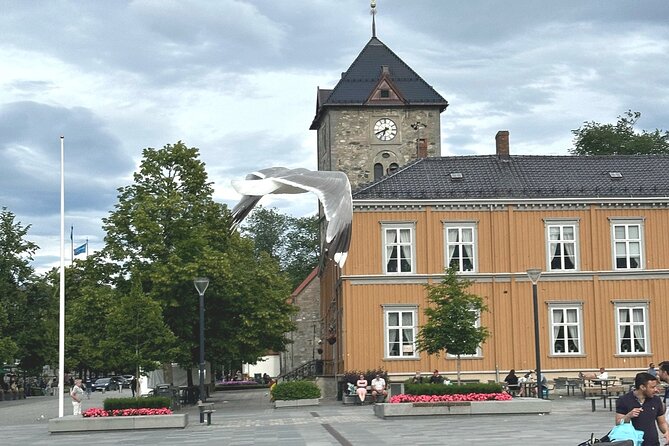
Trondheim Torg is the practical pause point
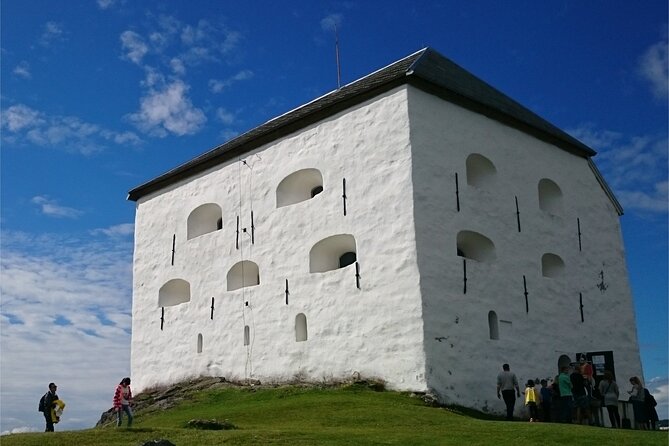
Trondheim Torg is the city’s main square, with shopping and places to get refreshments. It is less about one grand monument and more about seeing how the city works in daily life.
I like this part of the route because it breaks up the sightseeing. After several historical stops, you reach a place where local routines, shopping, and meeting friends are part of the scene. If you need coffee, food, or a short rest, this is a sensible place to take one.
The square also gives you flexibility. You can pause the tour without losing your place, then continue when you are ready. That is a simple advantage over a fixed group walk, particularly if you are fitting Trondheim into a short stop.
Nidaros Cathedral is the route’s great centerpiece
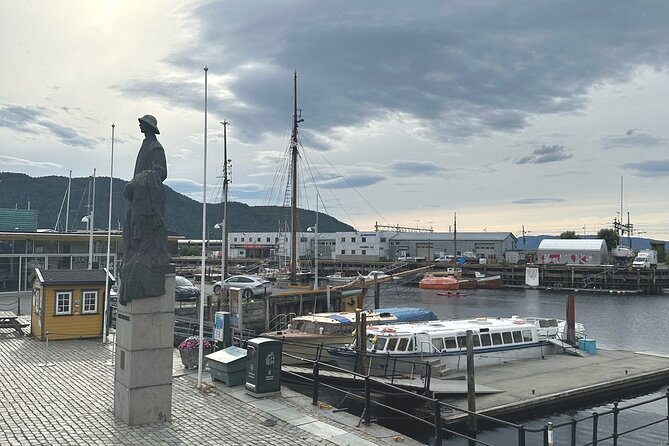
Nidaros Cathedral is Norway’s national sanctuary and the northernmost medieval cathedral in the world. It was built over the tomb of Saint Olaf, Norway’s patron saint, which explains its importance as both a religious site and a destination for pilgrims.
This is likely to be the tour’s most memorable building. The audio gives you the key context before you decide how much time to spend looking around or going inside. The exterior alone deserves a slow look, while an interior visit would add considerably to the schedule.
The guide’s role here is to make the cathedral more legible. A large church can blur into stone, statues, and pointed arches when you first see it. Historical background helps you understand why this particular building matters to Norway.
Allow extra time if the cathedral is a priority. The advertised 60 to 75 minutes is walking time, not a promise that you can thoroughly visit every attraction along the way.
The Old Town Bridge leads into Bakklandet
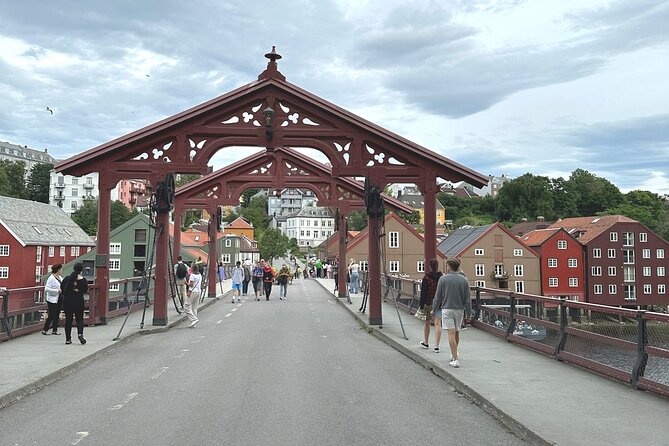
Crossing the Old Town Bridge is one of the route’s most appealing transitions. The historic wooden bridge offers views along the Nidelva and has a connection with Trondheim’s old defenses.
From the bridge, you get both a photograph and a sense of movement through the city. Ahead lies Bakklandet, while the river and older parts of Trondheim open around you. The bridge works well as a pause point because the view is easy to appreciate without needing a long stop.
Bakklandet is the walk’s most atmospheric neighborhood. Its colorful wooden houses, cafés, and small shops show a softer, more relaxed side of Trondheim. I would not rush this section. Pause the audio if a storefront, house, or café catches your attention, then pick up the route again.
The tradeoff is that a self-guided route cannot tell you which café is busiest or which shop is open on a particular day. It gives you the neighborhood and the context, while you make your own choices.
Kristiansten Fortress provides a worthwhile finish
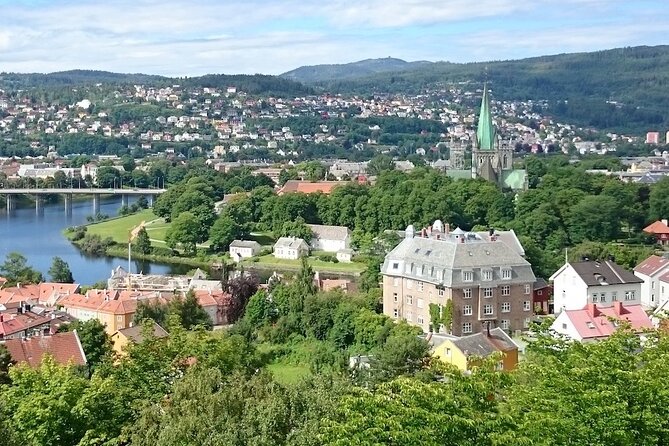
The route ends at Kristiansten Fortress, reached by climbing up from the lower city. That uphill section is the main physical consideration. The walk is generally accessible to most participants, but the climb means you should allow a little more time if you prefer a slow pace.
The reward is a broad view over Trondheim. The fortress also adds a military chapter to the tour, explaining its role in defending the city during wartime. After the river, cathedral, shops, and wooden houses, the final stop gives you a different way to understand Trondheim: from above and from the point of view of defense.
Ending here is better than finishing in an anonymous street. You have a clear destination, a major viewpoint, and a natural place to stop the narration. The tour ends at Kristiansten Fortress, rather than returning you to the starting hotel.
Decorative arts add a final cultural layer
The route includes the National Museum of Decorative Arts, with ceramics, textiles, and furniture that show Norway’s artistic traditions. Like Rockheim and the cathedral, it is best understood as a stop that may deserve extra time beyond the walking schedule.
This museum broadens the tour’s cultural range. You move from popular music to royal architecture, religious art, river commerce, military history, and decorative objects. That mix keeps the route from feeling like a list of churches and monuments.
If you hope to explore the museum’s collections carefully, plan a separate visit. The self-guided tour provides the route and commentary, but its stated duration only counts the time spent walking past the attractions.
What the app does well, and where to take care
The main strength is control. You can pause, resume, repeat sections, and make short detours without asking a guide to wait. The tour also includes a transcript, which is useful if an accent or street noise makes part of the narration hard to catch.
The audio has a light touch, including a humorous warning if you wander away from the route. That matters more than it sounds. GPS tours work best when they notice that you have strayed and help you return without fuss.
You should download both the app and the tour before you start. This is especially important if you are on a Hurtigruten or Havila voyage and have Wi-Fi only on board. Offline access includes the audio, maps, and geographic data, so you do not need to depend on a live connection during the walk.
Do not assume the tour will begin automatically the instant you reach the starting area. The directions link helps you find Clarion Hotel Trondheim, but you may need to force the start once you are nearby. I would allow a few extra minutes for this, particularly if you are working around a ship departure.
You need to supply your own smartphone and headphones. Service animals are allowed, the route is near public transportation, and most people can take part. The information does not give a precise distance or detailed accessibility description, so anyone concerned about mobility should note the climb to Kristiansten Fortress and the historic streets along the way.
Is $9.99 good value for this Trondheim walk?
At $9.99 per person, the tour is inexpensive for a private experience that covers nine notable stops. You are not paying for a live guide, entrance tickets, or transport. You are paying for narration, directions, route planning, offline access, and the ability to use the tour again.
That last point improves the value. The tour offers unlimited, lifetime use before and after the booking date, plus a virtual playback option that lets you listen from anywhere. You may use it once as a walking guide and later replay parts as an audio introduction to Trondheim.
The best value comes if you want a short, organized introduction. A live guide could offer more conversation and answer personal questions, but it would also cost more and move according to a fixed schedule. This app gives you privacy and freedom, with less human interaction.
The average booking lead time is 15 days, but there is no need to treat that as a requirement. Bookings receive confirmation at the time of booking. Free cancellation is available until 24 hours before the start time, while cancellations within 24 hours are not refunded.
Who should choose this tour?
I would choose it for a first visit to Trondheim, a free morning, or a short coastal-voyage stop. It gives you enough history and geography to get your bearings, while showing you places you might return to with more time.
It suits independent walkers who dislike fixed groups and families or couples who want to pause often. It also works well if different people in your group have different interests, since you can stop the audio while someone photographs a building, browses a shop, or gets a drink.
I would be more cautious if you want a live historian, extensive museum time, or detailed answers about every building. This is an introduction and orientation route, not a substitute for a full day of museum visits or a private guide.
Should you book Trondheim’s Regalia Self-Guided Tour?
Book it if you want a low-cost, flexible way to see Trondheim’s main centre in about an hour. The combination of cathedral, river, wooden houses, royal residence, music museum, and fortress gives you a well-rounded first look, and the fortress finish is a real strength.
Download everything in advance, bring headphones, and expect to start the tour manually if GPS does not trigger it. If you can spare extra time, add a visit inside Nidaros Cathedral, Rockheim, or the National Museum of Decorative Arts.
For a short stop or a first orientation, this is an easy choice. For a deeper visit, use it as your opening walk, then return to the places that interest you most.
FAQ
How long does the tour take?
The walking portion takes approximately 1 hour to 1 hour 15 minutes. Optional time spent inside attractions is not included.
Where does the tour start?
It starts at Clarion Hotel Trondheim, Brattørkaia 1, 7010 Trondheim, Norway.
Where does the tour end?
The tour ends at Kristiansten Fortress, Kristiansten Festning, 7016 Trondheim, Norway.
What language is the audio tour in?
The tour is offered in English.
Do I need my own phone and headphones?
Yes. A smartphone and headphones are not included, so you need to bring your own.
Can I use the tour without mobile data?
Yes. The tour includes offline access to the audio, maps, and geographic data. Download the app and tour before you begin.
Does the tour start automatically at the meeting point?
The directions help you reach the starting area, but you may need to start the tour manually once you arrive. Allow a few extra minutes for setup.
Is this a private tour?
Yes. Only your group participates, and you explore independently through the GPS audio app.
Can I cancel for a full refund?
Yes, if you cancel at least 24 hours before the experience start time. Cancellations made less than 24 hours in advance are not refunded.
Just added around Trondheim
- Trondheim: Audio Guide Panorama Bustour★ 4.0 · 9 reviews
- Trondheim: City Bus Tour★ 4.1 · 31 reviews
- Half-Day Highlights of Trondheim by Bus and City Walk★ 4.0 · 33 reviews
- Slegding and tram-tour★ 5.0 · 19 reviews
- Trondheim Private Walking Tour with a Local★ 4.5 · 38 reviews
- Trondheim’s Inner Circle: A Self-Guided Audio Tour★ 4.0 · 15 reviews
- Skiing in winter wonderland★ 4.5 · 12 reviews
- See the city power-walk★ 4.5 · 6 reviews
Historical Tours, compared.

Reindeer Camp and Sami Cultural Tour with Lunch
Read our review →

Sightseeing Cruise of Bergen’s Historic Landmarks
Read our review →


Browse the lists this tour appears in