
Reviewed · TOURS IN TRONDHEIM
Trondheim’s Inner Circle: A Self-Guided Audio Tour
Trondheim’s inner center packs Viking beginnings, royal power, wartime memory, and handsome wooden buildings into a compact walk. This audio tour follows that story from Olav Tryggvason’s founding of the city in 997 to the grand Nidaros Cathedral, with Stiftsgården, the river wharves, and Kristiansten Fortress along the way.
I like the low price of $7.99 and the fact that your download never expires. I also like the flexible format: you can pause for photos, stop for coffee, or move faster without waiting for a guide or another group.
The main caution is the app. Most of the route is easy to follow, but GPS can drift, and the audio may not start automatically if the beginning is blocked by an event or construction. Download everything before you arrive and learn where the force start option is.
Key points to know before you walk
- Olav Tryggvason’s Trondheim: Learn how the Viking-era king founded the city in 997 and helped bring Christianity to Norway.
- Stiftsgården’s 100-plus rooms: See Northern Europe’s largest wooden palace, still used as a royal residence.
- A route shaped by fire: Understand how the great fire of 1681 led to Trondheim’s Baroque rebuilding.
- The Old Town Bridge and riverfront: Walk through the historic center toward colorful wooden warehouses and the city’s famous bridge.
- Kristiansten Fortress: Look up to the hilltop stronghold that helped defend Trondheim and later became a place of Nazi executions.
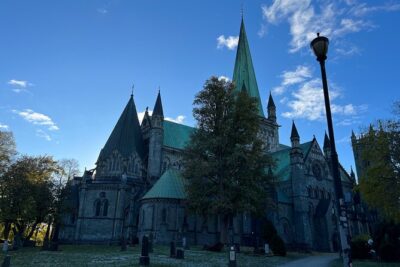
- Nidaros Cathedral finish: End at Norway’s grand Gothic cathedral, built over the tomb of St. Olav.
A short walk through Trondheim’s long story
This is a compact city-center walk, lasting about one hour to one hour and 30 minutes. The distance is manageable for most people, and the route gives you a useful first look at Trondheim without tying you to a fixed departure time.
The walk is self-guided through the VoiceMap app. Once the tour, map, and location data are downloaded, you can use them offline. That matters in Norway, where roaming charges, weak signal, or a busy network can get in the way of a live audio experience.
You begin in central Trondheim and finish at Nidaros Cathedral on Kongsgårdsgata. The route is designed as a one-way sightseeing walk rather than a loop. Plan what you’ll do after the cathedral, since the audio does not provide a return route to the starting point.
The city is Norway’s third largest, but its historic core is easy to cover on foot. The audio helps connect separate sights into one story. Instead of seeing a wooden palace, a bridge, a fortress, and a cathedral as unrelated stops, you learn how fire, religion, kingship, trade, and war shaped the same small center.
Other tours you can do at your own pace around Trondheim:
- Trondheim: Audio Guide Panorama Bustour
★ 4.0 · 9 reviews - Trondheim’s Regalia Self-Guided Tour of Norway’s Historic Centre
★ 5.0 · 9 reviews - Panorama Bus Tour with Audio Guide
★ 4.0 · 3 reviews
Olav Tryggvason and the city’s Viking beginning
One of the most useful early stops concerns Olav Tryggvason, the king who founded Trondheim in 997. He ruled Norway from 995 to 1000 and is a familiar figure in the old Icelandic sagas.
The commentary explains his role in Norway’s early Christian story, including his construction of the first Christian church in Norway. This gives the walk a firm starting point. Trondheim is not presented simply as an old Norwegian town. You see it as a place built at a time when royal power, belief, and trade were changing quickly.
I like this opening because it gives the rest of the route a clear frame. The cathedral later in the walk is not just a fine building. It connects to the long story of St. Olav and Norway’s conversion. The wooden buildings and riverfront are not just attractive photo stops. They belong to a city that grew through royal authority and commerce.
The audio commentary is short enough to keep you moving. It offers the main facts without turning the walk into a lecture. If you already know Trondheim’s history, you may want more detail. For a first visit, the amount of information is generally well judged.
Munkegata and Northern Europe’s largest wooden palace
The walk continues along Munkegata toward Stiftsgården, one of Trondheim’s most striking buildings. Its scale can surprise you. This is not a small historic house, but a palace with more than 100 rooms.
Stiftsgården was built between 1774 and 1778 for Lady Cecilie Christine Schøller. She was the widow of chamberlain Stie Tønsberg Schøller, a wealthy wholesaler and trader, and an important figure in Trondheim’s social elite.
The building’s Baroque design reflects the money and status of the late 18th century. Its wooden construction also says something about Trondheim’s building tradition. You are looking at a palace made from the same broad material that shaped much of the city’s historic center.
Since 1906, Stiftsgården has served as Trondheim’s official royal residence. That gives the stop a useful link between old social power and modern Norway. You can appreciate the façade on the outside, while the audio explains why this large residence was built and how it came to serve the royal family.
Admission fees for sights are not included, so treat this tour as an outdoor walking experience unless you choose to pay separately for entry somewhere along the way. The route still gives you a strong introduction to the palace and its place in Trondheim.
Narrow streets, parks, and the marks of the 1681 fire
After Munkegata, the route leads through narrower streets and past elegant parks and medieval churches. These quieter stretches give the walk some breathing room after the larger civic buildings.
A major part of the story is the great fire of 1681. Trondheim was badly damaged, and the rebuilding that followed changed the city’s appearance. The new plan brought Baroque ideas to the center, creating wider streets and a more ordered layout.
That history is especially useful because it explains what you are seeing underfoot. A city can look old while much of its form comes from a later rebuilding. The audio points out that difference and helps you read Trondheim as a place repeatedly reshaped by disaster.
This section also works well for independent walkers because you can set your own rhythm. Stop when a building catches your eye, take photographs, or pause the audio while you look around. You do not have to hold up a group or hurry to the next stop.
The tradeoff is that a self-guided walk depends on your attention. The app provides directions and location prompts, but you still need to watch traffic, read the map, and confirm that you are on the intended street.
Other audio-guided tours around Trondheim:
- Oslo: Scenic Fjord Cruise with Audio Guide Commentary
★ 4.5 · 5,375 reviews - Molde: Atlantic Ocean Road & Varden Audio Guide Bus Tour
★ 4.1 · 473 reviews - Geiranger: Bus Tour with Multilingual Audio Guide
★ 4.0 · 317 reviews - Ålesund: Ålesund and Surrounding Islands Audio Guide Tour
★ 4.1 · 116 reviews
The Old Town Bridge and Trondheim’s riverfront
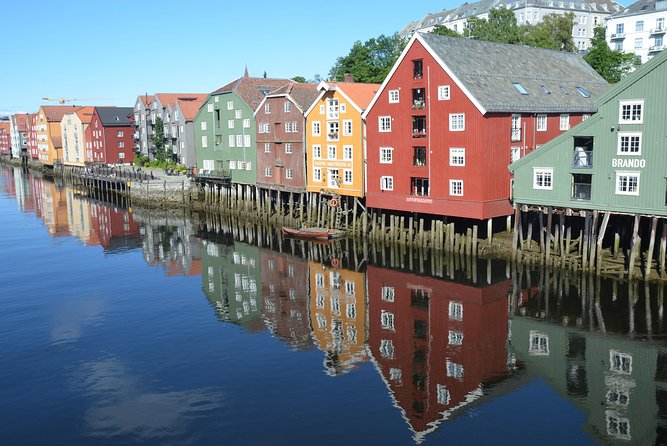
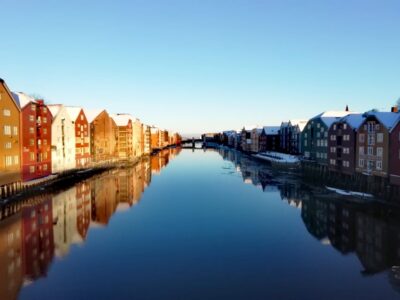
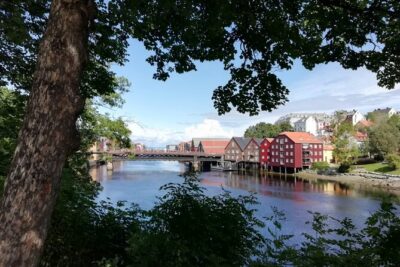
The route reaches the historic waterfront district, where colorful wooden warehouses line the river. These buildings recall the commercial side of Trondheim, when goods moved through the city and merchants built their businesses around the water.
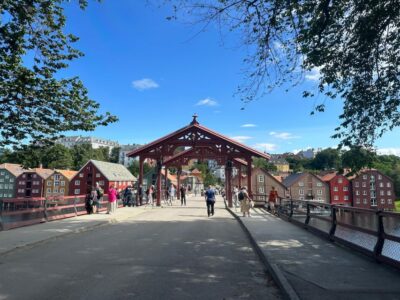
The Old Town Bridge is another memorable point along the route. It is known as the gate of happiness, a charming name that gives the crossing a bit of local character. From here, the riverfront offers some of the walk’s best views and photo opportunities.
I particularly like this part because it makes the city feel lived in rather than purely monumental. The cathedral and palace tell stories of kings, church leaders, and wealthy families. The warehouses show the practical side of the city, where trade helped keep Trondheim working.
The riverfront is also a good place to pause the audio. You may want a few extra minutes to take in the water, timber buildings, and hillside views before continuing. The tour’s stated duration is an estimate, not a hard schedule. With photographs and short stops, your walk can easily run toward the longer end of the 60 to 90 minute range.
Kristiansten Fortress and Trondheim’s wartime memory
Kristiansten Fortress sits above the city and appears as a hilltop landmark during the walk. It was built after the 1681 fire, both to watch over Trondheim and to defend its strategic position.
The fortress played an important part in resisting Swedish conquest in 1718. That makes it more than a scenic overlook. Its location shows why control of the hill mattered to the city’s safety.
The site also has a darker modern history. During the Second World War, the Nazis took over the fortress and executed 23 Norwegian patriots there. Today, the fortress is a museum, including a dungeon that is open to view.
If you want to enter the fortress, admission is not part of the audio tour. Look for the flag flying over the fortress. The information provided says that the flag indicates when the fortress is open to the public.
The route may not take you through every interior space, so keep your expectations clear. The audio gives you the historical setting and points out the fortress, while a separate visit is needed for a closer look at the museum and dungeon.
The Archbishop’s Palace and the religious center
The grounds of the Archbishop’s Palace provide another change of tone. Here, the story shifts toward church authority and the religious role of Trondheim.
Walking through the grounds helps you understand why Nidaros became such an important destination. The palace and cathedral were part of a wider religious center, not isolated attractions. The audio supplies the background as you move through the area, allowing the buildings to remain the focus.
This is also one of the more useful sections for first-time visitors. Without context, a palace beside a cathedral can seem like a collection of impressive stone buildings. The commentary explains the connection between the church, the archbishop, and the city’s place in Norway.
The experience remains firmly outdoor and self-paced. If you want to enter the cathedral or other sites, check separately for opening times and admission. The tour does not include those costs.
Finishing at Nidaros Cathedral
The walk ends at Nidaros Cathedral, the northernmost Gothic cathedral in the world. It was built over the tomb of St. Olav, giving the final stop a direct link to Norway’s medieval religious story.
This is a strong ending because the route has gradually moved from Trondheim’s founding king to the city’s royal residence, commercial riverfront, military defenses, and church center. By the time you reach the cathedral, the main themes have come together.
The cathedral is also a practical finishing point. You can choose to visit inside by buying a ticket there, as one route user did after completing the walk. If you have time, this is the natural place to continue your sightseeing.
The tour itself ends at the cathedral rather than returning you to the start. That is fine if you plan to keep exploring the area, but less convenient if you need to get back to a ship, hotel, or transport connection right away.
How the VoiceMap app handles the walk
The strongest part of the technology is its flexibility. The app plays the commentary based on your position, provides a map, and can alert you if you are moving in the wrong direction. You can walk at your own pace instead of keeping up with a scheduled guide.
The audio also appears to be easy to follow once it is running. The voice is described as pleasant, and the directions are clear enough to keep the route moving. The app can even help when you make a wrong turn.
Still, GPS is not perfect in a city center. One problem reported during the walk involved the tracker drifting off the route even when the person was walking correctly. Repeated warnings to return to the route can become irritating, especially when the error comes from the phone rather than the walker.
The starting point can also be awkward during a festival or another city event. If fences block the exact location, the app may keep telling you that you are only a few meters away without triggering the audio. In that situation, use the force start option.
My practical advice is simple:
- Download the VoiceMap app and the tour before walking.
- Download the audio, map, and geodata for offline use.
- Start with a charged phone.
- Look at the route before setting out.
- If the start is blocked, use force start rather than waiting for GPS.
- Treat the map as a guide, not an unquestionable authority.
The provider offers support through [email protected] if you have trouble redeeming or downloading the tour. This is worth knowing because one poor experience came from the setup process rather than the historical content itself.
Is $7.99 good value?
At $7.99 per person, this is one of the cheaper ways to get structured sightseeing in Trondheim. A private walking guide would give you more personal interaction and the chance to ask questions, but this option costs far less and works well for a couple or a small private group.
The lifetime access is the biggest value point. You do not need to finish the route on one particular day, and the downloaded tour never expires. You can pause the walk, return later, or use it on a future visit.
The price also makes the tour easy to pair with other plans. You can use the audio as a morning orientation, stop for lunch, then visit Nidaros Cathedral or Kristiansten Fortress separately. Since transport, food, drinks, and admission fees are not included, budget for those extras if you plan to go inside the sights.
The main limitation is content length. Some people will find 60 to 90 minutes just right. If you want a long, detailed city tour, it may feel short. The commentary covers the key sights and broad story, but it does not replace a full museum visit or an in-depth guide.
Who should choose this Trondheim audio tour?
I would choose this walk if you want independence, a low price, and a clear introduction to central Trondheim. It suits people who like stopping for photographs, moving at their own speed, and avoiding a fixed group schedule.
It is also useful for a first afternoon in the city. The route brings together the sights most likely to help you get your bearings: Munkegata, Stiftsgården, the riverfront, the Old Town Bridge, Kristiansten Fortress, the Archbishop’s Palace, and Nidaros Cathedral.
Families and couples can use the tour privately, and most people can participate. Service animals are allowed, and the route is near public transportation. You still need to manage your own phone, navigation, and pace.
I would skip it if you dislike phone-based tours, want a live guide, or expect deep detail at every stop. GPS quirks can also bother anyone who prefers a completely simple, hands-free walk.
Free cancellation is available if you cancel at least 24 hours before the local start time. Inside that window, the cost is not refunded, and late changes are not accepted.
Should you book Trondheim’s Inner Circle?
Book it if you want a practical introduction to Trondheim for less than the cost of many paid attractions. The best reasons are the strong route, the pleasant and clear audio, the offline access, and the lifetime validity.
Prepare for it properly by downloading everything early and knowing how to force-start the audio. Give yourself time to stop at the riverfront and Nidaros Cathedral, and remember that the route finishes at the cathedral rather than at its starting point.
For independent sightseeing, this is a solid value. It gives you the city’s main historic sights and enough background to make them meaningful, with only a few app-related frustrations to manage.
FAQ
How long does the Trondheim audio tour take?
The walk takes approximately one hour to one hour and 30 minutes, depending on your pace and how long you stop at the sights.
Where does the tour finish?
The tour ends at Nidaros Cathedral, at Kongsgårdsgata 2 in Trondheim.
Does the audio tour expire?
No. Once downloaded, the tour provides lifetime access and never expires.
Can I use the tour without mobile data?
Yes. The VoiceMap app includes offline access to the audio, maps, and geodata once you download them.
Are entrance fees included?
No. Admission fees, transportation, food, drinks, and personal expenses are not included.
What happens if I need to cancel?
You can receive a full refund if you cancel at least 24 hours before the experience’s local start time. Cancellations or changes made less than 24 hours before the start are not refunded.
Just added around Trondheim
- Trondheim: Audio Guide Panorama Bustour★ 4.0 · 9 reviews
- Trondheim: City Bus Tour★ 4.1 · 31 reviews
- Half-Day Highlights of Trondheim by Bus and City Walk★ 4.0 · 33 reviews
- Slegding and tram-tour★ 5.0 · 19 reviews
- Trondheim Private Walking Tour with a Local★ 4.5 · 38 reviews
- Trondheim’s Regalia Self-Guided Tour of Norway’s Historic Centre★ 5.0 · 9 reviews
- Skiing in winter wonderland★ 4.5 · 12 reviews
- See the city power-walk★ 4.5 · 6 reviews
Tours in Trondheim, compared.

Half-Day Highlights of Trondheim by Bus and City Walk
Read our review →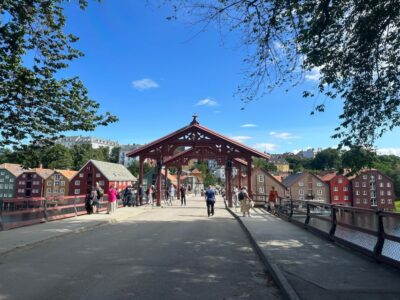

Browse the lists this tour appears in