
Reviewed · FJORD CRUISES
Geiranger: Sky to Fjord Downhill Biking Adventure
The best part of this Geiranger outing is simple: you start high above the fjord and coast downhill through some of Norway’s most dramatic scenery. The route covers 16 kilometers, with stops near Kvandalls waterfall, Knuten, and famous Flydalsjuvet.
I like the freedom to stop for photos instead of keeping up with a group. I also like that the ride begins with a comfortable vehicle transfer to Djupvatn Lake, at 1,030 meters above sea level. The main caution is important: you ride without a guide on a public road, and large buses may share the route.
Key points at a glance
- Start at Djupvatn Lake: The air-conditioned transfer carries you up to 1,030 meters, where the downhill ride begins.
- 16 kilometers of mostly downhill riding: You can set your own pace and stop for photographs along the way.
- Major viewpoints on the route: Expect the Blåfjell viewpoint, Kvandalls waterfall, Opplenskedalen Valley, Knuten, and Flydalsjuvet.
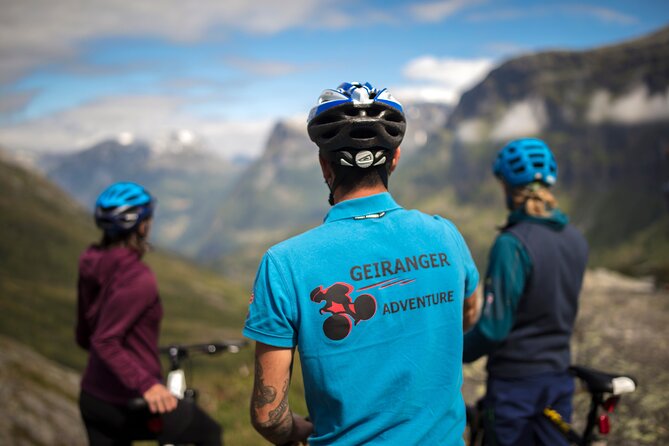
- Equipment is supplied: A bike, helmet, bicycle gloves, and visibility vest are included.
- No guide rides beside you: You receive instructions and tips before setting off, then continue independently.
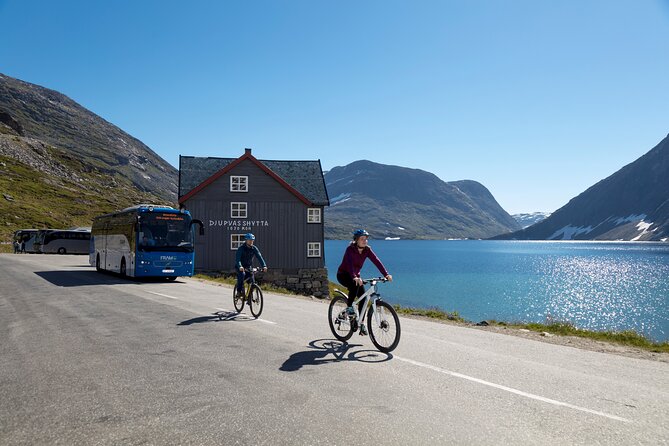
- A real road ride, not a closed bike trail: There is no shoulder or bike path on parts of the descent, and traffic can include large buses.
From Geirangervegen to Djupvatn Lake
You meet at Geirangervegen 10 in Geiranger. From there, the operator drives you uphill in an air-conditioned vehicle to Djupvatn Lake. The transfer is more than a simple shuttle. It gets the hard climbing out of the way and places you at the start of the scenic descent.
Djupvatn sits at about 1,030 meters above sea level, so the setting feels very different from the village below. The lake marks the high point of the outing, with the road dropping toward Geiranger and the fjord. The exact weather can change the character of the ride. On a clear day, you get broad views and sharper mountain detail. In poor weather, visibility can shrink quickly, which is why the activity requires good weather.
At the start, the team provides the bike, helmet, gloves, and visibility vest. You also receive technical and safety instructions, plus advice on how to handle the downhill route. Since no guide accompanies you, pay close attention at this point. You want to know how the bike brakes, where to go, and what to do if you need help before leaving the lake.
Other boats out on the water in Åndalsnes:
- From Ålesund: Trollstigen Sightseeing Village & Fjord Tour
★ 4.4 · 651 reviews - Guided Boat Tour in Geiranger
★ 4.5 · 147 reviews - Fjord Sightseeing Tour by Boat in Geiranger
★ 4.0 · 69 reviews
A downhill ride with a few things to manage
The route is mostly downhill, which makes this suitable for many people with moderate fitness. You do not need the stamina required for a long mountain climb. One short section requires some pedaling uphill, and it may be easier to walk that portion if you prefer.
Do not confuse easy fitness with no skill needed. A downhill bicycle ride still calls for steady braking, control on bends, and comfort sharing the road with motor vehicles. You should be able to ride a bicycle confidently before booking.
The ride is unguided, so you are free to go slowly. That is a real advantage for photography. You can pause at viewpoints, catch your breath, and let faster riders move ahead. It also means you are responsible for your own pace and decisions. If you are nervous on descents, the lack of a guide beside you may feel less reassuring than a conventional group cycling tour.
The Blåfjell viewpoint and Kvandalls waterfall
Early in the descent, the viewpoint at the foot of Blåfjell gives you a chance to pause and take in the mountain setting. The road itself is part of the attraction, but the stops keep the outing from becoming a nonstop coast.
Kvandalls waterfall adds movement and sound to the ride. Waterfalls are one of the reasons this route works so well as a bicycle excursion. From a vehicle, you can look out the window and move on. By bike, you can stop beside the road, take photographs, and spend a little time looking at the water and mountain slopes.
Use the stops wisely. Since the ride is unguided, you will not receive a running explanation at each viewpoint. The value here is the chance to see the scenery at your own pace, not a detailed historical or geological tour.
Opplenskedalen Valley and Knuten
As you continue, Opplenskedalen Valley opens another view of the high country. The route shifts between mountain scenery, water, and the long descent toward Geiranger. The variety helps make the 16 kilometers feel like a proper outing rather than a short bicycle transfer.
Knuten is another useful pause along the way. You can stop, take photographs, and check your comfort before continuing. Keep in mind that the ride takes place on a road, not a purpose-built cycling track. You need to pull over safely and remain aware of passing traffic.
One of the most practical tips is to avoid rushing the descent. The road may tempt you to pick up speed, but the best parts are the views and the freedom to stop. Braking early is especially sensible if you are not used to downhill riding.
Other rides around Åndalsnes:
- E-bike and hike in Åndalsnes
★ 5.0 · 4 reviews - Andalsnes: Bike & Hike Adventure to Litlefjellet Summit
★ 5.0 · 3 reviews - Oslo: 3-Hour Highlights Bike Tour
★ 4.8 · 1,609 reviews - Oslo Highlights Bike Tour
★ 5.0 · 979 reviews
Flydalsjuvet, the grand finish
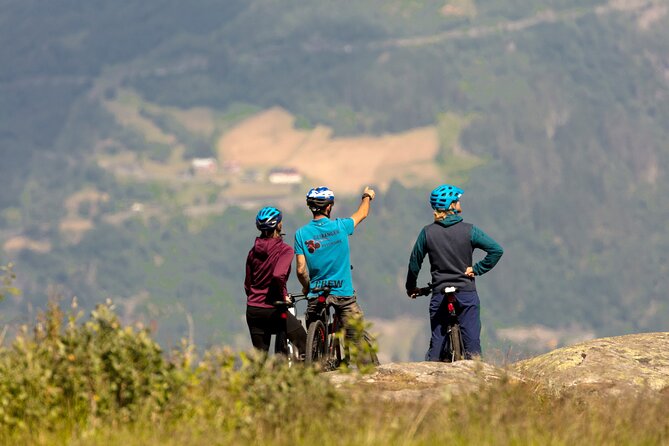
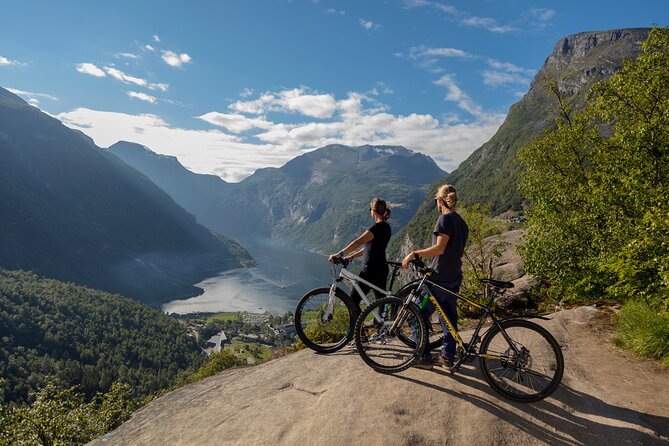
Flydalsjuvet is the route’s most famous viewpoint and the major photographic reward. From here, the Geiranger area shows the steep relationship between mountain, road, and fjord. It is the kind of place where a short stop can easily turn into a longer one.
The itinerary identifies Flydalsjuvet as the formal stop, but the ride also allows you to pause elsewhere. You are not locked into a strict group schedule. That flexibility is one of the strongest reasons to choose this activity over a standard sightseeing drive.
You should still keep an eye on the clock. The full outing lasts about two and a half hours, including the vehicle transfer and equipment arrangements. The return is to the original meeting point in Geiranger.
Why the unguided format works, and when it does not
The operator gives you instructions at the top, then you ride independently. I see this as both the charm and the weakness of the activity.
For confident riders, it works very well. You can ride with your own companion, pause whenever you want, and avoid the stop-and-start rhythm of a large group. One couple even left the bikes at the start of a hike to Storsaeterfossen Waterfall, then continued riding afterward. That shows the flexibility available, although the hike itself is not a standard included part of the listed itinerary.
For less confident riders, the setup demands more preparation. There is no guide pointing out every turn or riding behind you. You need to understand the route, manage your speed, and deal with traffic on your own.
The group size is capped at six people, which keeps the transfer and equipment process relatively small. But the ride itself may spread people out because each person can travel at a different pace.
Traffic is the biggest practical concern
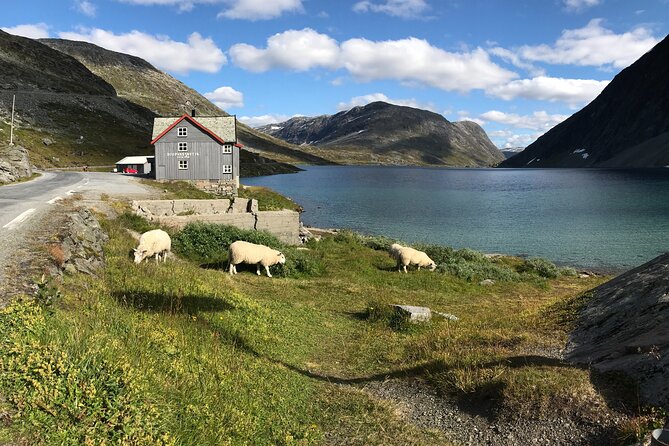
This is not a traffic-free mountain path. Parts of the descent have no shoulder or bicycle lane, and large buses use the road. That detail deserves more attention than the glossy scenery. If sharing a narrow road with buses makes you uneasy, you may decide not to ride after seeing the conditions.
Traffic may be accommodating, but you should not count on every vehicle behaving exactly as you wish. Stay alert, keep control of the bike, and leave room for stopping. The supplied visibility vest is useful here, but it does not replace careful riding.
This road setting also explains why moderate physical fitness is listed as a requirement. The physical effort is not mainly about climbing. It is about holding a controlled position, braking, steering, and staying focused for the length of the descent.
Equipment: included, but inspect it yourself
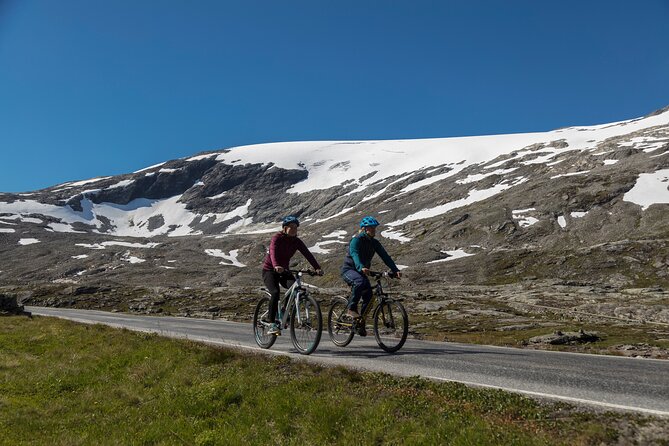
The package includes a bike, helmet, gloves, and visibility vest. That makes the price easier to understand, since you do not need to bring a bicycle or rent basic protective equipment separately.
Most of the supplied feedback describes the bikes as good and easy to manage. Still, serious equipment concerns have also been raised, including poorly adjusted seats, worn tires, sticky brakes, loose kickstands, small helmets, and damaged visibility gear. Those problems are not something you should ignore on a downhill road.
Before setting off, I would check:
- That the seat height suits you
- That both brakes engage smoothly
- That the tires look properly inflated and have usable tread
- That the helmet fits securely
- That the kickstand is folded and stable
- That the vest and gloves are in usable condition
Ask for an adjustment before leaving the lake. The equipment is part of the safety arrangement, not just a convenience. If something feels wrong in the first few meters, stop and report it rather than trying to manage it for the whole descent.
The operator’s team provides safety and technical advice, but the quality of your ride still depends on the condition and fit of the equipment handed to you.
What $160.09 buys you
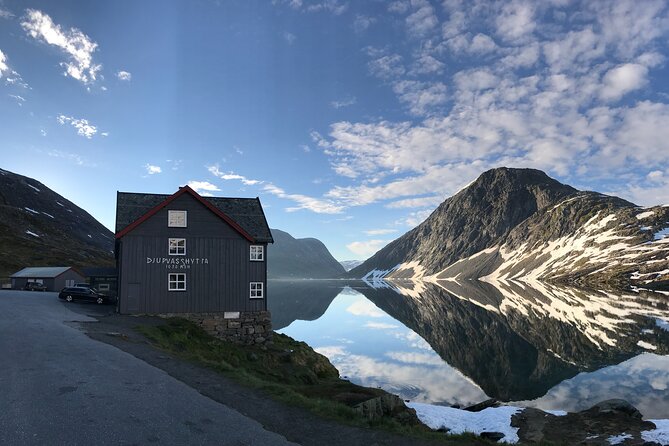
The listed price is $160.09 per person. That is not cheap for a two-and-a-half-hour activity, especially because there is no guide riding with you and the main cycling portion is self-directed.
You are paying for more than bicycle use. The price covers the uphill vehicle transfer, the bike and protective equipment, the setup at Djupvatn, and access to a route that would be difficult to arrange on your own. You also avoid making your own way up to 1,030 meters and then solving the problem of getting back down.
The value is strongest if you want an active way to see Geiranger rather than another bus ride. It is weaker if you define a tour as a guide-led outing with commentary and hands-on support throughout. At this price, I would expect the equipment to be checked carefully and the starting instructions to be clear.
The small maximum group of six is another part of the value. You are not being processed with a huge crowd, and the independent format gives you more control. Still, the cost may feel high for a simple drop-off and bike ride, particularly if you do not care about riding and mainly want the viewpoints.
Who should book this ride?
I would recommend it to:
- Confident recreational cyclists
- People who enjoy downhill riding more than strenuous climbing
- Cruise passengers wanting an active shore excursion
- Couples or friends who want to stop for photographs
- Riders comfortable sharing a public road with buses and cars
- Visitors who prefer freedom over a guide-led schedule
I would think twice if you are a nervous cyclist, have limited road-riding experience, or want constant local commentary. The ride is not a closed-course thrill attraction. It is a scenic road descent with real traffic and independent riding.
Age alone is not the issue. One 67-year-old rider found the route easy to manage. Your confidence, balance, braking control, and comfort on a downhill road matter more than the number on your passport.
Timing, weather, and booking details
The experience lasts approximately two hours and 30 minutes and is offered in English. Confirmation is provided when you book, and the meeting point is near public transportation.
This activity is weather dependent. If poor weather causes a cancellation, you can receive a different date or a full refund. For your own cancellation, you need to cancel at least 24 hours before the start time to receive a full refund. Changes or cancellations inside that window are not accepted.
Because the outing is often booked well in advance, planning matters. It is booked an average of 74 days ahead, so do not assume you can decide at the last moment, especially if your schedule depends on a cruise call.
My call: book it if the road setting suits you
This is a memorable way to see Geiranger because it combines a high mountain start, a long downhill ride, waterfalls, valleys, and Flydalsjuvet. The strongest features are the scenery, the freedom to stop, the small group size, and the convenient transfer to Djupvatn Lake.
I would book it if you are a capable cyclist who understands that this is an unguided ride on a public road. Before leaving the top, inspect the bike, confirm the route, adjust the helmet and seat, and ask about emergency contact details. If traffic or equipment concerns would spoil your day, choose a conventional sightseeing option instead.
For the right rider, the price buys an active view of Geiranger that a bus window cannot match. Just remember that the fjord scenery is spectacular, but you still need to ride the bicycle.
FAQ
Where does the Geiranger downhill biking experience start?
It starts at Geirangervegen 10, 6216 Geiranger, Norway.
Where does the activity finish?
The ride and activity finish back at the original meeting point.
How long does the experience last?
The experience lasts approximately two hours and 30 minutes.
How far do you ride?
You ride approximately 16 kilometers downhill from Djupvatn Lake toward Geiranger.
How high is the starting point?
The vehicle takes you to Djupvatn Lake, which is about 1,030 meters above sea level.
Is a guide included during the bicycle ride?
No. You receive technical and safety instructions before starting, but the downhill ride takes place without a guide.
What equipment is included?
A bicycle, helmet, bicycle gloves, and visibility vest are included. An air-conditioned vehicle transfer is also included.
What happens if the weather is poor?
The activity requires good weather. If it is canceled because of poor weather, you will be offered another date or a full refund.
Just added around Åndalsnes
- Via Ferrata Åndalsnes West Wall★ 5.0 · 65 reviews
- The Golden Train on Rauma Railway in Romsdalen★ 4.5 · 21 reviews
- Via Ferrata Åndalsnes Intro Wall★ 5.0 · 84 reviews
- 3-Hour Kayak Tour in Åndalsnes★ 5.0 · 6 reviews
- Double Kayak Rental in Geiranger (Excursions.no)★ 4.5 · 4 reviews
- Geiranger by Royal route, 5 hours with visiting a high-mountain farm★ 5.0 · 3 reviews
- Private tour Geiranger and Glaciers 1 to 15 people★ 5.0 · 4 reviews
- Geiranger: Excursions.no Geiranger Highlights★ 3.5 · 19 reviews
Fjord Cruises, compared.
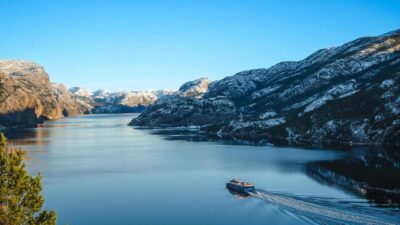
Scenic Fjord Cruise to Lysefjord and Preikestolen
Read our review →
Scenic Fjord Cruise with Audio Guide Commentary
Read our review →
Fjords and Sommarøy Islands Tour with Salmon Picnic
Read our review →
Dalsnibba, Flydalsjuvet, Eagle Bend & Fjords Tour
Read our review →Browse the lists this tour appears in