
Reviewed · MUSEUMS & VIKING HERITAGE
Stavanger: Norwegian Petroleum Museum – Entrance Ticket
Stavanger’s Norwegian Petroleum Museum turns a complicated subject into something you can grasp quickly: how oil and gas formed, how crews locate them beneath the seabed, and how offshore platforms changed Norway. I like the hands-on displays and the clear link between petroleum income, Norwegian society, and today’s climate problem. The only drawback is that the museum may feel less appealing if you have little interest in industry or environmental issues.
I especially like the way the museum serves both adults and children. You can study original objects, films, and models, while younger visitors try the rescue chute, catastrophe room, interactive games, and play platform. Allow enough time to follow the story rather than simply glance at the machinery, because the best part is seeing how technology, money, work, and climate are tied together.
Key points to know before you go
- Oil explained simply: Learn how petroleum forms, how deposits are found, and how drilling and production work offshore.
- Norway’s modern story: See how the petroleum industry became the country’s most important industry and shaped Norwegian society.
- Climate included: Exhibits address greenhouse gas emissions, global warming, and the wider climate challenge.
- Good for families: Children can use the rescue chute, catastrophe room, games, picture quiz, and play platform.
- Watch Oilkid: The museum film follows growing up during a period of major change.
- Easy city-center stop: The museum is close to Stavanger’s Vågen harbor and open year-round, with seasonal hours.
Why Stavanger’s oil museum matters
Stavanger is closely linked with Norway’s offshore petroleum industry, so this museum gives you useful local context rather than a general science lesson. It explains why offshore operations became so important to the country and shows the systems behind an industry that most people only encounter through headlines.
You begin with the basics. Oil and gas are not simply pulled from a convenient underground pool. They form over long periods, remain beneath layers of seabed, and require careful searching before drilling can even begin. The museum uses models and interactive displays to make those steps easier to follow.
I like this approach because it keeps the subject grounded. You are not asked to understand every technical term before moving on. Instead, the museum builds the story from formation, to exploration, to drilling, to production.
That simple sequence is one of the strongest parts of the visit. A Polish visitor described the presentation as simple and pleasant, and that is a fair way to think about it. The museum gives you enough detail to understand the process without turning the visit into a technical course.
Other museums and Viking sites around Stavanger:
- A time travelling adventure to “The Viking Farm”, Avaldsnes+TVP.
★ 4.0 · 18 reviews - Kon-Tiki Museum Entrance Ticket
★ 4.5 · 1,096 reviews - Bergen: Viking Village, Nærøyfjord Cruise & Flåm Railway
★ 4.8 · 1,047 reviews
From seabed geology to offshore production
The central story concerns the Norwegian continental shelf. Exhibits show how resources beneath the seabed are located and how offshore drilling and production are carried out.
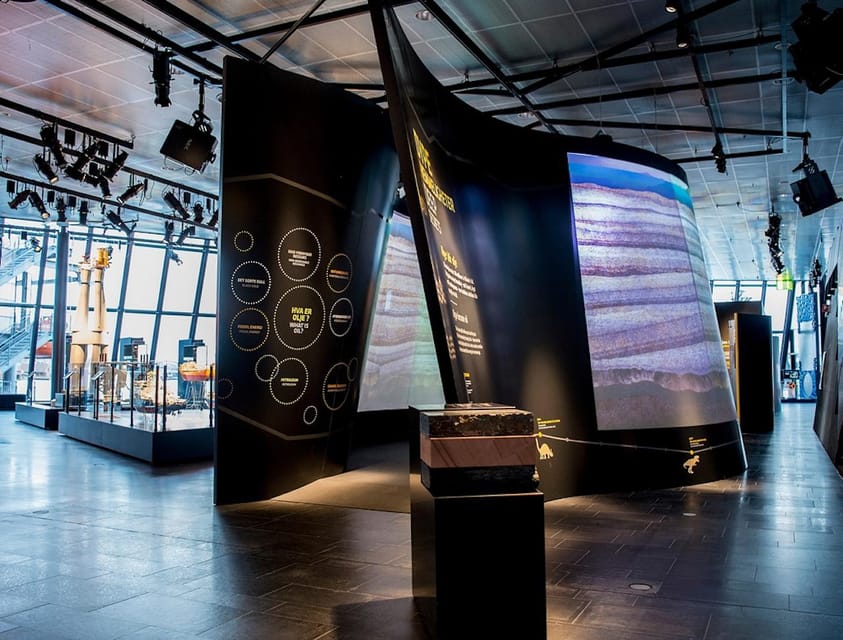
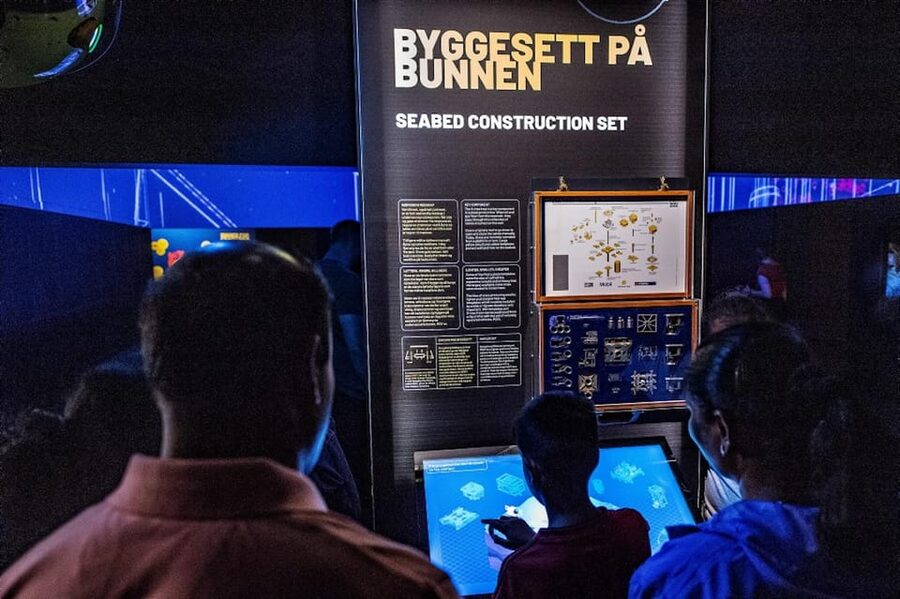
You can expect a mixture of original objects, scale models, films, and interactive exhibits. The objects give the subject physical weight. Models help you see the parts of an offshore operation that are difficult to picture from a photograph. Interactive elements let you work through ideas rather than only read about them.
For adults, the value is in connecting the separate pieces. Exploration requires technology. Drilling requires engineering and safety systems. Production depends on a large network of equipment and workers. The museum presents these developments as part of a longer story of technological change.
This also gives the displays a human side. Offshore work is not just a set of machines. It involves demanding conditions, risk, training, and systems designed to protect people. The rescue chute and catastrophe room help younger visitors think about safety, while adults can consider the hazards behind the polished public image of the petroleum sector.
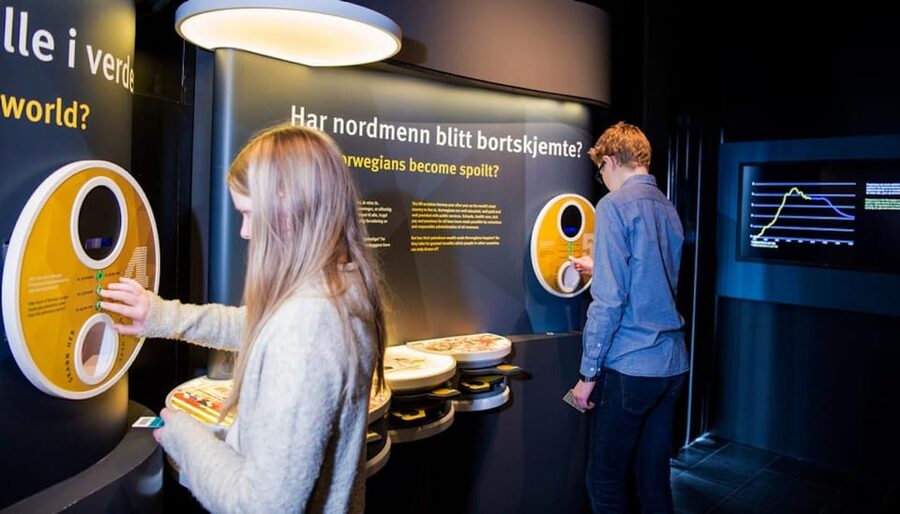
The museum does not present oil only as a source of fuel. It also looks at how oil revenue affected Norwegian society. That is important context if you are trying to understand modern Norway. The industry changed the country’s economy and its place in the world, and the museum asks you to consider the effects of that change.
The climate challenge is part of the visit
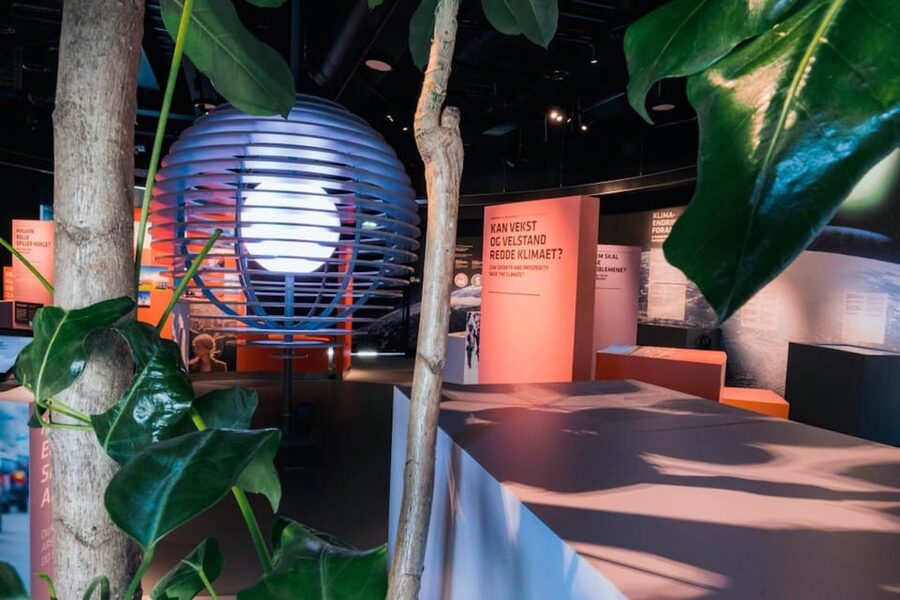
A strong museum about petroleum cannot stop at the moment oil and gas come out of the ground. This one also addresses greenhouse gas emissions, global warming, and the climate challenge.
That balance makes the visit more useful. You see why petroleum has mattered to Norway, then face the environmental cost of the same industry. The museum does not leave you with a simple story of progress. It shows that technology can create wealth and solve problems while also contributing to a serious global issue.
I appreciate that the climate section is part of the main museum experience rather than an afterthought. It gives you a chance to consider the full chain, from natural resources beneath the seabed to their effect on the wider world.
If you are visiting with children, this section can also lead to good questions. The displays give families a starting point for discussing energy, emissions, and how societies make difficult choices. You do not need a background in science to follow the basic message.
Watch Oilkid for the personal story
Make time for the museum film Oilkid. It focuses on growing up during a period of change, giving the large subject of petroleum a more personal frame.
The film matters because industrial history can otherwise feel distant. Oil fields, drilling systems, and national revenue figures are useful, but a story about ordinary life helps you think about how a changing industry affected people and families.
I would place the film somewhere in the middle of your visit, after you have seen enough of the main exhibits to understand the setting. Then the personal story can add meaning to the technology and social changes around it.
The information provided does not specify the film’s running time, so you should check the current schedule if timing matters. Still, it is specifically recommended as a museum highlight, and it is worth including rather than treating it as an optional extra.
Other tickets worth booking ahead around Stavanger:
- Tromsø: Midnight Concert Ticket at the Tromsø Cathedral
★ 4.8 · 1,734 reviews - Oslo: 24 or 48-Hour Hop-On Hop-Off Sightseeing Bus Ticket
★ 4.1 · 1,470 reviews - Bergen: Round-Trip Ulriken Cable Car Ticket
★ 4.6 · 925 reviews - Oslo: Paradox Museum Entry Ticket
★ 4.3 · 799 reviews
Family activities beyond ordinary display cases
This is not a museum where children are expected to walk quietly from one glass case to the next. The activity list is unusually practical and physical.
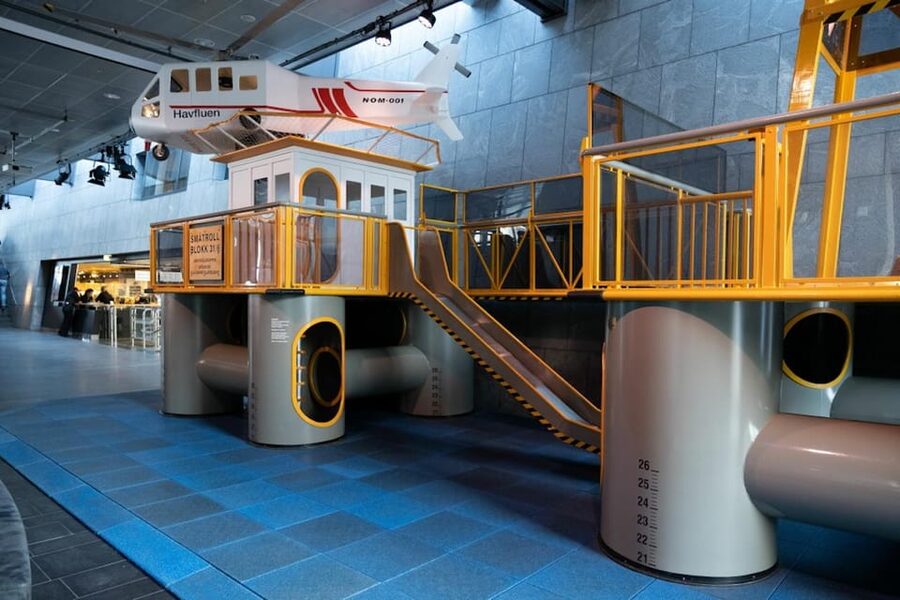
Young visitors can use a rescue chute, explore a catastrophe room, try interactive games, and play on a platform where smaller children can slide, climb, and play. These features give children something active to do while adults spend time with the more detailed exhibits.
The picture quiz is another useful family feature. It encourages everyone to look closely for details in the exhibitions, so children are not simply waiting for the adults to finish. You can use it as a shared task, with each person searching for answers in a different part of the museum.
The play platform is intended for little ones, while older children and teenagers may prefer the interactive games and safety-related features. The museum therefore works best for families with children of different ages, since the activities are not all aimed at the same group.
There is a practical consideration here. If you are visiting without children, the family areas may not add much to your experience. If you are bringing children, however, they can make the museum much easier to enjoy at a sensible pace.
A useful stop near Vågen harbor
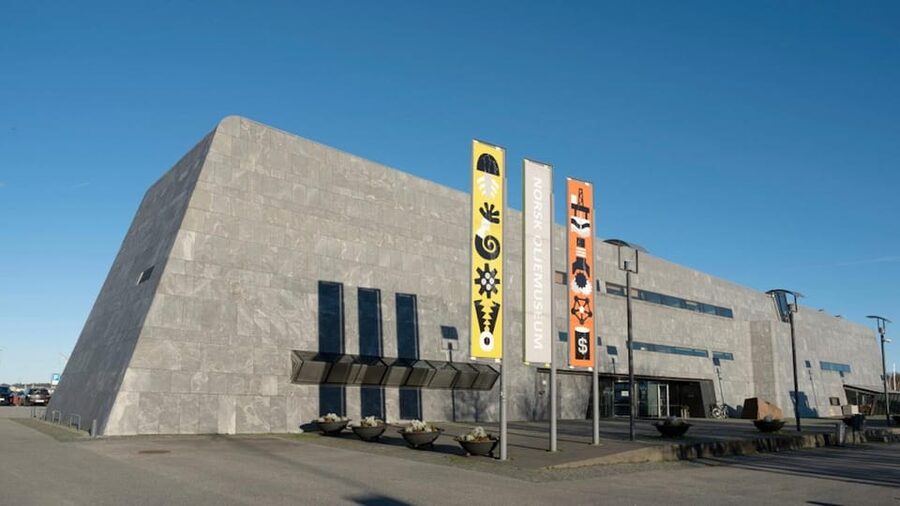
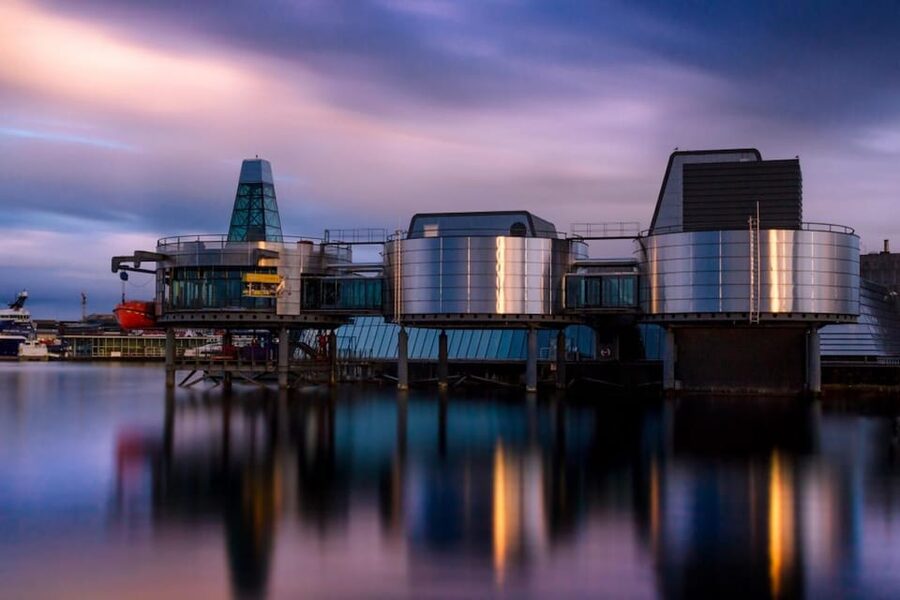
The museum is in Stavanger city center, close to Vågen harbor. That location makes it easy to add to a day of exploring the city rather than planning a separate excursion.
The ticket is valid for one day, so you have room to fit the museum around other plans. The activity does not include meals or pickup and drop-off service, but those omissions are less troublesome here because the museum is central and close to the harbor area.
If you are driving, Jorenholmen is the recommended parking area. Public transport details are not provided, so check local options if you are not staying near the center.
The city-center setting also makes the museum useful in poor weather. Stavanger can be a wet place, and an indoor attraction with enough material for adults and children gives you a practical alternative to outdoor sightseeing.
How long should you allow?

The ticket lasts for one day, but the exact time you need depends on how you use the museum.
A quick visit focused on the main story might work for you if you want a basic introduction to the petroleum industry. I would allow longer if you plan to read the displays, watch Oilkid, try the interactive exhibits, and use the picture quiz with children.
Families may also need extra time because the play areas and games can slow the visit in a good way. Children often want to repeat hands-on activities, while adults need time to read the explanations.
The museum’s stated opening hours are generous in summer, from 10:00 to 19:00 every day from June 1 through August 31. From September 1 through May 31, it opens Monday through Saturday from 10:00 to 16:00 and Sunday from 10:00 to 18:00.
At Christmas, it closes on December 24, December 25, December 31, and January 1. At Easter, it closes on Good Friday and Easter Sunday, and it is closed on May 17. Check the date carefully if you are visiting around a Norwegian holiday.
Is the $19 ticket good value?
At $19 per person, this is not a throwaway attraction, but the ticket gives you access for a full day. That matters if you want to take your time with the exhibits, film, activities, and family features.
I see the strongest value in the museum’s range. You are not paying only for a collection of machinery. You get science, industrial history, social history, climate information, films, interactive displays, and children’s activities in one place.
The price is easier to justify if you have a full hour or more to spend and a genuine interest in understanding Norway’s oil story. Families may find the practical activities especially helpful, since the adults can read and watch while children have their own things to do.
If you only have a short gap in Stavanger and prefer art, architecture, or outdoor sights, the ticket may feel less worthwhile. The museum’s subject is specific. Its value comes from explaining that subject well, not from trying to appeal to everyone.
The overall rating is 4.8 from 78 reviews, and the most consistent praise centers on the museum’s clear, pleasant presentation. One useful takeaway is that the museum makes the formation and extraction of oil easy to understand, while historical details add interest instead of clutter.
Who should visit the Norwegian Petroleum Museum?
I would recommend it to several kinds of visitors:
- Families looking for an indoor activity with real hands-on features.
- Adults who want a clear introduction to Norway’s petroleum industry.
- Anyone curious about how offshore drilling works.
- Visitors interested in the connection between energy, society, and global warming.
- People staying near Stavanger harbor who want an easy city-center stop.
- Travelers who enjoy museums that combine objects, models, films, and interactive displays.
I would be less likely to recommend it to someone who wants only scenery or a short photo stop. This is a museum for understanding. The exhibits reward attention, and the climate material asks you to think beyond the machinery.
The host or greeter support is available in English and Norwegian, and the museum itself lists English and Norwegian as its languages. The museum is wheelchair accessible, which is useful to know before you plan your day.
Small details that improve your visit
Start with the main petroleum story, then give yourself time for the climate section. If you rush directly to the children’s activities, you may miss the connection between Norway’s wealth, offshore technology, and the emissions challenge.
If you are visiting as a family, use the picture quiz to keep everyone involved. The rescue chute, catastrophe room, and interactive games are not just distractions. They help turn safety and offshore work into something children can understand through action.
Watch Oilkid rather than skipping every film. Its focus on growing up during change adds a human note to the industrial story.
Check the seasonal hours before you go, especially outside summer. The winter closing time is early on most weekdays and Saturdays, while Sundays remain open later.
Should you book this museum ticket?
Book it if you want to understand why petroleum is so important to Norway and how the industry works offshore. The clear explanations, original objects, models, films, climate displays, and family activities give the $19 ticket solid value, particularly if you use the full day.
It is an especially good choice for families, curious adults, and anyone with an interest in energy or Norwegian society. Skip it only if your Stavanger schedule is very tight or industrial history does not appeal to you.
For most visitors, this is a practical, well-focused museum stop. It explains a major part of Norway’s modern story without hiding the difficult climate questions that come with it.
FAQ
Where is the Norwegian Petroleum Museum?
The museum is in Stavanger city center, close to Vågen harbor.
How much does admission cost?
The listed price is $19 per person.
How long is the ticket valid?
The ticket is valid for one day.
What does the admission ticket include?
It includes entrance to the Norwegian Petroleum Museum.
Are meals included?
No. Meals are not included.
Is transportation included?
No. Pickup and drop-off services are not included. Jorenholmen is the recommended parking area.
Is the museum suitable for children?
Yes. Children can use the rescue chute, catastrophe room, interactive games, picture quiz, and play platform with climbing, sliding, and play areas.
Is the museum wheelchair accessible?
Yes. The museum is wheelchair accessible.
What languages are available?
The museum and host or greeter support are available in English and Norwegian.
When is the museum open?
From June 1 through August 31, it is open daily from 10:00 to 19:00. From September 1 through May 31, it is open Monday through Saturday from 10:00 to 16:00 and Sunday from 10:00 to 18:00. It closes on specified Christmas, Easter, and May 17 holidays.
Can I cancel the booking?
Yes. You can cancel up to 24 hours in advance for a full refund. Reserve now and pay later is also available.
Just added around Stavanger
- The Pulpit Rock Air★ 4.5 · 8 reviews
- Discover Sensational Stavanger: Self-Guided Audio Tour★ 3.5 · 7 reviews
- Preikestolen | Pulpit Rock – Hike with a local guide★ 5.0 · 84 reviews
- Stavanger Private Walking Tour with a Local★ 4.5 · 20 reviews
- Kjerag Low-Season Hike + Packed Lunch★ 5.0 · 3 reviews
- Stavanger Kjerag Hike with Guide and Transportation★ 5.0 · 9 reviews
- Guided winter hike to Pulpit Rock Preikestolen★ 4.5 · 23 reviews
- Guided sunrise hike to Pulpit Rock Preikestolen★ 5.0 · 20 reviews
Museums & Viking Heritage, compared.

Viking Village, Nærøyfjord Cruise & Flåm Railway
Read our review →

Sightseeing with Holmenkollen Ski Jump & Vigeland Park
Read our review →
Troll Museum Entry Ticket with AR Media Experience
Read our review →
Browse the lists this tour appears in