
Reviewed · MUSEUMS & VIKING HERITAGE
A time travelling adventure to “The Viking Farm”, Avaldsnes+TVP.
The most memorable part of this experience is the short boat ride through Karmsundet, the waterway that gave Norway its name. You reach the Viking Farm on Bukkøy by water, then shift from sea views and old legends to reconstructed longhouses, a boathouse, and a digital museum in Haugesund.
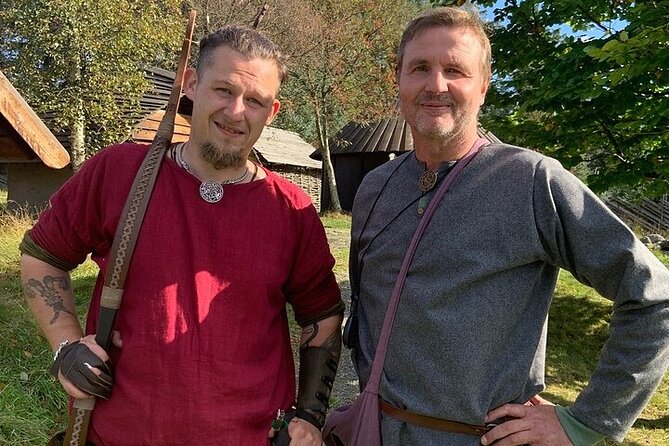
I like the way the tour joins two very different kinds of history: a hands-on farm setting and the modern technology of Viking Planet. I also like the local guiding, especially when the chieftain at the farm has time to explain daily life and answer questions. The main caution is timing. On one occasion, a school group meant that much of the farm visit became a 45-minute lecture in one spot rather than a full walk around the site.
Key points to know before you book
- The boat ride gives the history a real setting: You travel through Karmsundet, the passage known to Norse people as Nordvegr, or Way to the North.
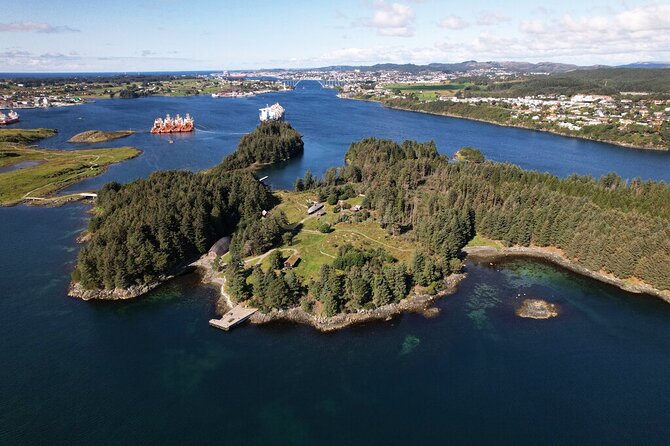
- Bukkøy feels more atmospheric than a city museum: The farm sits on a small forested island with a longhouse, roundhouse, boathouse, and woodland paths.
- The tour combines old and new: After the reconstructed farm, you visit Viking Planet Haugesund, a digital museum in the city center.
- The farm visit can vary: School groups or other scheduled activities may limit how much of the site you tour.
- The listed starting point is in Haugesund: Although the experience is described under Stavanger in some information, the meeting point is Garpeskjærvegen 3 in Haugesund.
- The price is $140: That is a fair but not bargain-level price for a three-hour guided outing with transport and two Viking-focused attractions.
From Haugesund harbor into Karmsundet
The tour begins at Garpeskjærvegen 3, 5527 Haugesund, where you meet the local team and are escorted to a passenger boat. Check this location carefully if you are coming from Stavanger, since the practical start and finish point given for this experience are both in Haugesund.
The boat ride is more than a transfer. Your guide points out places along Karmsundet and explains why this narrow sound mattered so much to early Norway. Norse people called it Nordvegr, meaning Way to the North. That name is linked to the modern name Norway, giving the journey a useful thread before you even reach the farm.
The overview describes the boat ride as about 15 minutes, while the first itinerary section allows 30 minutes for the guided passage. I would treat it as a short, guided boat segment rather than a long cruise. Its value is the setting and the introduction, not onboard comfort or a full sightseeing voyage.
You also pass beneath or near the Karmsund Bridge, where five standing stones are known as the Maidens. They may once have formed a simple calendar. That detail gives you something specific to watch for, rather than leaving you to stare at the water without context.
Other museums and Viking sites around Stavanger:
- Stavanger: Norwegian Petroleum Museum – Entrance Ticket
★ 4.8 · 78 reviews - Kon-Tiki Museum Entrance Ticket
★ 4.5 · 1,096 reviews - Bergen: Viking Village, Nærøyfjord Cruise & Flåm Railway
★ 4.8 · 1,047 reviews
Reaching the Viking Farm on Bukkøy
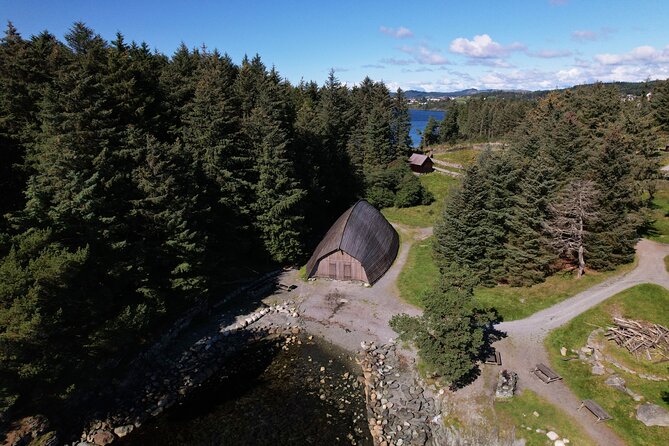
The Viking Farm sits on Bukkøy, a small forested island among the rocks. The setting does much of the work. Instead of looking at isolated objects in glass cases, you see buildings arranged as a working farm might have been arranged, with paths leading through the woods beyond the yard.
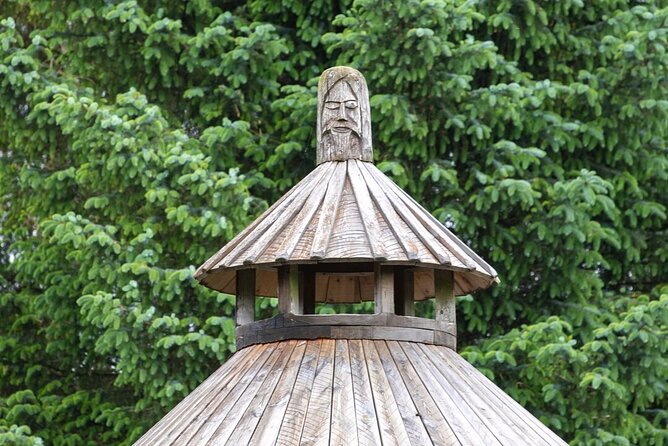
The reconstructed site includes a longhouse, a boathouse for a Viking warship, a roundhouse, and several smaller buildings. The longhouse is the main draw. It provides the enclosed, smoky, communal setting people usually picture when thinking about Viking life, though the precise value here comes from being able to move through the space and hear how it was used.
You may also hear the local story tied to the island: King Olav Tryggvason is said to have drowned a group of wizards here about a thousand years ago. It is the sort of dramatic tale that works well with children, though the tour is not only for families. People with a serious interest in Viking culture will appreciate the combination of setting, architecture, and oral storytelling.
A family connected with the farm has been described as sharing its way of life and inviting people into the different rooms. The emphasis is on simple necessities and customs passed from one generation to the next. That personal element can make the visit feel less like a staged display and more like a conversation about how the buildings are used and understood.
The summer season is the key period for public visits. In evenings and on weekends, the longhouse can also be rented for guided tours and banquets. Each June, the Viking Festival brings people from several countries, with tents set up among the reconstructed buildings. If your trip happens during the festival, the atmosphere will be more crowded and event-focused than on a standard visit.
The farm visit needs the right expectations
The Viking Farm is the heart of the tour, but it is also the part most affected by the day’s schedule. One visitor found the guides good but was disappointed to spend roughly 45 minutes in one place listening to a talk instead of walking around the village. The operator acknowledged that a school group had affected the visit and said it was working with the farm to improve consistency.
That is useful advice for you. The advertised farm stop lasts about 1 hour and 30 minutes, but the exact balance between explanation and exploration may change. If you want a self-guided wander through every building, ask at the start how the time will be handled. If the group includes schoolchildren, the site may operate partly around their program.
I would not treat this as a fault that ruins every departure. Another account describes an excellent chieftain who was full of facts and happy to talk about almost anything. The strongest version of the visit seems to be personal and flexible, with time to ask questions rather than simply follow a fixed speech.
The woodland paths are another useful feature. They offer a quieter break from the farmyard and give you room to appreciate Bukkøy’s setting. The tour information does not promise a long nature walk, so think of these paths as an added option, not a separate hiking excursion.
Why the old waterway and standing stones matter
The tour’s historical value is not limited to buildings labeled Viking. Karmsundet explains why this area mattered. A protected water route could support travel, trade, political power, and movement between the coast and inland areas. You do not need a long lecture to grasp the point: the boat puts you directly in the route that made the region important.
The five standing stones beneath the high arch of the Karmsund Bridge add another layer. Their possible use as a primitive calendar hints at how people observed the year before modern clocks and printed calendars. The story is brief, but it gives you a specific landmark to remember after the boat ride.
I like these small points because they connect the big theme, the birth of a nation, to things you can actually see. The tour is at its best when the guide ties a view, a bridge, a stone, or a building to a clear idea.
Other farm visits around Stavanger:
- Puppy Training Experience at a Husky Farm in Tromso
★ 5.0 · 79 reviews - Reindeer Sledding, Feeding And Sami Culture At Reindeer Farm
★ 4.5 · 76 reviews - Sleigh Ride w/ snacks – Experience Arctic Farm Life
★ 5.0 · 53 reviews - Haugesund Viking Cruise – The Viking Farm and Viking Planet
★ 4.3 · 37 reviews
Viking Planet Haugesund brings the story into the digital age
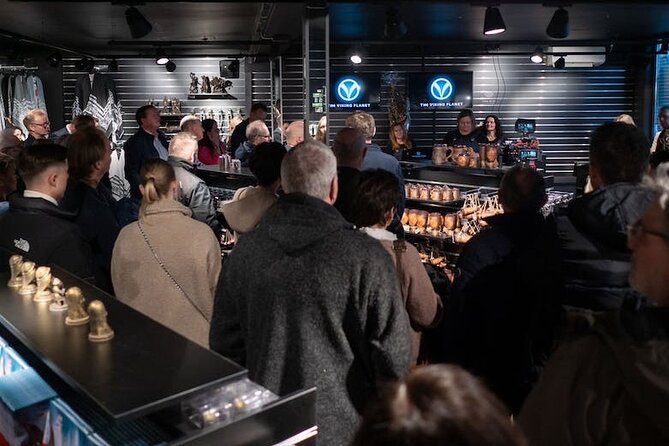
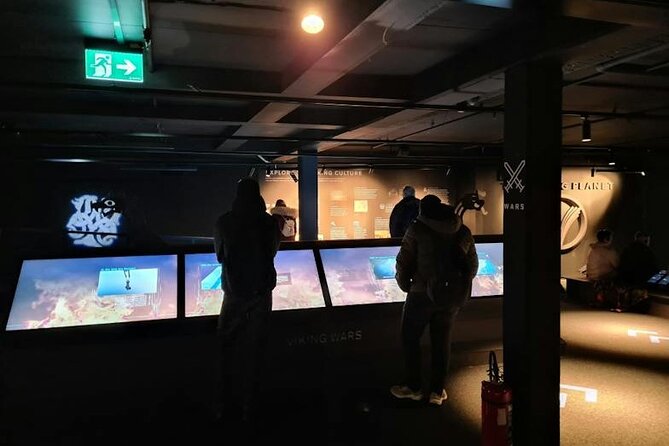
After the farm, the experience turns toward Viking Planet Haugesund, a digital museum in the heart of Haugesund. The contrast is deliberate: first a reconstructed island farm, then a technology-based presentation of Viking subjects.
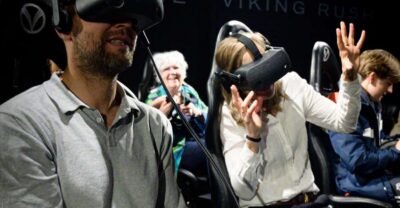
You receive about an hour at the digital museum. The supplied details do not list each digital feature, so I would not book this expecting a specific film, virtual reality program, or interactive exhibit that has not been confirmed. What you can count on is a modern museum setting that offers a different way to approach the period.
This second stop is especially helpful for families with mixed interests. A younger child may respond more quickly to digital displays than to a long talk in a reconstructed building. At the same time, adults who want a broader introduction to Viking Norway get a change of pace after the farm.
The order also works well. The farm gives you a physical reference point. Once you enter the digital museum, you have already seen a longhouse, a roundhouse, and a boat building. That makes the modern presentation easier to place.
Is $140 a fair price?
At $140, this is not a low-cost shore outing. The value depends on what you want from a three-hour experience. The price includes the guided boat trip, the visit to the Viking Farm, admission to Viking Planet, and local guiding. You are paying for a connected experience rather than two unrelated entry tickets.
I consider it reasonable for families or Viking enthusiasts who would otherwise need to arrange transport and admission on their own. The boat access gives the day a special shape, and the guide helps turn Karmsundet into part of the story. The value drops if the farm visit becomes mostly a stationary lecture or if you mainly want free time to explore.
The maximum group size is 45 people. That is large enough that you should not expect a private conversation at every stop. A good guide can keep such a group moving, and the experience has received strong praise for clear updates and attention to the group’s movements.
The tour is listed as suitable for all ages, and most people can take part. Service animals are allowed, and the meeting point is near public transportation. Those are useful practical advantages, though the information provided does not specify details about boat boarding, wheelchair access, or restroom facilities. Ask the operator directly if any of those points matter to you.
Who will get the most from this outing?
I would choose this tour for a family that wants history without spending a full day in a conventional museum. The short boat journey, island setting, buildings, stories, and digital museum create enough variety to keep the day moving.
It also suits a cruise passenger who wants a guided introduction to Haugesund’s Viking connections. The meeting point is close to the cruise terminal area, and the tour ends back at the same meeting point. Still, you should allow yourself a sensible buffer around your ship’s schedule, since the experience lasts about three hours and the itinerary can be affected by group activity.
Serious Viking enthusiasts may enjoy the site, but should know what it is. This is not an archaeological dig, a long museum study session, or a festival on every departure. It is a reconstructed farm paired with a digital museum, supported by local stories and a short boat journey.
The tour is less suitable if you dislike organized pacing or want a long, independent visit. You may have to remain with the group, and the farm’s program can influence how much free movement you get.
Booking, cancellation, and the final call
You can cancel for a full refund up to 24 hours before the local start time. Cancellations or changes made within 24 hours are not refunded, and the tour requires a minimum number of participants. If that minimum is not reached, you are offered another date or experience, or a full refund.
I would book this if you want the setting as much as the facts. The boat route, forested island, standing stones, and reconstructed buildings give the history a physical sense that a city museum alone cannot provide. The digital museum then adds a modern counterpoint.
I would pause before booking if your main goal is a detailed, uninterrupted tour of every building. Ask how the farm schedule looks on your date, especially if school groups are expected. For most families and visitors with a clear interest in Norway’s Viking past, the combination is distinctive enough to justify the $140 price.
FAQ
Where does the tour begin?
The meeting point is Garpeskjærvegen 3, 5527 Haugesund, Norway.
Where does the tour end?
The activity ends back at the meeting point in Haugesund.
How long does the experience last?
The tour lasts approximately three hours.
What is the tour price?
The listed price is $140.
What transportation is included?
A passenger boat takes you through Karmsundet to the Viking Farm on Bukkøy and returns you to the city-side meeting point as part of the experience.
What can you see at the Viking Farm?
The farm includes a longhouse, a boathouse for a Viking warship, a roundhouse, and several smaller buildings. There are also paths through the forest outside the farmyard.
What is Viking Planet Haugesund?
Viking Planet Haugesund is a digital museum in the center of Haugesund, visited for about one hour during the tour.
How large can the group be?
The experience allows a maximum of 45 participants.
Can I cancel for a refund?
Yes. You can receive a full refund if you cancel at least 24 hours before the start time. Cancellations made less than 24 hours before the start time are not refunded.
Just added around Stavanger
- The Pulpit Rock Air★ 4.5 · 8 reviews
- Preikestolen | Pulpit Rock – Hike with a local guide★ 5.0 · 84 reviews
- Stavanger Private Walking Tour with a Local★ 4.5 · 20 reviews
- Discover Sensational Stavanger: Self-Guided Audio Tour★ 3.5 · 7 reviews
- Kjerag Low-Season Hike + Packed Lunch★ 5.0 · 3 reviews
- Stavanger Kjerag Hike with Guide and Transportation★ 5.0 · 9 reviews
- Guided winter hike to Pulpit Rock Preikestolen★ 4.5 · 23 reviews
- Guided sunrise hike to Pulpit Rock Preikestolen★ 5.0 · 20 reviews
Museums & Viking Heritage, compared.
Viking Village, Nærøyfjord Cruise & Flåm Railway
Read our review →
Sightseeing with Holmenkollen Ski Jump & Vigeland Park
Read our review →
Troll Museum Entry Ticket with AR Media Experience
Read our review →
Browse the lists this tour appears in