
Reviewed · MUSEUMS & VIKING HERITAGE
Oslo: Paradox Museum Entry Ticket
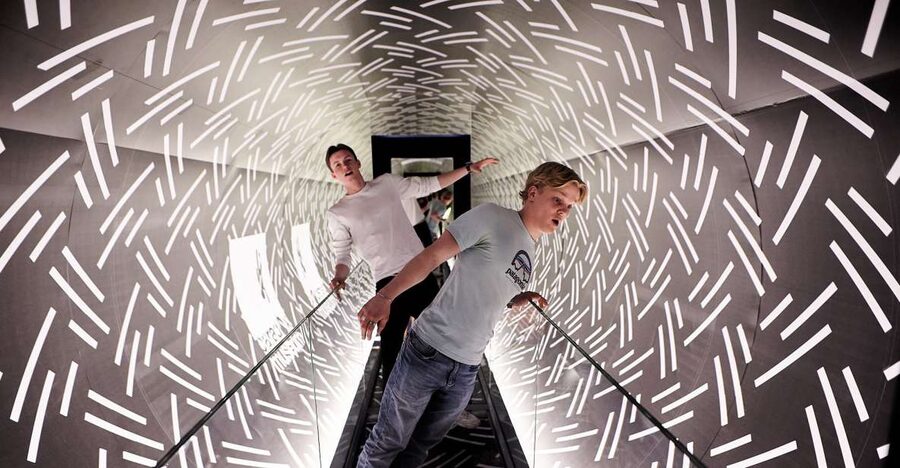
Paradox Museum Oslo turns optical illusions into hands-on play. You do not simply look at displays. You step into rooms, test strange effects, pose for photos, and learn why your eyes and brain can reach the wrong conclusion.
I like the clearly marked photo points, which make it easier to find the best angle, and the short explanations with QR codes, which add some science to the fun. The main drawback is value: at $29 per person, the museum can feel expensive if you move quickly or have already visited similar illusion attractions.
Key points to know
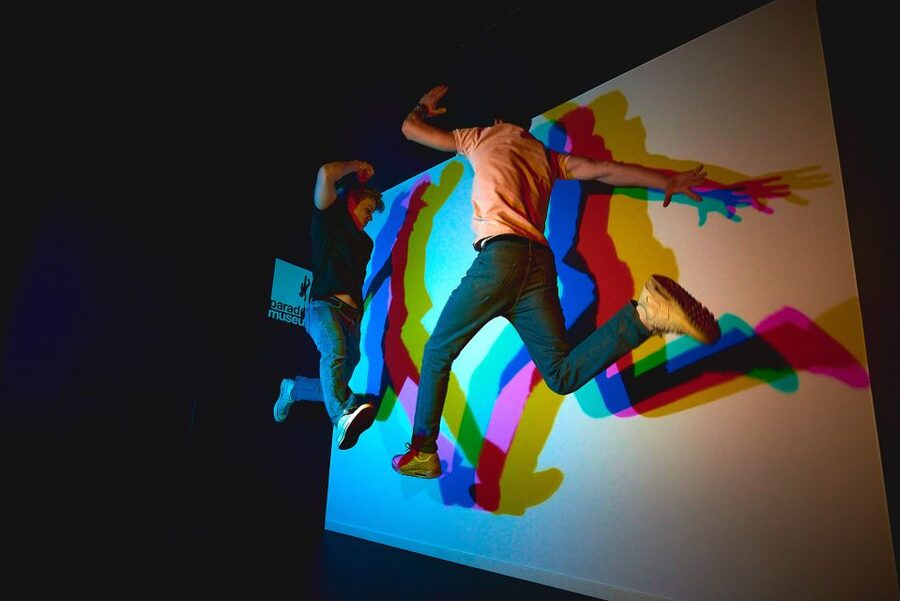
- More than 70 interactive exhibits cover perception, physics, perspective, and visual trickery.
- Plan on about one hour, though families and groups who stop for photos may spend closer to two.
- Follow the one-way route through the museum, with signs directing you from one installation to the next.
- Photo points are marked, but staff may not be stationed at every exhibit to help take pictures.
- Nationaltheatret and Stortinget public transport stops are only a couple of minutes away.
- Kseniia, known as the captain by one visitor, received warm praise for her energy and help, though most admission is self-guided.
Inside Oslo’s playful world of perception
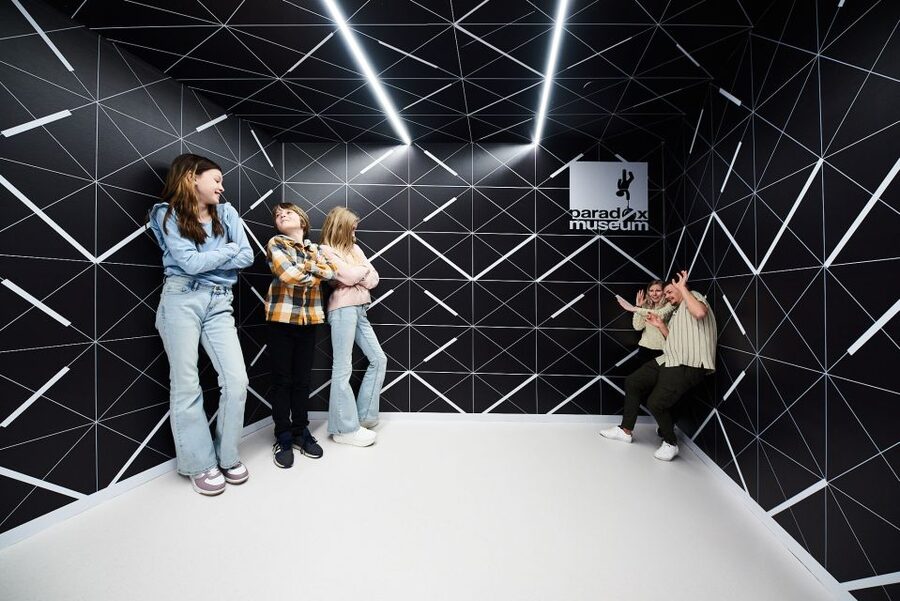
The Paradox Museum sits in the heart of Oslo, making it an easy addition to a city day. You can reach it from Nationaltheatret or Stortinget, with both stops just a couple of minutes away. That central location matters because this is not an all-day outing. It fits neatly between a museum visit, lunch, or an evening booking.
Once inside, you follow a one-way flow. Signs guide you from one exhibit to the next, so you do not need to work out where to go. This keeps the route simple, though it also means you generally move through the museum in a set order rather than wandering freely.
The attraction is built around participation. You may need to stand in a particular spot, look through a certain opening, or position another person in the frame to make the illusion work. Many installations are designed for photographs, so the experience feels part science lesson and part playful studio.
You will find more than 70 exhibits covering visual trickery, perception, physics, and perspective. Some rely on familiar optical effects. Others use rooms, mirrors, angles, or forced perspective to make an ordinary scene look impossible. The collection is not meant to be a serious art museum. Its aim is to make you question what you see, then laugh when you understand how the effect works.
Other museums and Viking sites around Oslo:
- Kon-Tiki Museum Entrance Ticket
★ 4.5 · 1,096 reviews - Oslo: Viking Planet Entry Ticket
★ 4.4 · 603 reviews - The Fram Museum Admission Ticket
★ 4.5 · 490 reviews
How the one-hour route works
A one-hour ticket is a useful guide, not a strict limit on how much attention you must give each room. If you move briskly and take only a few photographs, you may finish in less than an hour. A solo visitor who does not stop long at each illusion could complete the route quickly.
With children, a partner, or a group of friends, allow more time if your schedule permits. Posing for photographs takes longer than simply looking at an exhibit. You may also want to repeat an effect after you understand the correct position or camera angle.
The route begins with simpler illusions that help you learn how the museum works. This early section can require a little patience. Some people find the first exhibits easy to understand, while others need clearer instructions before the trick becomes obvious. Read the signs, look for the marked standing points, and use the QR codes when an exhibit leaves you puzzled.
As you continue, the installations become more visually dramatic. The best moments usually come when you take part rather than stand back. Bring a friend who is willing to pose, crouch, turn, or play along. The museum is much less rewarding if you treat it as a sequence of displays to inspect silently.
Because the route is one way, you cannot always return to an earlier exhibit immediately. Take your time with the installations that interest you. If a room is busy, you may need to wait for a clear photo opportunity rather than rush through.
The photo experience, from marked angles to missing helpers
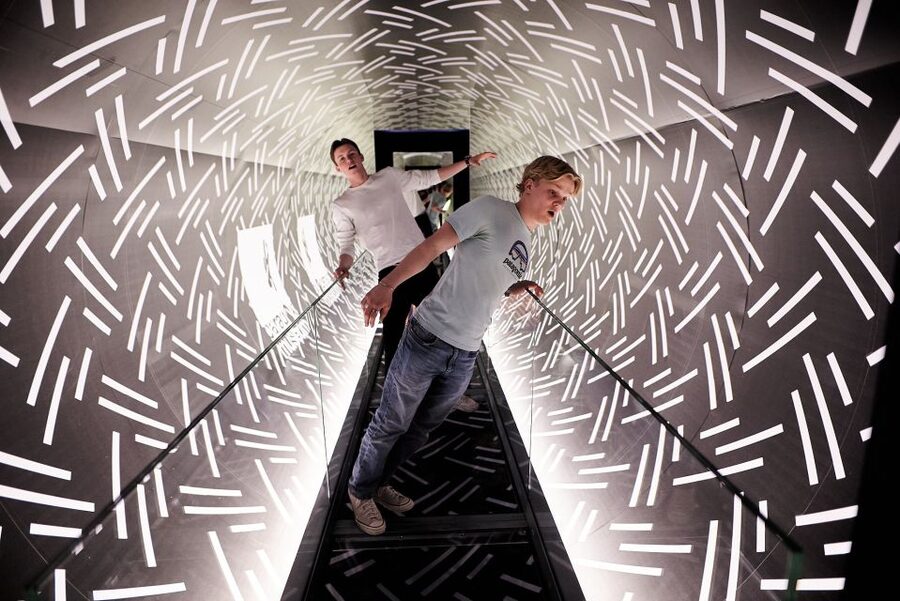
Photography is a major part of the attraction. Each exhibit has a recommended photo point or a clear position that helps you get the intended effect. These markers remove much of the guesswork and are especially useful when the illusion depends on perspective.
You will still need to frame the shot carefully. The best photograph may require one person to stand in a precise place while another uses the correct angle. If you are visiting alone, taking pictures can be harder. A staff member may help, but you should not assume someone will be available at every installation.
This is one of the museum’s practical weaknesses. Helpful staff have taken photographs for solo visitors and explained how the displays work, but assistance is not guaranteed in every room. At times, only one area may have a staff member available for photos. If you want a full set of polished images, go with a partner or small group.
Bring a phone with enough battery and storage. That is practical advice rather than a museum rule, since the experience encourages repeated photographs. You may want to try several angles before moving on, especially when the first image does not show the illusion clearly.
The marked photo points are valuable because they make the museum more accessible to people who are not used to photographing perspective tricks. They also help families get a usable picture without spending ten minutes guessing where to stand.
What you learn behind the tricks
The museum is light on formal guiding. Your admission includes access to the exhibition areas, not a dedicated tour guide. English and Norwegian are used throughout the experience, and explanations are available through exhibit descriptions and QR codes.
That self-guided format gives you freedom. You can linger over a strange effect, skip a display that does not interest you, or move at your own pace. It also means you need to take some responsibility for getting the most from each installation.
The educational side is simple but worthwhile. The displays show how perception can be misled by perspective, visual context, and physical arrangement. You are not studying advanced science, but you do get a clear reminder that the brain interprets what the eyes receive. The fun comes first, with the explanation close behind.
Some exhibits may feel familiar if you have visited other illusion museums or social media photo attractions. The basic ideas are not always new. The value here is the way the museum brings many of them together in one attractive, easy-to-follow route.
I would give the signs a careful read instead of rushing to the next photo. A few installations can be confusing at first, and the explanation may show you how to recreate the effect properly. The QR codes are useful for anyone who wants more context than a short wall label provides.
Other tickets worth booking ahead around Oslo:
- Oslo: 24 or 48-Hour Hop-On Hop-Off Sightseeing Bus Ticket
★ 4.1 · 1,470 reviews - The Viking Planet Museum Ticket
★ 4.0 · 197 reviews - Oslo: Munch Museum Admission Ticket
★ 4.5 · 193 reviews - Tromsø: Midnight Concert Ticket at the Tromsø Cathedral
★ 4.8 · 1,734 reviews
Is $29 a fair price in Oslo?
At $29 per person, this is not a cheap filler activity. The price is easier to justify if you spend a full hour or two, use many of the exhibits, and take photographs you genuinely want to keep. It is also more appealing for families or groups, where the shared reactions are part of the entertainment.
The cost feels less convincing if you finish in under an hour or have already seen several similar optical illusion attractions. Much of the visual trickery will be familiar to anyone who has visited a weird room museum, a perspective attraction, or a similar photo-focused venue.
Oslo is an expensive city, so that context matters. Some people consider the ticket reasonable for a central indoor activity, while others find it high for an attraction built mainly around visual effects. I would compare it with the rest of your day rather than judge the ticket in isolation.
For a rainy afternoon, a family break, or an hour between scheduled activities, the price can make sense. For a solo visitor looking for a serious museum with deep interpretation, it is less suitable. The attraction is about active fun, quick discoveries, and photographs, not a long scholarly visit.
Who will enjoy Paradox Museum Oslo most?
Families with children are a strong match. The exhibits are hands-on, visual, and easy to enjoy across different ages. Children can experiment with the effects while adults read the explanations or help arrange the perfect photograph.
Couples and groups of friends should also have a good time, especially if everyone is happy to pose. Many of the installations work best when two or more people share the frame. The museum gives you an easy way to create silly photographs without needing a separate photo session.
Curious adults can enjoy the science behind the tricks, but expectations matter. This is not a traditional museum with original paintings, long historical displays, or quiet galleries. It is closer to an interactive entertainment venue with educational details built into the route.
Solo visitors can still enjoy it. One solo visitor found that a staff member offered to take photographs, which made the visit better. Still, you may move faster alone, and some exhibits are more fun when another person can take part. If you are alone, use the photo markers and ask staff for help when available.
The museum is wheelchair accessible. Food and drinks are not allowed inside, so plan to eat before or after your visit rather than expecting a café stop as part of the experience.
Staff, guidance, and the human side
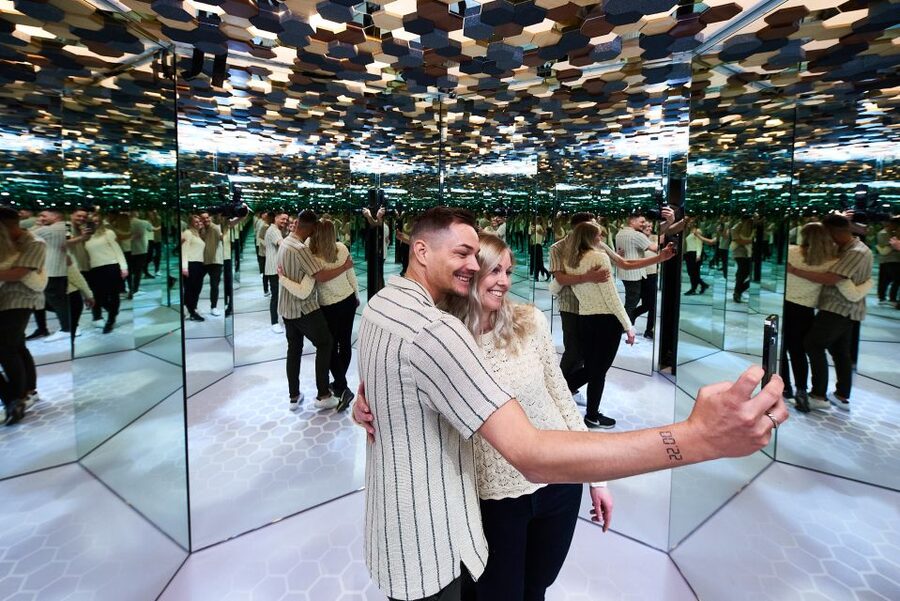
The museum is mainly self-guided, but staff can make a real difference. Friendly, energetic assistance has helped people understand the displays and take photographs. One particularly praised staff member was Kseniia, referred to as the captain, whose enthusiasm left a strong impression.
That personal help is not consistent at every exhibit. You may find staff in one area but not another. Some people have felt that more guides would make the illusions easier to understand, especially at the beginning.
The best approach is to see staff help as a bonus rather than part of the guaranteed format. You receive admission to all exhibition areas and the Paradox Boutique, but not a private explanation at each installation. Read the instructions first, then ask for help if an effect is unclear.
This balance between independence and occasional assistance works well for a short visit. You are not tied to a group schedule, and there is no need to wait for a guide before moving on. The tradeoff is that a few exhibits may not reach their full potential if you cannot work out the intended position.
Getting there and planning your visit
The museum is easy to reach in central Oslo. Nationaltheatret and Stortinget are the closest public transport stops, each only a couple of minutes away. That makes the attraction practical during a sightseeing day, with no long transfer or separate excursion required.
You should arrive at the entrance about 10 minutes before your booked time and show your ticket for check-in. Timed entry helps control the flow through the rooms, although the museum still uses a one-way route once you are inside.
Admission includes access to all exhibition areas and the Paradox Boutique. Food and drinks are not included and are not allowed inside. The boutique sells games, souvenirs, and keepsakes, so leave a little time at the end if you want to browse.
The activity is available with free cancellation up to 24 hours before the booking time. You can also reserve now and pay later, which helps if your Oslo schedule is still changing. Check the available starting times before booking, since the duration is listed as one hour rather than an open-ended visit.
How to get the best value from your hour
Start by reading the instructions instead of rushing toward the camera. The first few exhibits teach you the basic language of the museum: where to stand, how to frame the effect, and what your eyes are being tricked into seeing.
Visit with at least one other person if photographs matter to you. One person can pose while the other takes the picture, and you can swap roles. If you go alone, ask staff for help, but allow for the possibility that they will not be free at every point.
Do not judge the museum by the first few displays. Some early effects may feel familiar or easy to understand. The larger installations later in the route can offer more satisfying photographs and stronger shared reactions.
If you have children, let them lead for part of the visit. They may spot the intended action faster than you do, and giving them control turns the route into a small problem-solving game rather than a simple walk through rooms.
Finally, give yourself a little room after the one-hour estimate. You can complete the museum quickly, but a relaxed visit with photos and repeat attempts may take longer. The attraction is more worthwhile when you treat the exhibits as activities rather than a checklist.
Should you book Paradox Museum Oslo?
Book it if you want a central, indoor activity built around optical illusions, playful photographs, and simple science. It is especially well suited to families, couples, friends, and anyone with an hour to fill between other Oslo plans.
Think twice if you want a traditional museum, a fully guided experience, or strong value from a short visit. The $29 ticket is easier to defend when you spend up to two hours, take part in many exhibits, and enjoy the social side of the attraction.
My practical call is this: choose Paradox Museum Oslo when you are happy to pose, experiment, and laugh at your own eyes. Go with another person if possible, arrive ready to follow the one-way route, and treat staff assistance as helpful but not guaranteed.
FAQ
Where is Paradox Museum Oslo located?
It is located in Oslo Municipality, in the heart of Oslo. The closest public transport stops are Nationaltheatret and Stortinget, both a couple of minutes away.
How long does the visit take?
The stated duration is one hour. You might finish sooner if you move quickly, while families and groups who stop for photos may spend closer to two hours.
How much does admission cost?
The listed price is $29 per person.
What is included in the ticket?
The ticket includes admission to Paradox Museum Oslo, access to all exhibition areas, and access to the Paradox Boutique.
Is the experience guided?
The visit is mainly self-guided. Exhibits include descriptions and QR codes, and the museum operates in English and Norwegian. Staff may help with explanations and photographs when available.
Can I take photographs inside?
Yes. The museum is designed to be photo-friendly, and clearly marked photo points show where to stand for many effects.
Are food and drinks allowed?
No. Food and drinks are not allowed inside the museum, and they are not included with admission.
Is Paradox Museum Oslo wheelchair accessible?
Yes, the activity is wheelchair accessible.
Do I need to arrive before my booked time?
Yes. Show your ticket at the museum entrance and check in 10 minutes before your booked time.
Can I cancel my booking?
You can cancel up to 24 hours in advance for a full refund. A reserve now and pay later option is also available.
Just added around Oslo
- Oslo: 3-hour Kayaking Trip on the Oslofjord★ 4.9 · 43 reviews
- Oslo Sea Kayak Tour: Explore The Incredible Oslofjord★ 4.5 · 31 reviews
- Oslo Sea Kayak Tour “Fjord City”★ 4.5 · 39 reviews
- Akerselva River Kayak/Packraft Tour: Urban Adventure in Oslo★ 4.5 · 42 reviews
- Maral Kunst : Jewelry Bar Experience (Jewelry Making)★ 5.0 · 3 reviews
- Oslo: Perfect Escape – Fun and exciting Escape Rooms★ 3.9 · 4 reviews
- Oslo Private Transfer Between Gardermoen Airport and City★ 4.0 · 27 reviews
- Private Transfer from Oslo Airport to Oslo City Centre★ 5.0 · 15 reviews
Museums & Viking Heritage, compared.

Viking Village, Nærøyfjord Cruise & Flåm Railway
Read our review →
Sightseeing with Holmenkollen Ski Jump & Vigeland Park
Read our review →
Troll Museum Entry Ticket with AR Media Experience
Read our review →
Browse the lists this tour appears in