
Reviewed · HISTORICAL TOURS
Svolvær and Henningsvær Sightseeing and History Tour
Lofoten’s story comes into focus on this five-hour trip from Svinøya’s fishing huts to Viking-era Kabelvåg, wartime sites, Henningsvær’s harbor, and the old church at Gimsøy. It is a useful way to connect the dramatic scenery with the people and events that shaped it.
I like the small group of no more than eight, which should make it easier to ask questions and get help with photographs. I also like the range of stops: fishing traditions, Viking stories, World War II, church history, geology, and Arctic scenery all fit into one outing.
The main consideration is the pace. Five hours covers several communities, so this is more of a guided overview than a slow exploration of each place. Lunch and coffee in Henningsvær cost extra, and comfortable shoes are important.
Key points to know before you book
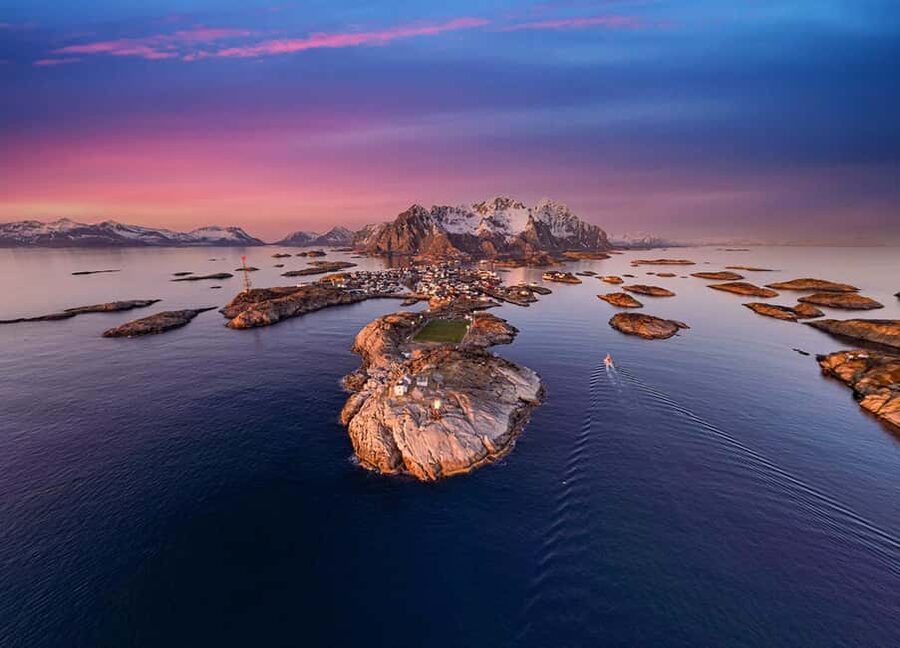
- Svinøya begins the story: Walk among colorful wooden cabins, fishing boats, and drying stockfish while learning how fishing shaped Lofoten.
- Dave may be your guide: The professional photography guide named in the tour material is Dave, who has a sharp eye for scenic viewpoints and local stories.
- Kabelvåg connects two eras: Hear about the Vikings who founded the town, then visit places linked to Norwegian resistance during the German occupation.
- Henningsvær provides your break: You’ll have time to stop for lunch or coffee, but food and drinks are not included.
- Gimsøy Church ends the route quietly: The 12th-century wooden church offers a calm finish beside broad coastal views and mountains.
- The price buys context as much as transport: At $121 per person, the value lies in a small group, a guide, transportation, and several separate sights in five hours.
Why this tour works for a first look at Lofoten
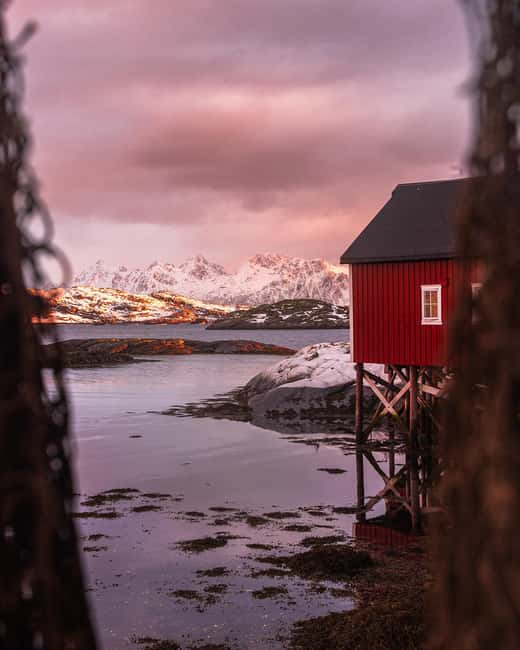
Lofoten can feel like a collection of beautiful villages scattered among mountains and sea. Without context, you may see red cabins, fishing boats, churches, and old military sites without knowing how they fit together.
This tour gives those places a clear thread. Fishing explains Svinøya. Viking settlement and World War II give Kabelvåg two very different stories. Henningsvær shows how a working fishing community developed around its harbor. Gimsøy Church shifts the mood from commerce and conflict to faith and quiet coastal scenery.
I like that the day is not limited to viewpoints. The guide also covers the geology and geography of Lofoten, so you can learn why the islands look the way they do. The exact teaching style will depend on your guide, but the tour is designed to connect natural features with human history.
The small-group format matters here. With a maximum of eight people, you are not being moved around in a large coach with little chance to speak. You can ask about fishing, Viking stories, photography, or the war sites as they come up. The guide speaks English.
More of the past around Svolvær:
- Tromsø: Reindeer Camp and Sami Cultural Tour with Lunch
★ 4.7 · 3,326 reviews - Oslo: Historic Myths & Legends Evening Walking Tour
★ 4.8 · 408 reviews - Tromsø: Fjord History Cruise with Snack and Drinks
★ 4.9 · 364 reviews
Starting among the cabins of Svinøya
Svinøya Rorbuer is both the meeting point and the first important stop. You meet outside the reception, then begin with a short guided walk through this historic fishing village.
The setting gives you an immediate sense of old Lofoten. Colorful wooden cabins sit near the water, with fishing boats nearby. You may also see stockfish hanging to dry, a detail that brings the region’s fishing economy into view rather than leaving it as an abstract part of local history.
The walk focuses on the lives of the fishermen who worked these shores. You’ll hear how fishing traditions helped shape the identity of the islands and why these small buildings and harbor areas matter.
This is also a good place to get your camera ready. The professional photography guide can point out scenic views, boats, cabins, and details that are easy to miss when you are simply walking from one attraction to the next. The guide named in the supplied tour information is Dave, and one account specifically praised his help in showing the area’s scenery.
Do not expect a long hike here. The walking tour is short, which makes the stop manageable for most people who can walk comfortably in suitable shoes. Still, the ground may be uneven around an old waterfront area, so supportive footwear is a sensible choice.
Lofoten Cathedral and the meaning of a landmark
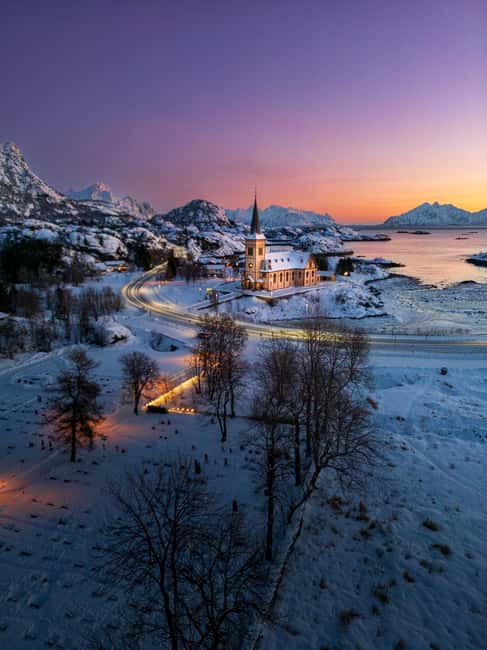
The next stop is Lofoten Cathedral in Kabelvåg, a large wooden church that has served as a major religious landmark in the region.
You go inside to see the wooden carvings and stained-glass windows, then hear about the church’s place in local religious and cultural life. The visit adds variety to the day. After fishing cabins and boats, you are looking at a building shaped by worship, community, and the harsh conditions of the far north.
The cathedral is also a useful reminder that Kabelvåg was more than a fishing stop. It developed as an important center for people living and working around the islands. The tour places the church within that broader story instead of treating it as a quick photo stop.
The amount of time inside is not specified, so you should not plan on a long independent visit. This is a guided sightseeing tour with several stops, not a full day devoted to one church. If religious architecture is your main interest, you may want additional time in Kabelvåg on another day.
Kabelvåg, from Viking settlement to wartime resistance

Kabelvåg is one of the most historically layered stops. The tour presents it as a town founded by Vikings, then shifts to the World War II period and the Norwegian resistance during the German occupation.
The Viking section draws on stories from the Sagas. That gives you a sense of how early settlement and power were remembered in written tradition. You are not only looking at an old village. You are hearing about the people who established a community here and the wider Norse world that shaped Lofoten.
The wartime section changes the tone. You visit key sites and landmarks connected with resistance activity. A viewpoint from a bunker is among the types of places described in the experience, so you may see how military remains and coastal views occupy the same ground. The combination is effective because the scenery can look peaceful while the stories attached to it are not.
The tour does not list every resistance site by name, so you should think of this as a guided introduction rather than a specialist military tour. If World War II is your main reason for booking, ask the guide questions while you are there. The small group should make that easier.
Kabelvåg is where the tour’s broad subject range pays off. In a short time, you move from medieval stories to modern conflict, with the town itself providing the physical link between them.
Same base, a completely different day:
- From Svolvær: Lofoten Islands Silent Trollfjord Cruise
★ 4.8 · 2,979 reviews - From Svolvaer: Lofoten Fishing Boat Cruise
★ 4.7 · 621 reviews - From Svolvær: Lofoten RIB Sea Eagle Safari Trollfjord Cruise
★ 4.9 · 591 reviews - Lofoten Island: Silent Trollfjord Cruise from Svolvær
★ 5.0 · 389 reviews
Henningsvær for harbor life and a warm drink

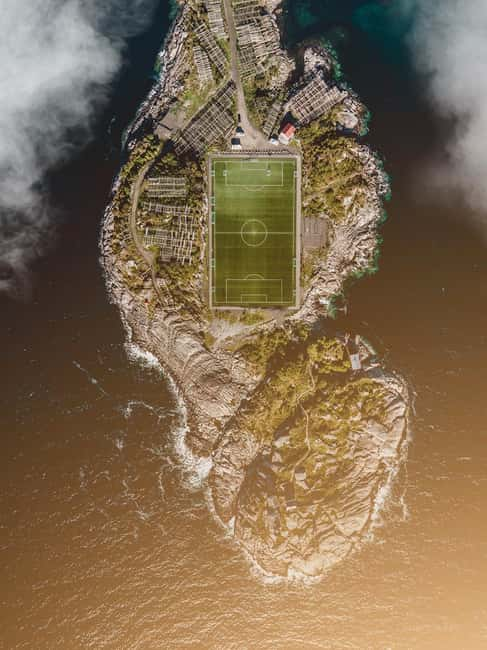
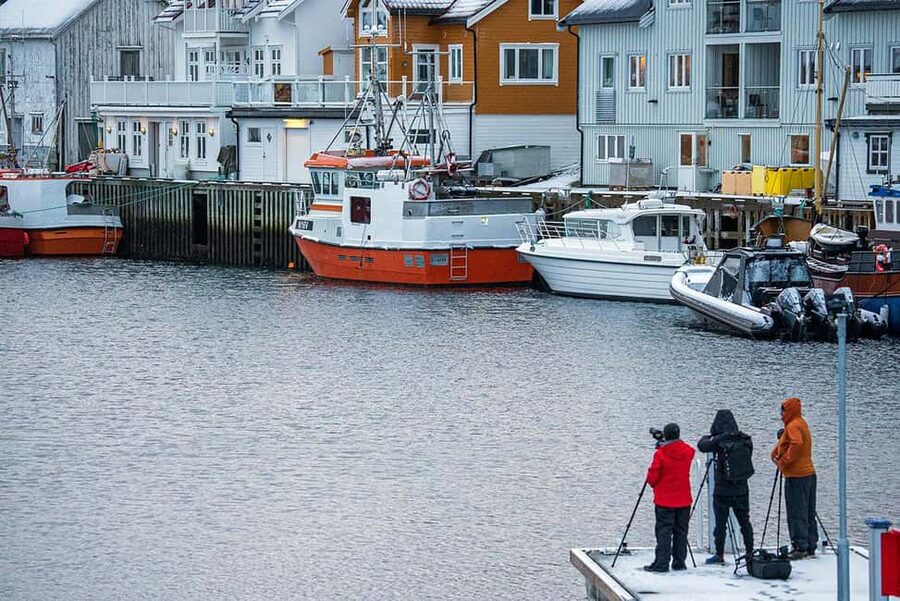
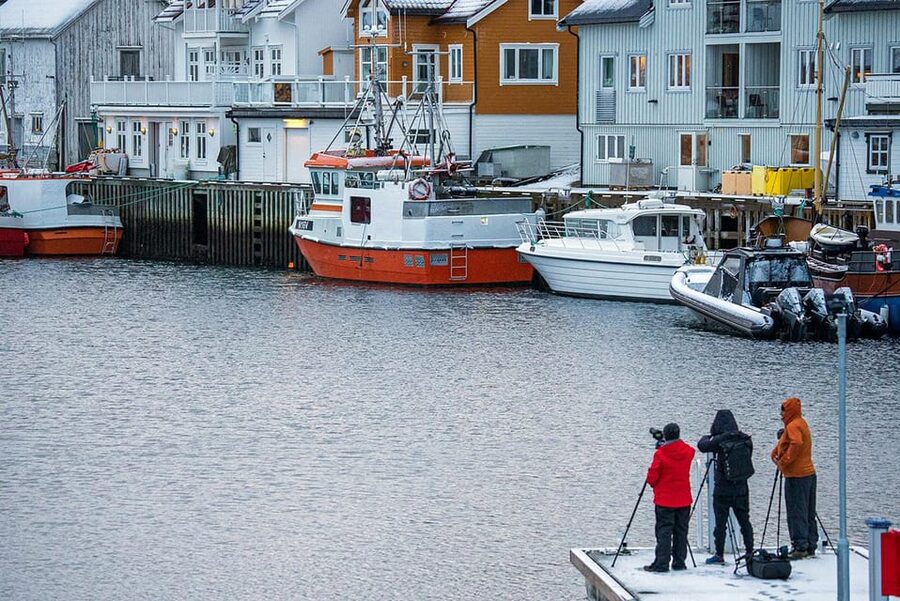
Henningsvær is the most obvious place to pause. This fishing village sits at the edge of the Norwegian Sea, with harbor fronts, old warehouses, colorful buildings, and narrow streets to explore.
The tour gives you an opportunity to stop for lunch or coffee here. Food and drinks are not included, so bring money or a payment method for your break. The available time is not stated, and the schedule may depend on the day’s traffic, weather, and the group’s pace.
I see this stop as more than a meal break. Henningsvær lets you observe how a working fishing community functions around its waterfront. The warehouses and harbor buildings help explain the practical side of the fishing trade, while the colorful streets provide the postcard views many people associate with Lofoten.
You may want to keep your camera accessible rather than packed away in the vehicle. The guide’s photography background should be useful here, especially if you want help choosing angles or making the most of changing Arctic light.
There is one tradeoff. Since Henningsvær is included within a five-hour route, you will not have unlimited free time. If you want a long meal, shopping, or an unhurried walk through every street, a separate visit would give you more freedom. On this tour, the benefit is seeing Henningsvær as part of a larger story.
A scenic drive through Lofoten’s open country

After the village stops, the route heads into the wider countryside. This is where the geography and geology discussion becomes especially useful.
The tour description does not promise a specific hike or named viewpoint along this part of the drive. Instead, you’ll have time to look at the rugged Arctic scenery, coastal spaces, mountains, and open stretches between settlements. These transfers are not empty travel time. They show how isolated communities relate to the sea and to one another.
A photographer guide can help you notice changes in the setting that are easy to miss from a car. Weather can alter the appearance of the mountains and coast quickly, so keep a jacket and comfortable clothing handy. The tour runs in a northern environment, and practical clothing matters more than dressing for a city outing.
You should also expect some time seated in the vehicle. That is the price of covering Svinøya, Kabelvåg, Henningsvær, and Gimsøy in one half-day. If you prefer a long walk at every stop, this itinerary may feel too vehicle-based. If you want broad coverage without arranging several separate excursions, it is a strong format.
Gimsøy Church and a quiet finish
The final stop is Gimsøy Church, a wooden church dating from the 12th century. It gives the tour a calmer ending than the busy waterfront settings earlier in the day.
The church sits among broad coastal views and mountains. You have a chance to pause on historic ground and take in the setting rather than rushing straight back to town. After fishing, Viking stories, and wartime history, this stop offers a slower look at how old religious places remain part of the region’s identity.
The description does not specify how long you spend inside or outside the church, so keep your expectations flexible. The value is in the contrast: a small historic building, open coastal scenery, and a sense of time stretching far beyond the modern villages.
For photography, this may be one of the most rewarding stops because the church and surrounding views provide a clear subject. Weather can affect what you see, though. Snow-capped mountains and coastal views are part of the setting, but northern conditions are changeable.
What $121 includes, and what it does not
At $121 per person, this is not the cheapest way to see Lofoten. The price makes more sense when you count what is bundled together: five hours of transportation, an English-speaking guide, a professional photography guide, and stops in several communities and historic places.
You are also paying for interpretation. A rental car can take you to Svinøya, Kabelvåg, Henningsvær, and Gimsøy, but it will not explain the fishing traditions, Viking stories, resistance history, or geology as you go. Driving yourself also means handling directions, parking, and the day’s timing.
The small group improves the value. Eight people or fewer means a more personal setting than a large sightseeing bus, especially if you want to ask questions or get photography advice. It also keeps the experience focused and social without making it feel crowded.
You need to budget separately for lunch or coffee in Henningsvær. Food and drinks are not included. The supplied information does not list extra entrance fees, so check the final booking details if you want to know whether any particular site has an additional charge.
Free cancellation is available up to 24 hours before the activity for a full refund. You can also reserve now and pay later, which helps if your Lofoten schedule depends on weather or changing plans.
Who will get the most from this five-hour route
I would recommend this tour to you if it is your first time in the Svolvær area and you want an introduction that goes beyond scenery. It suits people who enjoy local history, photography, coastal villages, and short guided walks in one day.
It is also a good choice if you are staying in Svolvær without a car. Transportation removes the need to arrange separate visits to several communities, and the guide provides a useful framework for the area.
You will probably like it if you want a small group and direct access to an English-speaking guide. The format leaves room for questions, though the tour remains on a set schedule.
I would be more cautious if your priority is a long hike, extensive free time, or a specialist focus on only one subject. The route covers a lot. That breadth is its strength, but it means each stop receives an introduction rather than a full day of study.
Bring comfortable shoes and comfortable clothes. Keep room in your schedule for a coffee or lunch stop, and plan to spend much of the day moving between villages and viewpoints rather than sitting in one place.
Should you book the Svolvær and Henningsvær tour?
Book it if you want a well-rounded introduction to Lofoten in five hours and value a guide who can connect photographs with local stories. The mix of Svinøya’s stockfish traditions, Lofoten Cathedral, Viking and resistance history in Kabelvåg, Henningsvær’s harbor, and Gimsøy Church gives you far more context than a simple scenic drive.
The strongest reasons to choose it are the small group, the professional photography guide, and the unusually broad subject range. Dave’s help with scenic viewpoints may be especially useful if you want better photographs without spending a full day on a photography workshop.
Skip it if you want to explore Henningsvær slowly, eat a long lunch, or spend most of the day hiking. For everyone else, $121 is a reasonable price for transport, expert guidance, and a compact introduction to the people, places, and events behind Lofoten’s famous scenery.
FAQ
How long does the Svolvær and Henningsvær tour last?
The tour lasts five hours. Starting times vary, so you need to check availability for the date you want.
Where does the tour start?
You meet outside the reception of Svinøya Rorbuer in Svolvær. Pickup can also be arranged from the Tourist Information Office in Svolvær, Lofoten Rorbuer, or Marina Hotel by sending a message after booking.
Where does the tour end?
The activity ends back at the meeting point.
Is transportation included?
Yes. Transportation is included along with the guided tour and professional photography guide.
Is food included?
No. You have an opportunity to stop for lunch or coffee in Henningsvær, but food and drinks are not included in the price.
What language is the tour in?
The live tour guide speaks English.
How many people are in the group?
The group is limited to eight participants.
Just added around Svolvær
- From Svolvær: Whale Watching Day Trip to Andenes★ 3.8 · 27 reviews
- Lofoten Winter Panoramic Tour★ 5.0 · 31 reviews
- Lofoten VIP PRIVATE tour from Svolvaer★ 5.0 · 13 reviews
- Lofoten Summer Panoramic Tour★ 4.5 · 34 reviews
- Small Group Luxury Cruise to Trollfjord on a 33m Classic Yacht★ 5.0 · 29 reviews
- Lofoten Highlights Photo Tour – Henningsvær & Haukland★ 5.0 · 14 reviews
- Private Full Day Sightseeing Tour from Svolvær to Å★ 5.0 · 12 reviews
- Lofoten RIB Sea Eagle Safari and Trollfjord Cruise★ 5.0 · 69 reviews
Historical Tours, compared.

Reindeer Camp and Sami Cultural Tour with Lunch
Read our review →
Sightseeing Cruise of Bergen’s Historic Landmarks
Read our review →
Browse the lists this tour appears in