
Reviewed · MUSEUMS & VIKING HERITAGE
The Fram Museum Admission Ticket
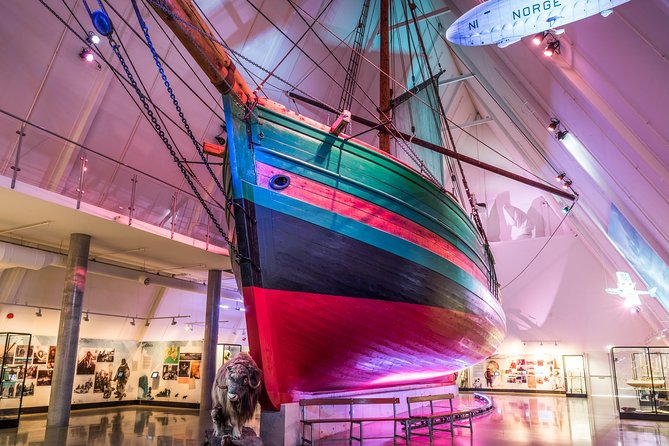
The most remarkable thing here is simple: you can walk aboard the actual Fram, the wooden ship that carried Norwegian polar expeditions. You can inspect its cabins, engine room, lower areas, and working spaces instead of viewing a ship from behind glass. The nearby Gjøa building adds another original vessel and a wider story of Arctic exploration.
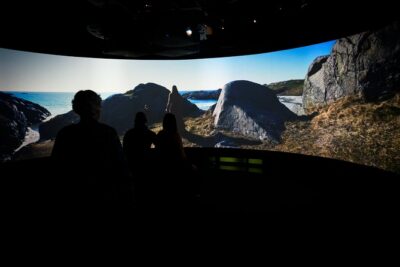
I like the hands-on feel, especially the chance to see how cramped life was aboard ship. I also like the clear displays, the storm and ice effects, and the short polar film, which help put names and routes into context. The main drawback is that the museum can feel crowded, and some areas may be dim or temporarily closed.
Key points to know before you go

- Walk aboard two historic ships: Fram and Gjøa are the heart of the visit.
- Follow three Fram expeditions: The main building explains the ship’s major polar voyages with texts in ten languages.
- Allow one to three hours: Two hours is a sensible target if you read the displays and explore the ships.
- Watch the High North film: A 116-seat cinema shows a polar introduction film every 15 minutes.
- Expect a self-guided visit: Prepaid mobile admission gets you inside, but the experience is built around displays, films, and your own pace.
- Check the opening time: The museum is listed as open daily from 10 a.m. to 5 p.m.
Why the Fram ship is the main event
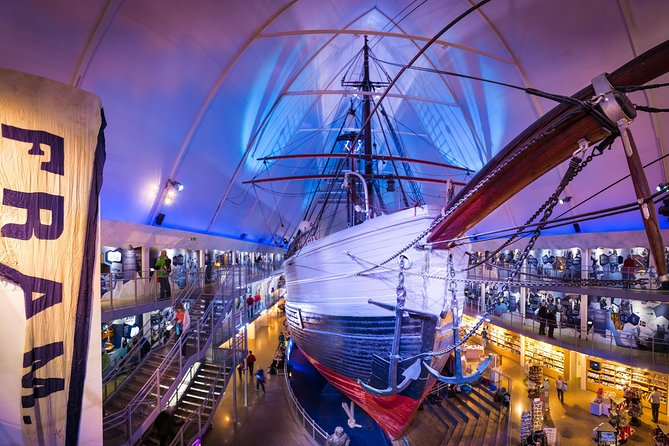
Many maritime museums display a historic vessel outside or behind barriers. Here, the ship is housed inside the museum, and you can walk through much of it. That changes the visit from a standard collection of objects into a physical lesson about polar travel.
You see the narrow rooms, basic furnishings, equipment, and working parts that supported long expeditions. The point is not luxury. It is understanding how a crew lived, worked, ate, slept, and waited through harsh conditions in a confined space.
The ship’s size and layout make the story immediate. A wall panel can tell you that an expedition lasted for months. Walking through the actual quarters helps you picture the patience and discipline that such a journey required.
The lower areas are especially interesting. You can see the engine room and parts of the ship that would have been essential during a polar voyage. Some children will enjoy the sense of exploring a real vessel, while adults may find themselves lingering over the practical details.
One useful tip is to give yourself time on board after reading the displays. If you rush straight to the ship, you will see the structure, but you may miss why each room, route, and expedition mattered.
Other museums and Viking sites around Oslo:
- Kon-Tiki Museum Entrance Ticket
★ 4.5 · 1,096 reviews - Oslo: Paradox Museum Entry Ticket
★ 4.3 · 799 reviews - Oslo: Viking Planet Entry Ticket
★ 4.4 · 603 reviews
Start with the Fram exhibitions
The main exhibition in the Fram building explains the three great Fram expeditions. Texts are available in ten languages, so you can study the story at a comfortable pace even if English is not your first language.
The displays cover expedition routes, preparation, equipment, and the people involved. Maps are worth your attention because they show how far the ships went and how difficult the journeys were to plan. The museum also presents original objects and historical material that give the voyages a human scale.
I suggest beginning with the introductory material before boarding Fram. It gives you names and dates to hold onto, and it makes the ship feel less like an isolated object. You start to see it as a working tool designed for a very demanding purpose.
The exhibition is well suited to independent touring. You are not tied to a guide or a set departure time. You can read every panel, move quickly through familiar material, or pause at the sections that interest you most.
That freedom also means you need to create your own order. One helpful approach is to watch the film first, then follow the expedition displays, and only afterward explore the ship. This gives the visit a clearer storyline.
Gjøa and the second building
The Gjøa building is connected to Fram by an underground tunnel. Its centerpiece is Gjøa, identified as the first ship to navigate the entire Northwest Passage.
This section broadens the visit beyond the Fram expeditions. Exhibits cover Gjøa and Maud, the N24 and N25 airplanes, and the airship Norge. There are also displays about John Franklin’s expedition, Henry Larsen, and Eivind Astrup.
That range is useful if you already know something about Fram. You get a fuller picture of northern exploration, including voyages that relied on ships, aircraft, and airships. The displays show that polar travel was not one single kind of adventure or one short period of history.
The tunnel connection makes it easy to move between the buildings, and the second ship gives you another chance to compare life aboard an exploration vessel. If time is tight, do not assume the first building contains everything. The Gjøa side is an important part of the museum.
The airplane and airship material adds variety, too. After studying wooden ships and cramped cabins, you can see how explorers later used flight to reach remote northern areas. The change in technology helps explain how polar exploration developed.
The cinema, weather effects, and interactive moments
The museum has a 116-seat cinema showing a polar introduction film every 15 minutes. That schedule makes it easy to fit the film into your visit without planning around a fixed screening time.
The film is a good first stop because it gives you a quick orientation to the High North and the museum’s themes. It can also help younger visitors understand why the people and equipment in the displays mattered.
The museum adds atmosphere with stormy weather and ice effects. On board Fram, you may encounter a simulation of violent weather and icebergs, with movement and sound that suggest the strain of a polar voyage. It is not a replacement for historical information, but it helps you imagine the physical conditions.
There is also a cold walk-through area and a lower-level N25 Flight 4D Cinema. These features give the visit a more active feel than a museum made only of labels and cases.
Some visitors may prefer quiet, traditional galleries, so the effects will not suit everyone. I found the balance useful because the museum still provides plenty of maps, timelines, artifacts, and written explanation. The effects work best as short reminders of the conditions, not as the entire story.
Other tickets worth booking ahead around Oslo:
- Oslo: 24 or 48-Hour Hop-On Hop-Off Sightseeing Bus Ticket
★ 4.1 · 1,470 reviews - The Viking Planet Museum Ticket
★ 4.0 · 197 reviews - Oslo: Munch Museum Admission Ticket
★ 4.5 · 193 reviews - Tromsø: Midnight Concert Ticket at the Tromsø Cathedral
★ 4.8 · 1,734 reviews
How long should you plan?
The official estimate is one to three hours. I would allow about two hours for a normal visit, with more time if you read the wall panels closely or want to take photographs.
One hour is possible if you focus on the ships and the main displays. It will feel rushed if you also want to watch the film, visit both buildings, and study the exhibits on Maud, Norge, Franklin, and the High North.
Three hours makes sense for history fans, families moving at a slower pace, and anyone who wants to examine the maps and routes. The museum rewards patience because much of its value is in the details around the ships.
Arriving near opening time can help if you prefer photos and a calmer first look. The listed hours are 10 a.m. to 5 p.m., Monday through Sunday, for the stated operating period. Check the current hours before setting out, especially if your Oslo schedule is tight.
The museum is near public transportation, but one visitor found the location somewhat remote and advised checking bus routes and times. That is sensible advice. Build in enough time for the journey back if you have a cruise departure, flight, or evening reservation.
Is the $19.38 admission good value?
At about $19.38 per person, this is not the cheapest museum stop in Oslo, but the price includes access to the central attractions: Fram, Gjøa, the aircraft displays, and the cinema experiences.
The value comes from the original ships. You are not paying only to read about polar exploration. You can move through the vessels and see the cramped conditions directly. For anyone interested in ships, engineering, exploration, or Norwegian history, that physical access makes the admission worthwhile.
The museum also works well for mixed-interest groups. A serious history reader can spend time with the expedition routes and artifacts, while children can explore the ships, watch the film, and enjoy the cold and storm effects.
If you are not interested in polar history or maritime exhibits, the price may feel less convincing. The visit is focused. It does not try to cover all of Oslo’s history, and much of the material concerns northern exploration and the High North.
Prepaid admission offers convenience and easy entry with a mobile ticket. The admission price is reported as the same as buying in person, so the main benefit is saving a little time rather than getting a major discount.
Practical points for a smooth visit
This is primarily a self-guided museum visit, not a guided tour with a named host. The booking is offered in English, while the main Fram exhibition has explanatory texts in ten languages.
Most people can take part, and service animals are allowed with identification. Food and drinks are not included, so plan those separately rather than expecting a meal as part of admission.
The experience is listed with a maximum of 14 travelers, although the museum itself can still feel busy at popular times. That distinction matters: a small booking limit does not guarantee an empty exhibition space.
Some displays can be dark, and temporary closures can affect the experience. One visitor found the cinema area closed on the first day and later discovered that it contained a substantial part of the museum. If a section is unavailable, ask staff what has changed and decide if you have time to return.
The gift shop carries reading material, which is useful if the subject catches your interest. A book can help you continue with the expeditions after the visit, especially since the museum presents more names and routes than you can absorb in one pass.
Who will enjoy Fram Museum most?
I would recommend it most strongly to anyone interested in polar exploration, maritime history, engineering, or the practical side of long expeditions. The museum also suits families because the real ships and physical effects give younger visitors something to do while adults read.
It is a good choice for a rainy Oslo day. Much of the visit takes place indoors, and the ship interiors provide enough variety to keep the experience moving.
You should also consider it if you want a museum with a clear sense of place. The original vessels are not decorative props. They are the reason the stories feel immediate.
You may want to skip it if your Oslo visit is extremely short and you prefer art, architecture, or urban history. The museum takes at least an hour to appreciate, and the trip to the site needs to fit your transport schedule.
Should you book the Fram Museum?
Book it if you want to walk through real polar ships and understand what exploration looked like from the inside. The combination of Fram, Gjøa, maps, artifacts, aircraft displays, films, and weather effects gives you plenty to see for the $19.38 admission.
Plan for two hours, start with the film or introductory displays, and leave time for both buildings. Check opening hours and transport before you go, especially if you have a fixed departure later that day.
Free cancellation is available when you cancel at least 24 hours before the experience start time. Cancellations or changes made within 24 hours are not refunded, and the cut-off uses local time.
FAQ
How much does Fram Museum admission cost?
Admission costs $19.38 per person.
How long does a visit to Fram Museum take?
The estimated duration is one to three hours. About two hours should allow time for the main displays, both ships, and the film.
What ships can I see inside the museum?
You can visit the original Fram and Gjøa ships.
Can I walk aboard Fram?
Yes. Admission lets you explore the ship, including its rooms, lower areas, and engine room.
What does the Gjøa building contain?
The Gjøa building presents Gjøa, the first ship to navigate the entire Northwest Passage. It also includes displays about Maud, the N24 and N25 airplanes, the airship Norge, John Franklin’s expedition, Henry Larsen, and Eivind Astrup.
Is there a film at the museum?
Yes. A 116-seat cinema shows a polar introduction film every 15 minutes. Admission also includes the N25 Flight 4D Cinema.
Are the museum displays available in English?
The booking is offered in English, and the main Fram exhibition has explanatory texts in ten languages.
What are the opening hours?
The listed hours are 10 a.m. to 5 p.m., Monday through Sunday, during the stated operating period from September 1, 2021, through April 2, 2027.
Is food included with admission?
No. Food and drinks are not included.
Can I cancel for a refund?
Yes, if you cancel at least 24 hours before the experience start time. Cancellations or changes made less than 24 hours in advance are not accepted for a refund.
Just added around Oslo
- Oslo Sea Kayak Tour “Fjord City”★ 4.5 · 39 reviews
- Akerselva River Kayak/Packraft Tour: Urban Adventure in Oslo★ 4.5 · 42 reviews
- Maral Kunst : Jewelry Bar Experience (Jewelry Making)★ 5.0 · 3 reviews
- Oslo: Perfect Escape – Fun and exciting Escape Rooms★ 3.9 · 4 reviews
- Oslo: 3-hour Kayaking Trip on the Oslofjord★ 4.9 · 43 reviews
- Oslo Sea Kayak Tour: Explore The Incredible Oslofjord★ 4.5 · 31 reviews
- Private Transfer from Oslo Airport to Oslo City Centre★ 5.0 · 15 reviews
- Oslo Private Transfer Between Gardermoen Airport and City★ 4.0 · 27 reviews
Museums & Viking Heritage, compared.

Viking Village, Nærøyfjord Cruise & Flåm Railway
Read our review →

Sightseeing with Holmenkollen Ski Jump & Vigeland Park
Read our review →
Troll Museum Entry Ticket with AR Media Experience
Read our review →
Browse the lists this tour appears in