
Reviewed · MUSEUMS & VIKING HERITAGE
Kon-Tiki Museum Entrance Ticket
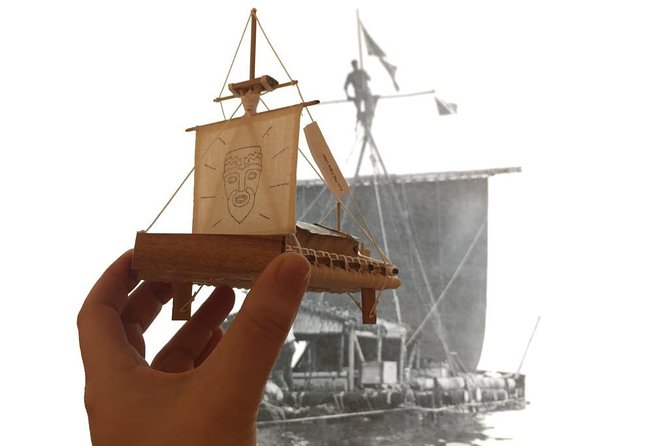
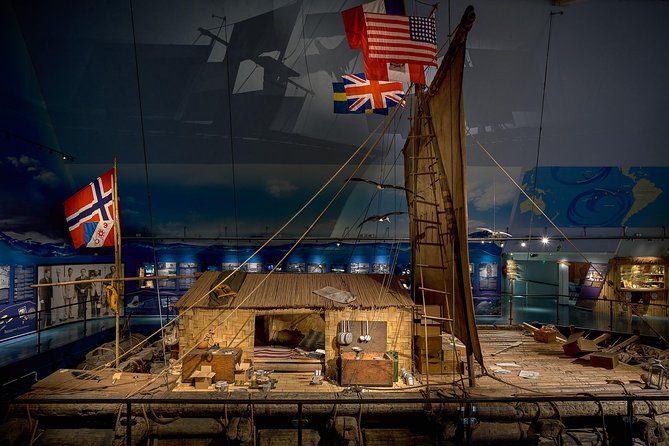
The Kon-Tiki Museum puts you close to one of the most audacious travel stories of the 20th century: Thor Heyerdahl’s 1947 Pacific crossing on a raft made of balsa wood. You can see the original Kon-Tiki raft, then watch the Oscar-winning film made from the expedition’s own footage.
I especially like the 12 noon documentary, which gives the exhibits a clear human story, and the museum’s mix of full-size boats, Easter Island material, a cave passage, and an underwater display. The main drawback is that some parts can feel dated, and a one-hour visit may feel rushed if you read everything.
Key points to know before you go
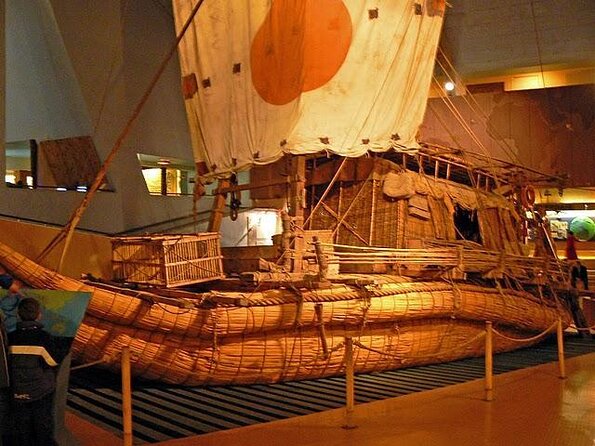
- The original Kon-Tiki raft is the star: See the vessel used in Heyerdahl’s 1947 Pacific voyage.
- The noon film is worth planning around: The original Oscar-winning documentary screens daily at 12 noon.
- The museum covers more than Kon-Tiki: Exhibits also focus on Ra, Tigris, Easter Island, Fatu-Hiva, Túcume, and the Galapagos.
- Families have plenty to look at: A 30-metre cave tour and a 10-metre whale shark model add variety beyond written displays.
- Combine it with the Fram Museum: The two museums sit next to each other, making the trip to Bygdøy more worthwhile.
- Allow more than the advertised hour if you like detail: A focused visit takes about an hour, but two hours is reasonable for careful reading and the film.
Why the Kon-Tiki raft still grabs your attention
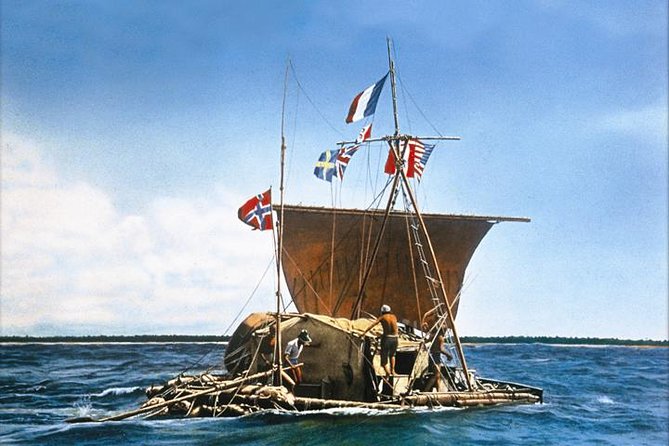
The first thing you notice is not a polished ship behind glass. It is a broad, rough-looking raft made from balsa logs, the same basic vessel Heyerdahl and his crew used to cross the Pacific in 1947.
That physical sight matters. The story can sound almost too bold when reduced to a few lines: six men, a traditional-style raft, and a long ocean crossing intended to show that ancient people could have reached Polynesia from South America. Standing near the real craft gives the tale a more practical edge. You can think about the open deck, the limited space, and the exposure to weather.
Heyerdahl became famous for testing ideas with real voyages instead of leaving them on a map. The museum follows that working spirit through later expeditions on the reed boats Ra and Tigris. These boats look different from Kon-Tiki, but together they show the larger question that drove his work: how far could early sailors travel using materials and methods available in their own time?
The displays also bring the crew into the picture. That is important because Kon-Tiki was not a one-man adventure. The raft, equipment, film, and personal material help shift the story from a simple portrait of a bold explorer to a group effort carried out under difficult conditions.
Other museums and Viking sites around Oslo:
- Oslo: Paradox Museum Entry Ticket
★ 4.3 · 799 reviews - Oslo: Viking Planet Entry Ticket
★ 4.4 · 603 reviews - The Fram Museum Admission Ticket
★ 4.5 · 490 reviews
The self-guided route through the museum
This is an entrance ticket, not a guided tour. You move through the museum independently, following displays about Heyerdahl’s major expeditions and the places connected with his research.
The route includes Kon-Tiki, Ra, Tigris, Easter Island, Fatu-Hiva, Túcume, and the Galapagos. You will find boats and artifacts, along with text that explains the purpose of each voyage and the questions Heyerdahl was trying to answer.
That format works well if you like to set your own pace. You can spend several minutes studying the raft, move quickly through a section that interests you less, or pause over photographs and expedition material. It is less ideal if you want a guide to explain the displays as you go, since no guide is included.
The museum also presents Thor Heyerdahl himself, including material connected with his life and work. One useful point to keep in mind is that the collection is stronger on the expeditions than on every stage of his personal life. If you want a full biography, you may find the coverage more limited than expected.
The 12 noon film gives the story its strongest shape
Plan your visit around the daily screening at 12 noon if you can. The original Kon-Tiki documentary uses footage taken by the crew during the voyage, and it gives you something the objects alone cannot: movement, weather, daily work, and the personalities aboard the raft.
The film runs for about an hour, so it changes the timing of your visit. If you arrive shortly before noon, you can watch the film and then explore the displays with the voyage fresh in your mind. If you start with the exhibits, the film works as a strong finish.
This is also one reason not to treat the museum as a quick photo stop. The raft is the obvious highlight, but the documentary supplies the tension and detail behind it. You see why the voyage required patience and teamwork, not just courage.
The film is not a modern presentation, and some visitors may find its age noticeable. That is part of its appeal, too. It is direct expedition footage rather than a newly produced dramatization. For children and adults who enjoy real adventure stories, it can be the most memorable part of the visit.
Beyond Kon-Tiki: Ra, Tigris, and far-off islands
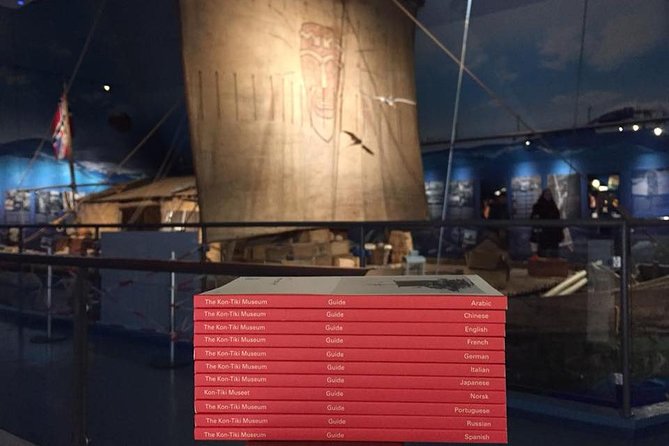
The later expeditions give the museum more range than its name suggests. Ra and Tigris were reed boats, built to explore the possibility of long-distance travel using ancient boat designs.
The inclusion of these vessels helps you see how Heyerdahl continued testing ideas after Kon-Tiki. He was not content to repeat one famous voyage. Each expedition asked a new question and placed people in another demanding setting.
The museum also covers Easter Island, Fatu-Hiva, Túcume, and the Galapagos. These sections connect Heyerdahl’s research to archaeology, island cultures, ocean travel, and the movement of people across large stretches of sea.
You should approach these displays with some care. Heyerdahl’s theories were influential and widely discussed, but the museum is best understood as a record of his expeditions and ideas, not as a substitute for a full academic treatment of every debate surrounding them. The value here is seeing how he formed questions, built boats, gathered evidence, and made his ideas public.
Other tickets worth booking ahead around Oslo:
- Oslo: 24 or 48-Hour Hop-On Hop-Off Sightseeing Bus Ticket
★ 4.1 · 1,470 reviews - The Viking Planet Museum Ticket
★ 4.0 · 197 reviews - Oslo: Munch Museum Admission Ticket
★ 4.5 · 193 reviews - Tromsø: Midnight Concert Ticket at the Tromsø Cathedral
★ 4.8 · 1,734 reviews
The cave and underwater displays add variety
Not every part of the museum is about reading panels beside a boat. A 30-metre cave tour gives the visit a change of pace and adds a physical element to the route.
There is also an underwater exhibit with a 10-metre model of a whale shark. It connects the expedition story with the marine world surrounding the boats. For younger visitors, these features may be easier to remember than long blocks of text.
The variety makes this a good family stop. One person can focus on maritime history, another can study the boats, and children can look for the more unusual visual displays. You should still expect a museum rather than a full entertainment attraction. Much of the experience depends on reading and looking closely.
How long to stay, and how to plan the day

The listed visit time is about one hour. That is enough for the main raft, a brisk look at the other exhibits, and perhaps a short stop in the cave or underwater section.
I would allow closer to two hours if you want to watch the full documentary, read carefully, and take your time with the vessels. The museum has enough material to reward a slower visit, especially if you have a personal interest in exploration, archaeology, navigation, or polar and maritime history.
Opening hours are 10:00 AM to 5:00 PM daily for the stated periods from September 1, 2025 through April 30, 2026, and from September 1, 2026 through April 30, 2027. The noon film is the one fixed point worth building around.
A practical plan is to visit the Kon-Tiki Museum and the Fram Museum next door on the same outing. The contrast works well. Kon-Tiki focuses on experimental sea voyages and ancient travel theories, while Fram adds another major Norwegian exploration story. You get more value from the trip to Bygdøy when you combine the two.
Getting to Bygdøy without making it a project

Transportation to and from the museum is not included in the ticket. The museum is near public transportation, and the city bus stops directly in front of the museums according to the available visitor information.
A hop-on hop-off bus also serves the area. That can suit you if you are already using that sightseeing service, though you should check its schedule for the day rather than assume frequent departures.
The museum is surrounded by a marina area, and another nearby cafe makes it possible to pause for food during a museum day. Food and drinks are not included in the admission, so plan to buy them separately.
The trip can take longer than expected if transport is disrupted. One account describes canceled trains and a complicated journey from the airport, so do not leave the museum until the last possible hour if you have a tight connection or a cruise departure. From central Oslo, the bus connection is the simpler option mentioned in the available information.
Is $19.42 a fair price?

At $19.42 per person, the ticket is reasonable if you use the museum as a full stop rather than a ten-minute glance at the raft.
The price includes admission and local taxes, but not transportation, food, drinks, souvenirs, or a guide. Its value improves if you watch the documentary, explore the secondary exhibitions, and pair the visit with the Fram Museum next door.
The ticket is less compelling if you only want a quick look at the famous raft and do not care about the later expeditions. In that case, the visit may feel short for the cost. The museum’s strongest value comes from the complete story: the original vessel, the film, the other boats, the island material, and the personal side of Heyerdahl’s work.
Advance booking is useful if you want a quick entry on the day. Confirmation is received at booking, and free cancellation is available if you cancel at least 24 hours before the start time. Cancellations or changes made inside that window are not refunded or accepted.
Who will enjoy this museum most?
I would recommend it most strongly to anyone interested in exploration, boats, archaeology, or real expedition footage. You do not need to know Heyerdahl’s work before arriving. The central story is easy to follow, and the full-size vessels give the displays a strong sense of place.
Families are also well served. An 11-year-old can follow the adventure story, while adults can spend more time with the research and historical questions. The cave, whale shark model, and large boats give children something to see even when they are not ready to read every panel.
It is also a useful choice for a mixed-interest day in Oslo. Someone who prefers maritime history can focus on the vessels, while someone else can enjoy the film, island artifacts, or the nearby Fram Museum.
You may want to lower your expectations if you prefer sleek, highly interactive museum design or a detailed biography of Heyerdahl’s entire life. Parts of the exhibition can feel dated, and the experience is mainly self-guided. The museum has begun planning a new presentation for the Kon-Tiki raft, with an ocean and sky setting, interactive stations, and a marine scene beneath the vessel. Check current details if that redesign is important to your visit.
Should you book the Kon-Tiki Museum ticket?
Book it if you want a focused, unusual Oslo museum experience built around a genuine expedition vessel and original film. The raft is impressive in person, and the noon documentary adds the drama and human detail that written displays cannot provide.
I would book the ticket for a family day, a museum pairing with Fram, or a visit built around Norwegian exploration. Arrive with enough time for the film, and plan on about two hours if you like to read.
Skip it only if your schedule is extremely tight or if you want a modern, heavily interactive museum with a guide leading the way. For most visitors with an interest in daring journeys and real boats, $19.42 buys a worthwhile stop on Bygdøy.
FAQ
Where is the Kon-Tiki Museum?
The museum is in Oslo, Norway, in the Bygdøy museum area. It is next to the Fram Museum and near public transportation.
What is the main thing to see at the museum?
The main attraction is the original Kon-Tiki raft used by Thor Heyerdahl during his 1947 Pacific expedition.
Who was Thor Heyerdahl?
Thor Heyerdahl was a Norwegian explorer who became internationally known for crossing the Pacific Ocean on the Kon-Tiki balsawood raft in 1947. He later led expeditions on the reed boats Ra and Tigris.
Does the museum show the original Kon-Tiki documentary?
Yes. The original Oscar-winning Kon-Tiki documentary is screened every day at 12 noon.
How long does a visit take?
The stated visit time is about one hour. You may need closer to two hours if you watch the film and read the displays carefully.
What other boats are displayed?
The museum includes the Kon-Tiki raft and the reed boats Ra and Tigris.
What other subjects are covered?
Exhibits cover Easter Island, Fatu-Hiva, Túcume, the Galapagos, Thor Heyerdahl’s library, Heyerdahl himself, and Kon-Tiki in popular culture.
Is the museum suitable for children?
Yes. The museum is described as suitable for families, and it includes a 30-metre cave tour and an underwater display with a 10-metre whale shark model.
Is transportation included with the ticket?
No. Transportation to and from the museum is not included. The museum is near public transportation, and a bus stops in front of the museums.
Can I cancel the ticket for a refund?
Yes, if you cancel at least 24 hours before the experience start time. Cancellations or changes made less than 24 hours in advance are not refunded or accepted.
Just added around Oslo
- Maral Kunst : Jewelry Bar Experience (Jewelry Making)★ 5.0 · 3 reviews
- Oslo: Perfect Escape – Fun and exciting Escape Rooms★ 3.9 · 4 reviews
- Oslo: 3-hour Kayaking Trip on the Oslofjord★ 4.9 · 43 reviews
- Oslo Sea Kayak Tour: Explore The Incredible Oslofjord★ 4.5 · 31 reviews
- Oslo Sea Kayak Tour “Fjord City”★ 4.5 · 39 reviews
- Akerselva River Kayak/Packraft Tour: Urban Adventure in Oslo★ 4.5 · 42 reviews
- Oslo Private Transfer Between Gardermoen Airport and City★ 4.0 · 27 reviews
- Private Transfer from Oslo Airport to Oslo City Centre★ 5.0 · 15 reviews
Museums & Viking Heritage, compared.

Viking Village, Nærøyfjord Cruise & Flåm Railway
Read our review →

Sightseeing with Holmenkollen Ski Jump & Vigeland Park
Read our review →
Troll Museum Entry Ticket with AR Media Experience
Read our review →
Browse the lists this tour appears in