
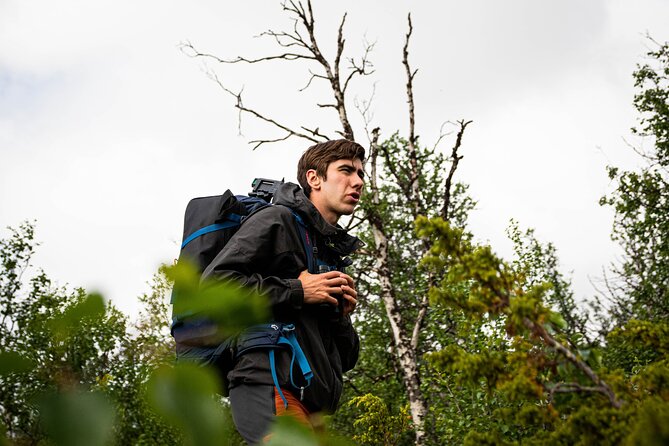
Reviewed · WHALE & WILDLIFE WATCHING
Muskox Safari from Hjerkinn | Dovre & Lesja Aktiv
Dovrefjell is one of the few places on Earth where you can see wild muskox, and this hike gives you a sensible way to search for them without turning the encounter into a zoo visit. The animals roam freely, so your guide leads you over 7 to 15 kilometers of mountain ground and uses a telescope when the herd appears.
I like two things here: the small maximum group of 18 keeps the outing manageable, and the transfer from Hjerkinn to the trailhead removes a bit of planning from a remote mountain day. The guides also keep the proper 200-meter safety distance, which protects both you and the muskox.
The catch is simple: this is a wildlife search, not a guaranteed sighting. You need moderate fitness, good clothing, your own lunch, and patience when the animals are far away or the weather changes quickly.
Key points to know before you book
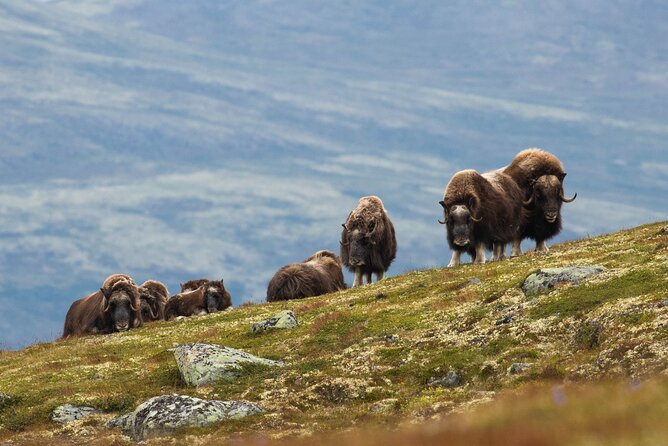
- Wild muskox, not a staged wildlife encounter: The animals move freely through Dovrefjell-Sunndalsfjella National Park.
- A 5 to 6 hour mountain hike: The route can cover 7 to 15 km and includes some elevation.
- A telescope is provided: You may also want to bring binoculars for a closer look.
- Weather-ready clothing is essential: Wear waterproof hiking shoes and windproof, waterproof outer layers.
- Lunch is your responsibility: Pack food, water, and perhaps a snack for the break.
- Strong overall satisfaction: The experience has a 4.8 rating from 72 reviews, with 97 percent recommended.
Why Dovrefjell is the right place to search for muskox
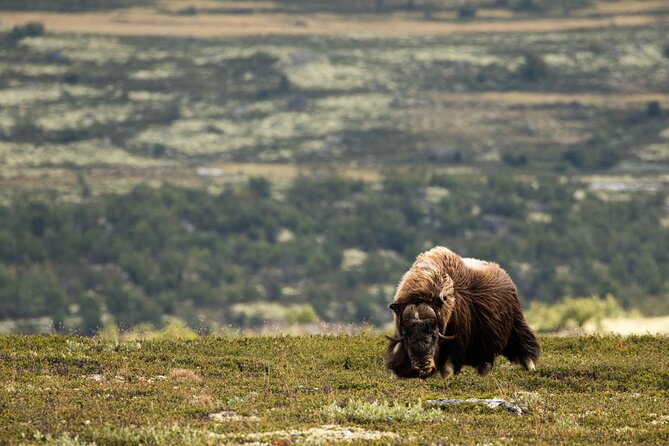
Muskox are not found across every Norwegian mountain area. Dovrefjell is one of the rare places where you can look for them in the wild, in a protected mountain setting rather than behind a fence.
That changes the feel of the day. You are not simply walking to a viewing platform at a fixed hour. You are moving through open country, scanning the slopes and valleys while your guide works out where the animals may be.
The animals’ freedom is also the main uncertainty. A muskox herd might be close to the trail on one day and much farther away on another. Your guide can improve your chances, but no guide can control the animals, the weather, or the exact route.
That makes this a good fit if you value the search as much as the photograph. If your only goal is a guaranteed close-up view, you may find the outing frustrating. If you like natural history, mountain walking, and the possibility of a rare sighting, the uncertainty is part of the appeal.
Other wildlife out of Norway:
- Tromsø: Whale Watching Tour by Hybrid-Electric Boat
★ 4.5 · 4,217 reviews - Tromsø Whale Safari with MS Gabriele
★ 4.3 · 1,937 reviews - From Tromsø: All-Inclusive Whale & Orca Safari
★ 4.5 · 1,221 reviews
Starting at Hjerkinn at 10 a.m.
The meeting point is Hjerkinnhusvegen 35 in Hjerkinn, with a 10 a.m. start. The activity ends back at the same meeting point, so you do not need to arrange a separate return from the mountains.
A transfer to the trailhead is included. That matters in Dovrefjell, where avoiding a confusing drive or an extra parking arrangement makes the day easier. You can meet the guide in Hjerkinn, settle into the outing, and let the operator handle that short transport link.
The available information does not give individual guide names, so you should not expect to choose a particular guide when booking. What is clear is that a local guide leads the walk and carries a telescope for the group.
The maximum group size is 18. That is not a private walk, but it is small enough for the guide to manage the group and keep everyone together. It also gives you a better chance of looking through the telescope without the outing becoming a large coach-style excursion.
What the 7 to 15 kilometer hike feels like
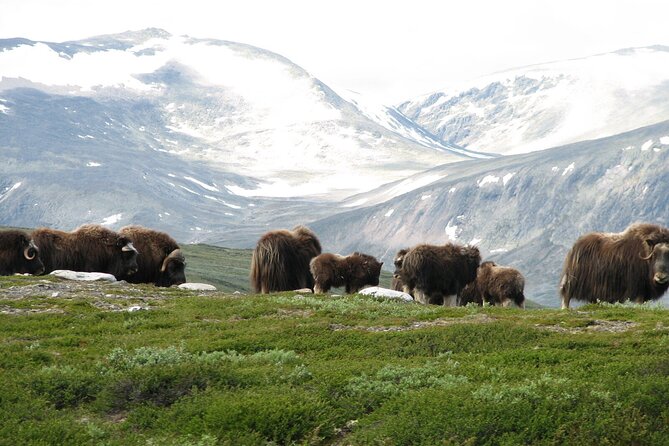
The total hike usually lasts around 5 to 6 hours, though the exact length depends on where the muskox are, the weather, and the fitness of the group. The stated distance is 7 to 15 km, so the difference between an easier day and a demanding one can be considerable.
You should think of this as a proper mountain walk, not a short stroll with a wildlife stop at the end. There is elevation along the route, and the ground may be affected by mountain weather. A moderate fitness level is required.
At the same time, the walk is not presented as an extreme expedition. One account describes the hike as quite easy, while other information makes clear that the route can stretch to 15 km. The practical lesson is to prepare for the longer version, even if the day turns out to be gentle.
Your guide will set the pace and decide how far the group needs to go. The animals determine much of the itinerary. You may cover more ground if the first search area is empty, or less if muskox are found in a reachable place.
I like this flexible approach because it respects the animals rather than forcing them into a fixed schedule. The tradeoff is that you cannot know the exact route in advance.
Keeping 200 meters from the animals
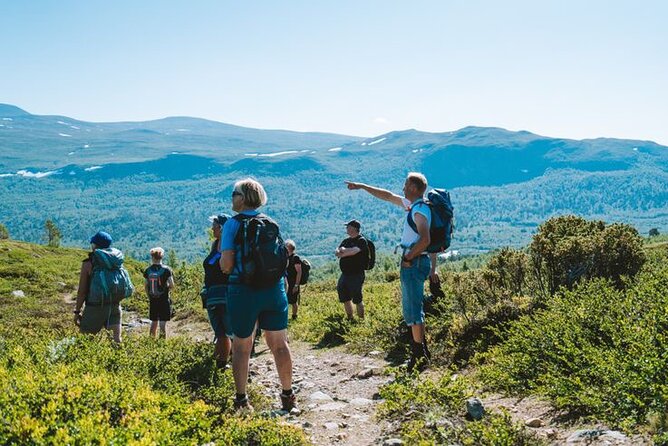
Muskox may look slow and calm, but they are powerful wild animals. The required safety distance is 200 meters, and the guide is responsible for making sure the group respects it.
This distance is not a flaw. It is the correct way to watch animals that live freely in the national park. You will not be walking up for a close portrait or standing beside a herd for a selfie.
The guide’s telescope is included and lets everyone take turns viewing the animals. Bring binoculars if you own a pair, since they will help you scan the area and follow the herd between telescope turns.
Photography is possible, but your results will depend on your camera, the light, the weather, and how far away the muskox are. A long lens will be more useful than a phone camera. Still, the best part may be watching their shape and movement through the telescope, then taking in the whole setting around them.
One particularly satisfying possibility is seeing the animals at a relatively close distance while still remaining safely away. A few muskox can appear surprisingly near the route, but you should never count on that outcome.
Same base, a completely different day:
- From Bergen: The Original Fjord Cruise to Mostraumen
★ 4.7 · 8,440 reviews - Tromsø: Reindeer Sledding & Feeding with a Sami Guide
★ 4.8 · 6,417 reviews - Stavanger: Scenic Fjord Cruise to Lysefjord and Preikestolen
★ 4.6 · 5,791 reviews - Oslo: Scenic Fjord Cruise with Audio Guide Commentary
★ 4.5 · 5,375 reviews
Clothing that can make or break the day
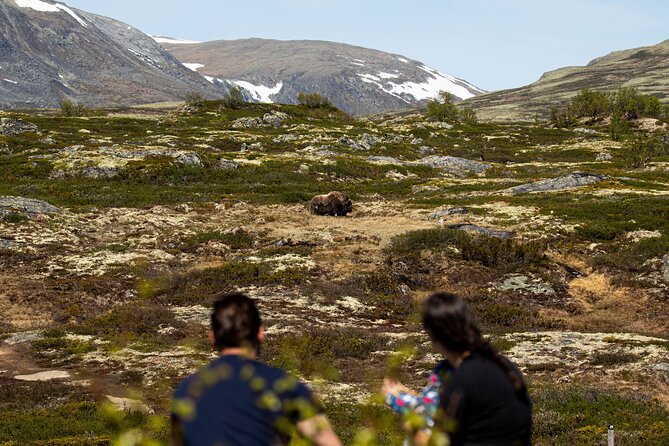
Mountain weather can change fast, so clothing is not a minor detail here. You need waterproof hiking shoes and windproof, waterproof clothing. Bring several layers so you can adjust as the temperature and wind shift.
Your footwear should be suitable for several hours on uneven mountain ground. Comfortable casual shoes are a poor choice, even if the forecast looks friendly at breakfast.
A useful clothing plan is simple:
- A moisture-managing base layer
- A warm middle layer
- A windproof and waterproof outer layer
- Waterproof hiking shoes
- Extra layers for stops and changing weather
The operator specifically advises multiple layers. Follow that advice. You may feel warm while walking, then cool down quickly during a lunch break or while standing still with the telescope.
The guide can help with the route and wildlife search, but you are responsible for arriving properly equipped. Good clothing will not guarantee muskox, but poor clothing can make a successful sighting much less enjoyable.
The lunch break you need to plan yourself
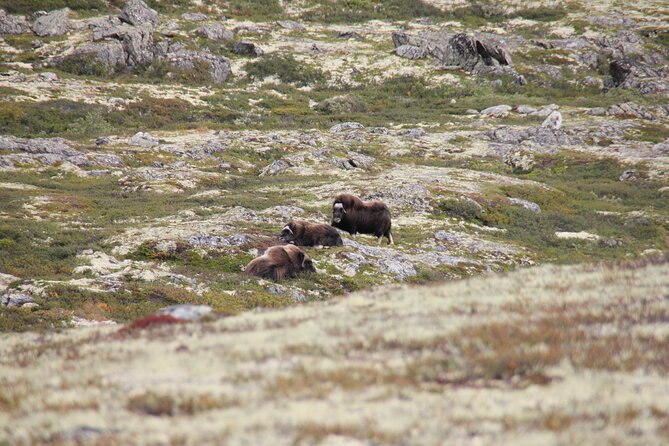
Lunch is not included. Bring your own lunch, something to drink, and perhaps a snack.
This is easy to overlook because the activity has a set meeting time and includes transport, a guide, and a telescope. Pack your food the night before so you are not searching for supplies at the last minute.
Choose food that travels well and is easy to eat outdoors. You may be sitting or standing in exposed conditions, and the timing of the break can depend on the route and the animals. Water is important, especially if the hike reaches the longer end of the 7 to 15 km range.
The lunch stop also gives you a useful pause in a long outing. You can warm up, eat, and take in the Norwegian mountain scenery without needing to rush to the next scheduled stop.
The value of $65.99 per person
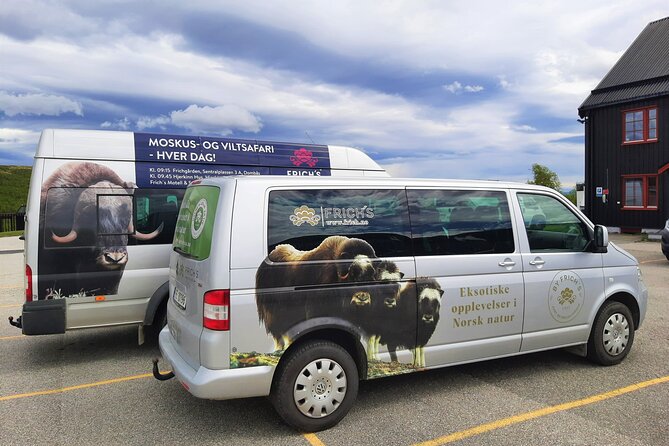
At $65.99 per person, this is reasonably priced for a half-day guided mountain activity that includes transport to the trailhead, a local guide, and use of a telescope.
You are not paying for a guaranteed animal encounter. You are paying for access to a difficult-to-plan wildlife search, route support in a mountain area, and better odds of finding muskox than you would have on your own.
That distinction matters. If you already know Dovrefjell well, have your own transport, and are comfortable searching independently, the price may feel less essential. If you are visiting the area for the first time, the guide and transfer provide practical value.
The 5 to 6 hour duration also makes the cost easier to justify. This is not a brief excursion built around a single viewing point. You get a full day outside, though lunch and personal equipment remain your responsibility.
The current rating is 4.8 from 72 reviews, with 97 percent recommending the experience. The praise centers on friendly guiding, a beautiful route, a secure setup, and successful muskox sightings. One family also found it suitable for a 7-year-old and a 15-year-old, but that should not replace your own judgment about fitness and weather.
The human side of the outing
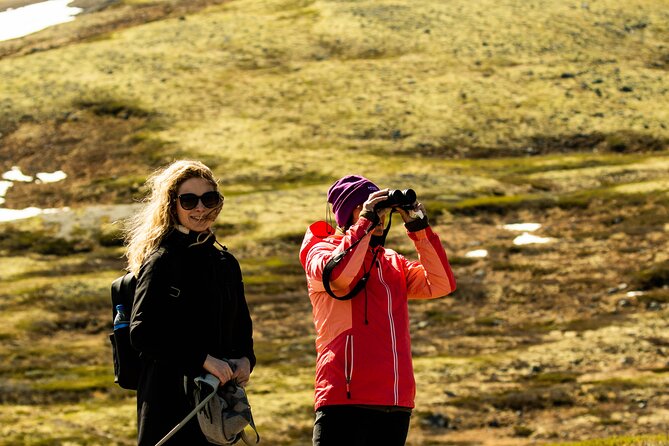
The guide does more than search for animals. The walk creates time for conversation, questions, and shared interest in the mountains. A group with people from different countries and work backgrounds found that the route encouraged useful discussions about nature and the area.
That social side can be a plus if you enjoy meeting people during an outdoor activity. It can also mean that the pace reflects the whole group rather than just the fastest hikers.
Several details point to a friendly and careful guiding style. The hike is described as well guided and secure, and the guides are praised for being friendly. The practical safety rule about staying 200 meters from the muskox is taken seriously.
The experience is offered in an international setting, while Norwegian-speaking families have also enjoyed it. You should expect a shared walk rather than a private naturalist session.
Who should book this muskox safari?
I would recommend it to you if you:
- Want a realistic chance to see muskox in the wild
- Enjoy walking for several hours in open mountain country
- Have moderate fitness and can manage 7 to 15 km
- Are comfortable with changing weather
- Prefer a guide and included trailhead transfer
- Like wildlife watching even when the result is not certain
Families may find it workable, as one outing included children aged 7 and 15. Still, the youngest members of your group need to manage a long walk, elevation, weather, and a possible wait while the group watches distant animals.
You may want to skip it if you need a guaranteed sighting, dislike wet or windy conditions, or are looking for a short, easy activity. The route can be manageable, but it is still a mountain hike with variable distance.
Booking and cancellation details
You receive confirmation when you book, and the activity accepts mobile tickets. It is near public transportation, which helps if you are staying in or passing through Hjerkinn.
Service animals are allowed. The experience requires a minimum number of participants, so if that minimum is not reached, you will be offered another date or activity, or receive a full refund.
Free cancellation is available if you cancel at least 24 hours before the 10 a.m. start time. Cancellations or changes made less than 24 hours in advance are not accepted for a refund, and the cut-off uses local Norwegian time.
Should you book this Dovrefjell experience?
Book it if seeing a wild muskox would be a highlight of your Norway trip and you are happy to earn the sighting with a half-day hike. The combination of a local guide, trailhead transfer, telescope, and a small maximum group gives you useful support without making the outing feel heavily packaged.
Go in prepared. Bring lunch, water, binoculars if you have them, waterproof hiking shoes, and several layers. Most important, accept that the animals set the terms.
For me, that is the honest appeal of this safari. You get a real mountain search, a chance to watch an unusual Arctic animal in its own setting, and a day in one of Norway’s great open spaces. You do not get certainty, but you get a well-organized chance.
FAQ
Where does the muskox safari start?
The tour starts at Hjerkinnhusvegen 35, 2661 Hjerkinn, Norway.
What time does the activity begin?
The start time is 10 a.m.
How long does the safari last?
The safari generally lasts 5 to 6 hours, or about 5 hours and 30 minutes.
How far will I hike?
The total distance can range from 7 to 15 km, with elevation along the way.
Is lunch included?
No. You need to bring your own lunch, something to drink, and perhaps a snack.
What clothing should I bring?
You should bring waterproof hiking shoes, windproof and waterproof clothing, and multiple layers because mountain weather can change quickly.
How close can I get to the muskox?
The safety distance is 200 meters. The guide provides a telescope for viewing, and binoculars are recommended if you have them.
What happens if I need to cancel?
You can receive a full refund if you cancel at least 24 hours before the experience starts. Cancellations or changes made less than 24 hours before the start time are not refunded or accepted.
Just added around Norway
- From Svolvær: Whale Watching Day Trip to Andenes★ 3.8 · 27 reviews
- Ulvik adventure: Exploring Hardangerfjord’s Osafjord by RIB★ 4.8 · 5 reviews
- Vik i Sogn: Authentic Farm Visit★ 5.0 · 3 reviews
- Vossevangen: Nærøyfjord Full-Day Guided Kayaking Trip★ 4.8 · 4 reviews
- Trondheim: Audio Guide Panorama Bustour★ 4.0 · 9 reviews
- Trondheim: City Bus Tour★ 4.1 · 31 reviews
- Ulvik: Hardangerfjord Ultimate RIB Tour★ 4.7 · 39 reviews
- Tromsø: City Walk & Polar Museum (Private or Shared)★ 3.7 · 3 reviews
Whale & Wildlife Watching, compared.

Silent Whale Watching by Hybrid-Electric Boat from Tromsø
Read our review →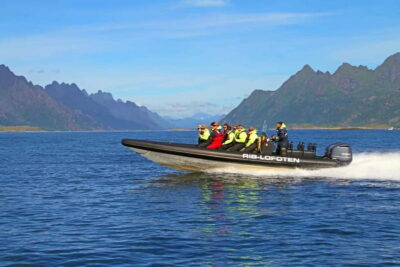
Lofoten RIB Sea Eagle Safari Trollfjord Cruise
Read our review →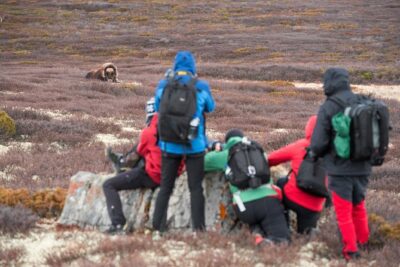
Musk ox Safari in Dovrefjell National Park, Oppdal Safari
Read our review →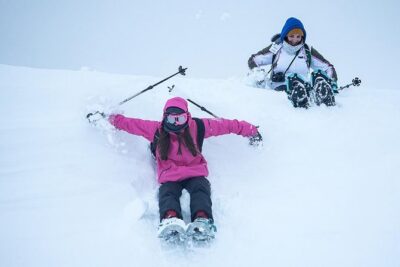
Tromso Snowshoeing – Valley, Fjord Views, Wildlife, Meal & Pickup
Read our review →
Browse the lists this tour appears in