
Reviewed · ZIPLINE & VIA FERRATA
Geiranger: Zipline Park Experience
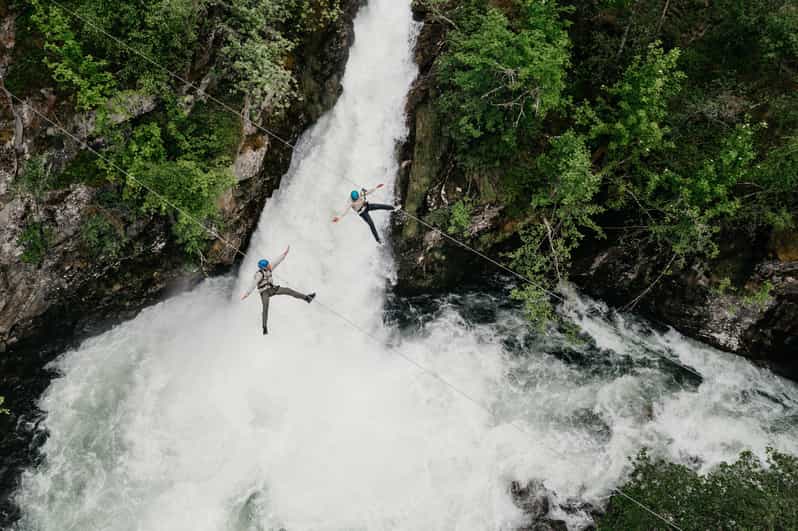
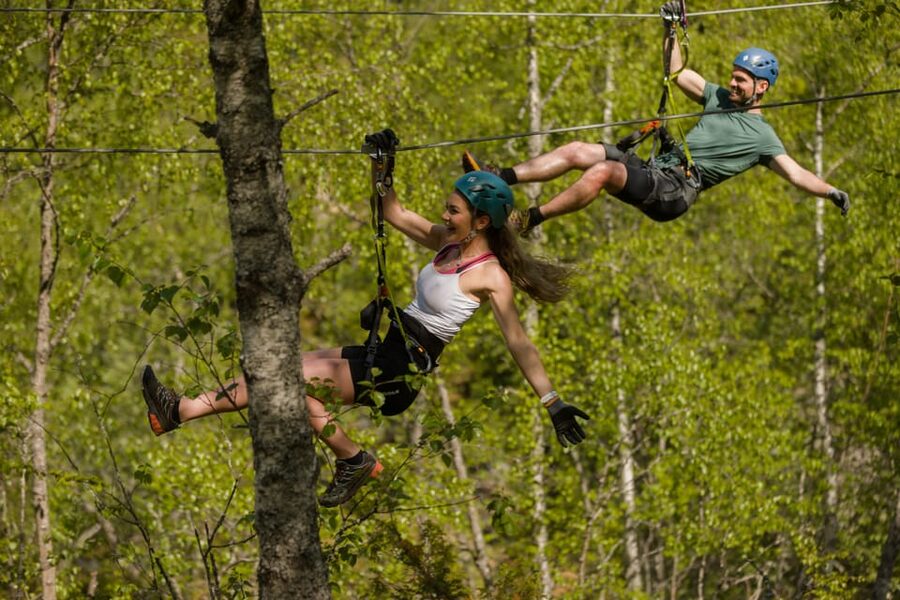
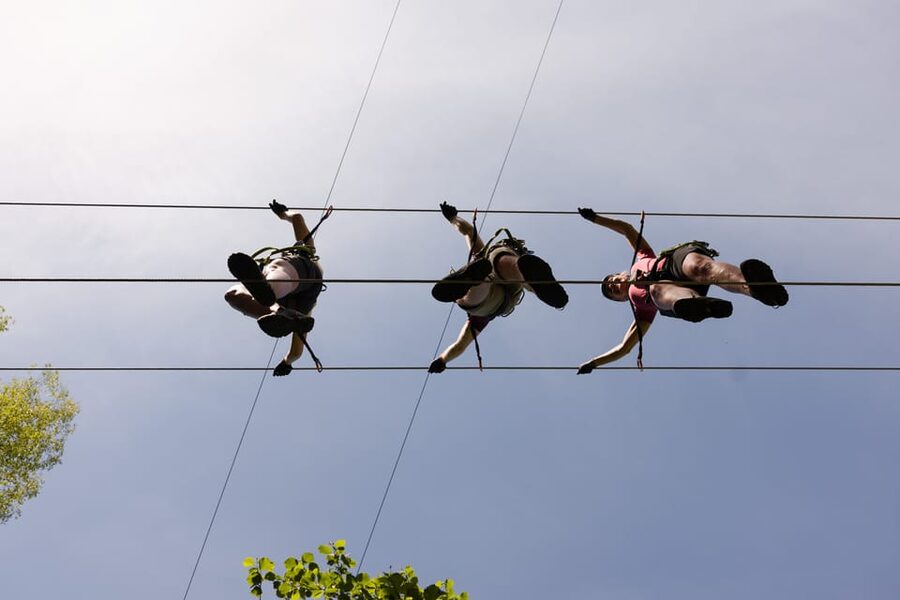
The best part of this Geiranger adventure is not simply the zipline ride. It is the setting: you cross the Geiranger River, skim over rocky gorges, and finish near the spray of Dynamite Waterfall. I like the choice between a quick four-line course and the tougher via ferrata. I also like that the ziplines run in parallel, so friends can fly side by side.
The main thing to know is that the longer option is a real climbing course, not a gentle walk with a few thrills added. The via ferrata can demand strength, reach, and confidence on metal footholds. It is mostly self-guided, so choose the short zipline option if you want a simple outing or are unsure about climbing.
Key points
- Four ziplines above water and forest: The lines cross gorges, rivers, and cascades, with the final section near Dynamite Waterfall.
- A proper via ferrata option: Add four Nepalese bridges, rock sections, and four double ziplines for a roughly 1.5-hour course.
- You control the pace: Staff explain the gear and safety system, then you move through much of the climbing course on your own.
- A memorable cruise-port activity: The park is reachable on foot from the port, though the walk takes about 25 to 30 minutes and includes an uphill road.
- Small groups: The activity is limited to eight participants, which helps keep the start organized.
- Weather matters: The park operates in rain, but closes during strong wind or thunderstorms.
Four ziplines beside the Geiranger River
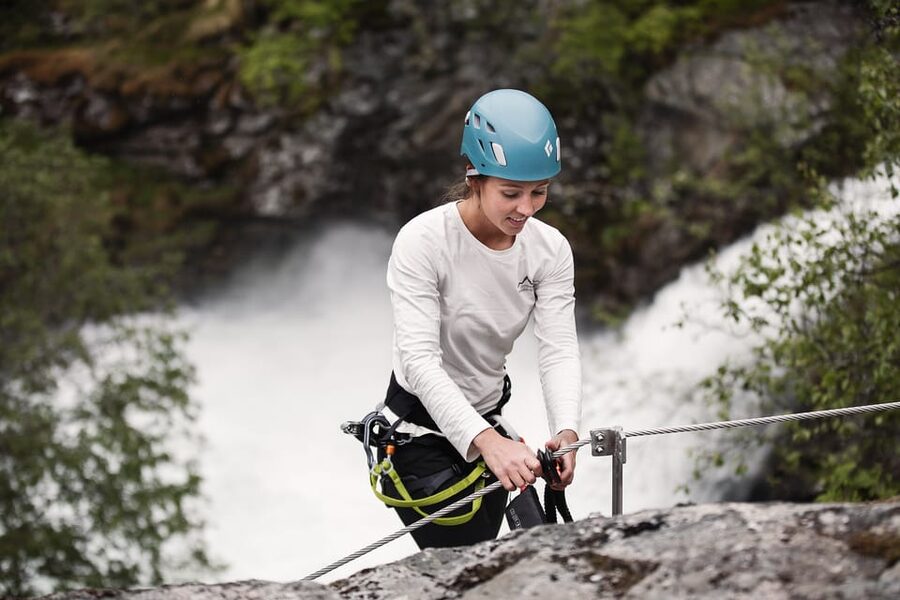
At the ticket office, you check in, receive your equipment, and get the basic safety instructions. The office is an old black wooden cabin on the right side of the access road, about 30 meters beyond a large gate with banners and beach flags.
If you choose the zipline-only option, you receive your briefing at the first line in the park. Then you work through all four ziplines, one after another, finishing near Dynamite Waterfall and close to the ticket office.
This is a compact activity, usually taking about 30 minutes. That makes it a handy choice for a busy day in Geiranger, especially if you are fitting it around a cruise schedule or another excursion. You still get the main reward: the sensation of crossing above water and rock instead of simply looking at the fjord from a viewpoint.
The four lines are not described as long alpine flights. Their appeal comes from the changes in scenery between launches. You move over rocky gaps, flowing water, and forest, with waterfalls close enough to make the setting feel active rather than staged. The end near Dynamite Waterfall is particularly memorable, since you can feel the cool spray while standing above the falling water.
The stopping system may feel firmer than what you have encountered on other ziplines. That is useful to know before you start. Hold on as instructed, follow the staff’s directions, and expect a more physical finish than a gentle glide into a platform.
Other ziplines and ferratas around Norway:
- Ålesund: Via Ferrata tour
★ 4.9 · 203 reviews - Odda: Full-Day Trolltunga Hiking, and Climbing Tour
★ 4.8 · 95 reviews - Extreme Canyoning With Waterfall Rappelling near Geilo in Norway
★ 5.0 · 10 reviews
The via ferrata adds the real challenge
The longer option combines a protected climbing route with the ziplines. It usually takes about 1.5 hours, though some groups take closer to two hours. You begin by walking along the Geiranger River and crossing it on a Nepalese bridge.
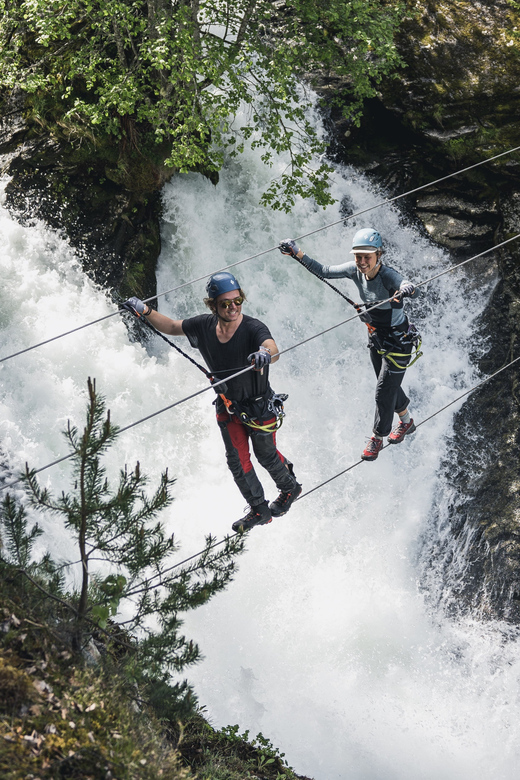
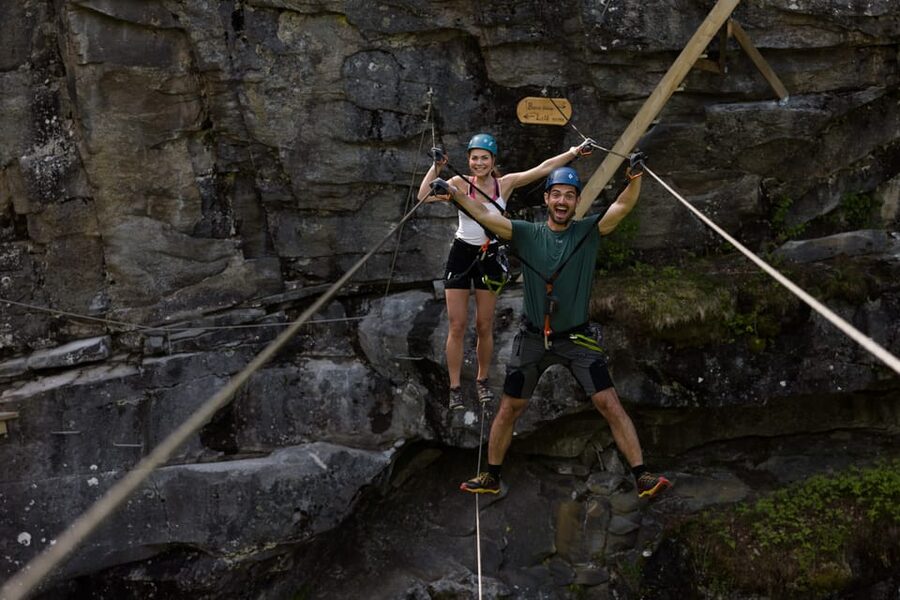
A Nepalese bridge is made from suspended ropes and narrow walking surfaces. It sways, but the safety equipment keeps you attached to the protected route. The bridge is less about technical climbing than balance and nerve. You will want both hands available, so listen carefully to the instructions before setting off.
The route then brings you to a choice. One direction offers an easier climb, while the other takes you toward a more demanding section. This matters because the course can feel far harder than the simple phrase via ferrata suggests. You may use metal handholds and footholds while climbing up or down rock, and some reaches can feel awkward if you are short or lack climbing experience.
At about 5 feet 3 inches, some participants have found the distance between holds and platforms intimidating. The course is not necessarily too difficult for a shorter person, but you should expect occasional long reaches and changes in height. Good balance and upper-body strength help.
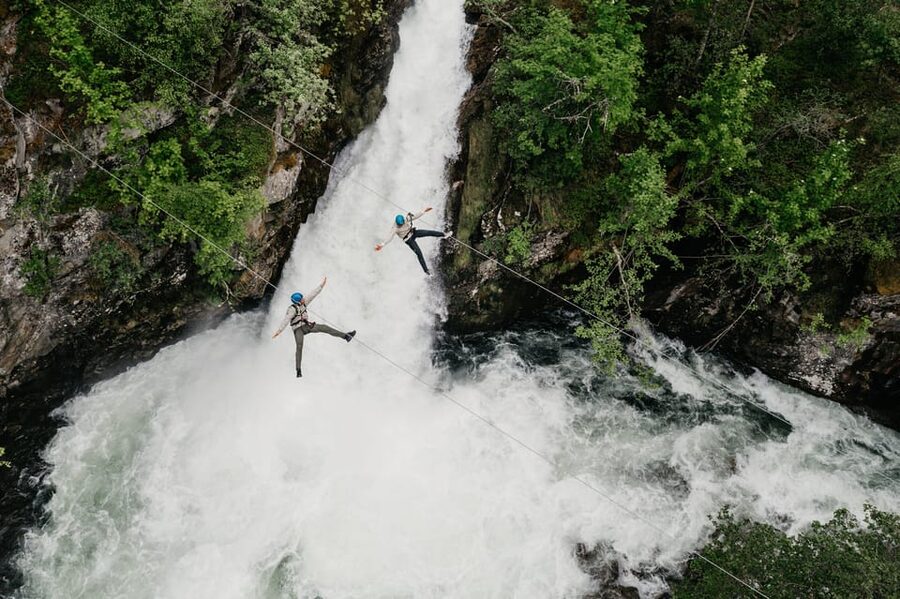
The route includes four Nepalese bridges and four double ziplines. On the double lines, you can travel parallel to a friend, which gives the activity a social feel missing from a single-file zipline course. You are still responsible for managing your own equipment between sections, so pay attention during the briefing.
The via ferrata is protected, but it is not a guided climbing lesson. Staff explain the system and set you on the route, then you largely continue at your own pace. Guides are present around the ziplines, but you should not expect someone to lead every step of the rock section.
That independence is part of the appeal. Reaching the next platform under your own power feels satisfying. It also means you should be honest about your fitness and comfort with heights before selecting the longer option.
Dynamite Waterfall is the payoff
The course crosses the river again above Dynamite Waterfall. Here, the activity shifts from a technical challenge to a close-up nature experience. The waterfall drops through the gorge, and you can feel fresh spray while standing on the route above it.
This is one of the strongest reasons to choose the park rather than a standard zipline in a flatter setting. The water is not just scenery in the distance. It is beside you, below you, and sometimes in the air around you.
After the waterfall crossing, you continue through deciduous forest. The green setting gives you a short break from the exposed rock and bridges, although the path can still be wet. If rain has passed through, footing becomes more important, and sturdy hiking shoes are a much better choice than casual sneakers.
The views also connect the activity to Geiranger’s wider setting. You see the river, gorges, falls, and fjord scenery from a low, active position. This is different from a road viewpoint or ship-deck photograph. You are paying for movement through the area, not simply a lookout stop.
What the staff do, and what you do yourself
The staff provide the equipment and a safety briefing. Instruction is available in English and Norwegian. At the zipline section, the first briefing explains how to use the system before you proceed through the lines.
The climbing section is more independent. You clip yourself to the safety line as you move through the course, and you are expected to understand the basic procedure before continuing. That arrangement worked well for people who wanted a sense of control and achievement, but it could feel daunting if you need constant reassurance.
Staff members have been praised for being friendly, patient, and encouraging. Jacob is specifically mentioned as a fun and helpful guide, and the owner has gone out of the way to accommodate larger groups. At the same time, sound can be an issue near the waterfall. One person found the initial zipline instructions hard to hear over the rushing water, so stand close and ask for a repeat if anything is unclear.
The group limit is eight people. That is small enough to keep the equipment process manageable, though the pace can still vary if one participant is moving cautiously through the climbing sections.
Same base, a completely different day:
- From Bergen: The Original Fjord Cruise to Mostraumen
★ 4.7 · 8,440 reviews - Tromsø: Reindeer Sledding & Feeding with a Sami Guide
★ 4.8 · 6,417 reviews - Stavanger: Scenic Fjord Cruise to Lysefjord and Preikestolen
★ 4.6 · 5,791 reviews - Oslo: Scenic Fjord Cruise with Audio Guide Commentary
★ 4.5 · 5,375 reviews
How hard is it?
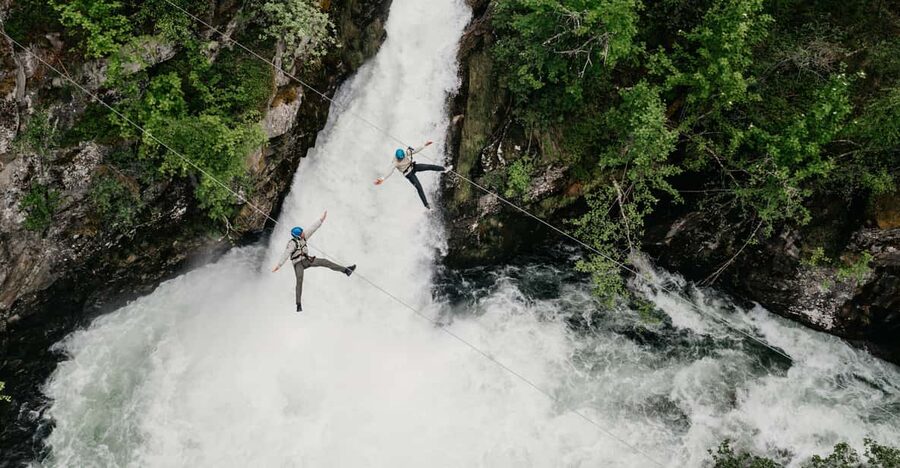
The zipline-only course is the more approachable choice. First-time zipliners have found the instructions clear enough to feel comfortable, and no previous zipline experience is required in the supplied information. You still need to cope with height and the physical effort of climbing onto the launch platforms.
The via ferrata is another matter. It can be strenuous, with ladders, metal grips, rock movement, suspended bridges, and repeated clipping to the safety system. It may give you an upper-body workout. Several people underestimated the effort and finished hot, thirsty, or covered in small bruises.
You should be comfortable with heights and reasonably fit before choosing the full course. It is not recommended for pregnant women, people with mobility impairments, or anyone under 130 centimeters, or 4 feet 3 inches. The stated weight limit is 120 kilograms, or about 264 pounds, and participants under 25 kilograms, or 60 pounds, are not suitable.
The information gives both 25 kilograms and 60 pounds for the lower limit, which are not exactly the same conversion. Treat the stated limits as firm and confirm details when booking if they affect your group.
The course can be bypassed or shortened if you decide the climbing section is not for you, according to the supplied activity details and direct experience from participants. Still, do not begin the longer route assuming you can simply turn around at any point. Ask the staff about the easier route and the options before setting out.
Getting there from the cruise port
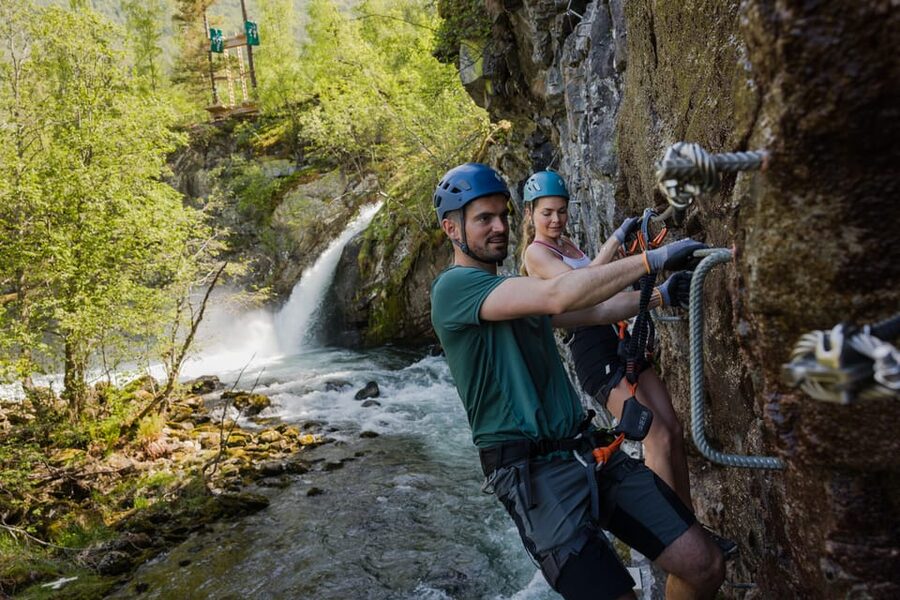
The park is close enough to reach on foot from the cruise area. The walk takes roughly 25 to 30 minutes and heads uphill. Part of it follows a winding main road without sidewalks, so take care and allow time.
A more pleasant route uses the scenic stairs beside the waterfall, near the campground. The waterfall walk adds its own view before the activity begins, but the main road may still be part of the approach. A hop-on hop-off bus can also drop you close to the start.
The meeting point is easy to identify once you are on the main road. Look for the large gate with banners and beach flags, walk through it, and continue about 30 meters. The ticket office is the old black wooden cabin on your right. There is a parking lot beside the office.
Plan your return carefully if you are visiting from a cruise ship. The short zipline course usually takes 30 minutes, but check-in, gearing up, walking to the first line, and returning to the port all add time. The via ferrata can take 1.5 hours or longer, especially if your group moves slowly.
What to wear and bring
Wear sturdy hiking shoes with good grip. Wet rock, wooden platforms, and forest paths are part of the route, and the via ferrata is not a place for smooth-soled shoes.
Bring water and a snack, especially for the longer option. Food and drinks are not included, and there is no food or drink available at the top of the course. A change of clothes is sensible in wet weather or if you expect to work hard on the climbing section.
Climbing gloves may make the metal holds and ropes more comfortable. They are available at the shop for a small fee, and one person specifically recommended having them. The supplied equipment is included, but personal gloves can be useful if your hands are sensitive.
The park stays open in rain, so waterproof layers can make the difference between a fun outing and a soggy one. Strong wind or thunderstorms close the park for safety. Check the weather and leave some flexibility in your plans.
Is $78 a fair price?
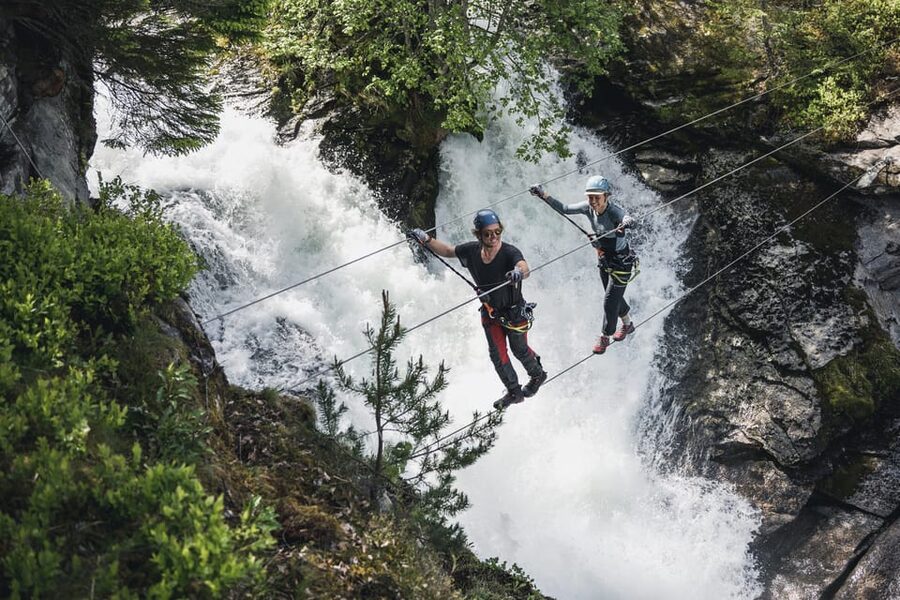
At $78 per person, the zipline-only option is not a bargain if you measure it by minutes alone. A 30-minute activity is short, and the price does not include food, drinks, or hotel transfer.
The value improves if you want a memorable Geiranger experience tied closely to the river and waterfalls. You receive equipment, instruction, and four lines in a striking natural setting. You are also paying for the access system, safety gear, staff, and upkeep of a course that crosses water and rock.
The via ferrata makes the price easier to justify for active visitors. You get a longer outing, four Nepalese bridges, four double ziplines, river crossings, and a physical challenge through the forest. If you enjoy active excursions, the sense of completing the course may matter more than the clock.
For a family or group with mixed interests, the two options are useful. Confident climbers can choose the full route, while others can stick to the ziplines. Children and older adults should be assessed individually, since the course requires strength and stepping onto elevated platforms. A 9-year-old and an 82-year-old have completed the course, but those examples do not remove the need for careful judgment.
Should you book the Geiranger Zipline Park?
Book it if you want more than a viewpoint and like the idea of moving through Geiranger’s scenery under your own power. The zipline-only option suits first-timers, families seeking a shorter activity, and anyone with a tight port schedule. The via ferrata suits fit teens and adults who are comfortable with heights, climbing, and a largely self-guided course.
Skip the longer route if you dislike exposed heights, have limited mobility, or want a fully guided experience. Choose the four ziplines instead, or select another Geiranger activity with less physical demand.
My practical pick is the full course for confident, active visitors, provided you bring water, sturdy shoes, and enough time. If you are uncertain, the shorter zipline option still delivers the best scenic ingredients: river, forest, rocky gorges, waterfalls, and a finish above Dynamite Waterfall.
FAQ
How long does the Geiranger Zipline Park experience take?
The zipline-only option usually takes about 30 minutes. The via ferrata plus zipline option usually takes about 1.5 hours, though the climbing course can take closer to two hours for some groups.
How many ziplines are included?
The experience includes four ziplines. The via ferrata option uses double ziplines, allowing friends to travel parallel to one another.
Is the via ferrata guided?
The via ferrata is largely self-guided after the safety briefing. Staff explain the equipment and route, but you move through the climbing sections on your own. Guides assist around the zipline sections.
Where does the activity meet?
Enter through the large gate with banners and beach flags on the main road. Walk about 30 meters down the access road, and find the ticket office, an old black wooden cabin, on the right.
Can I walk from the cruise port?
Yes. The walk takes about 25 to 30 minutes and includes an uphill section. You can use the scenic waterfall stairs near the campground or take a hop-on hop-off bus that stops close to the start.
What happens in bad weather?
The park operates in rain. It closes during strong wind or thunderstorms.
Is the activity suitable for children?
Participants must be at least 130 centimeters tall and weigh at least 25 kilograms. The activity is not suitable for people under 130 centimeters or under 25 kilograms. The climbing option also requires physical strength and comfort with heights.
Can I cancel my booking?
You can cancel up to 24 hours in advance for a full refund. The activity also offers reserve-now, pay-later booking.
Just added around Norway
- 1 Hour Photo & History Cruise★ 4.7 · 57 reviews
- Alta: Altafjord Whale Watching in a Heated Boat★ 5.0 · 80 reviews
- Alta: Alta Fjord Whale Watching Tour★ 4.7 · 26 reviews
- From Alta: Small Group Whale Watching by RIB★ 4.9 · 28 reviews
- Honningsvåg: North Cape Summer Tour with Sami Family Visit★ 4.2 · 106 reviews
- Dog Sled Tour and Husky Cuddles★ 5.0 · 70 reviews
- Flam: The Spectacular Stegastein Viewpoint Tour (Small Group)★ 3.5 · 74 reviews
- Maral Kunst : Jewelry Bar Experience (Jewelry Making)★ 5.0 · 3 reviews
Zipline & Via Ferrata, compared.
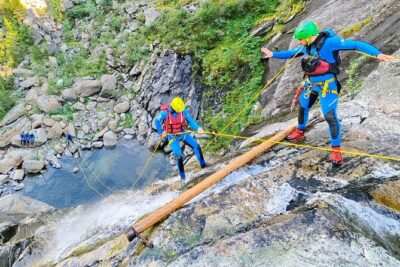
Extreme Canyoning With Waterfall Rappelling near Geilo in Norway
Read our review →Browse the lists this tour appears in